
Wisconsin Conservation Congress
Our Mission
The Wisconsin Conservation Congress (WCC) is the only statutory body in the state where citizens elect delegates to advise the Wisconsin Natural Resources Board (NRB) and the Department of Natural Resources (DNR) on how to responsibly manage Wisconsin's natural resources for present and future generations. The Congress accomplishes this through open, impartial, broad-ranged actions.
The WCC is advisory to the NRB. The NRB sets policy for the DNR and exercises authority and responsibility in accordance with governing statutory provisions.
Find Your Local Delegates
The WCC represents the voice, ambitions and concerns of the citizens of Wisconsin in the fulfillment of their mission to manage our abundant natural resources for future generations. Make your voice heard and contact your local delegates and the WCC leadership today.
Submit a Resolution Today for the 2027 Spring Hearings
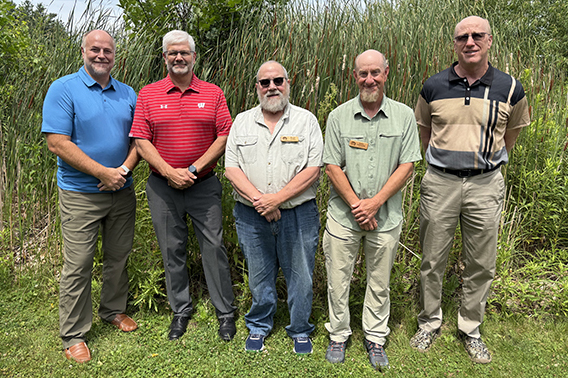
/ Photo credit: Stephanie Schmidt
Public Participation Resources
Public Participation Resources
The WCC represents the interests of citizens of Wisconsin by providing an avenue for input on a variety of natural resource issues. Wisconsin citizens are invited to submit their ideas for natural resource management via resolutions and provide input on county resolutions and statewide advisory questions at the annual April Spring Hearings. Members of the public may also provide testimony at WCC committee meetings in person, via Microsoft Teams or through written comments to the Chair on matters under the purview of the committee. Testimony and written comments must be respectful.
Get Involved in Your County Spring Hearing
- Spring Hearings
- WCC Positions
Participate in an Advisory Committee Meeting
Become a Delegate
Submit an Annual WCC Award Nomination or Application
Engage with WCC Outreach
About the WCC
About the WCC
The WCC was established in 1934 and legally recognized in 1972. Today, it consists of 11 districts made up of the 72 counties of Wisconsin. Each county can elect citizens to five seats (2- or 3-year terms) and each district can elect two councilors to serve on the District Leadership Council (1-year term). Delegates may also be selected to review, study and recommend citizen resolutions introduced at the annual Spring Hearings to the District Leadership Council through an advisory committee. The Executive Committee is comprised of five delegates elected from the District Leadership Council (1-year term) to guide the WCC delegation.
Our Vision
To strengthen and enhance our ability to gather and convey the wisdom and influence of Wisconsin citizens in the formation of natural resource policy, research, education and conservation.
State Statute 15.348
The conservation congress shall be an independent organization of citizens of the state and shall serve in an advisory capacity to the Natural Resources Board on all matters under the jurisdiction of the board. Its records, budgets, studies and surveys shall be kept and established in conjunction with the Department of Natural Resources. Its reports shall be an independent advisory opinion of such congress.
Committee and Meeting Resources
Committee and Meeting Resources
The responsibility of WCC committees is to review, study, and address citizen resolutions and concerns and department proposals under the scope of each committee’s mission statement. In order to make the most efficient use of time by delegates, the following committees with specific responsibilities are established.
WCC Advisory Committees
- Bear Committee
- Deer & Elk Committee
- Environmental Committee
- Fur Harvest Committee
- Great Lakes Committee
- Land Use Committee
- Legislative Committee
- Migratory Committee
- Mississippi Committee
- Motorized Recreation Committee
- Outdoor Heritage & Education Committee
- Outreach & Public Relations Committee
- Rules & Resolutions Committee
- Shooting Sports Committee
- Trout Committee
- Turkey & Upland Game Committee
- Warm Water Committee
- Wolf Committee
WCC Oversight Committees
WCC Committee Resources
- Robert's Rules Cheat Sheet
- Advisory Committee Welcome Message
- WCC Meeting Minutes Template [Word]
- Advisory Committee Report [Word]
- Resolution Author Follow Up Template [Word]
- Advisory Committee Evaluation [Word]
DNR Committees
- WCC Representatives to DNR Committees
- WCC representatives to DNR committees are expected to provide notes from their meetings to WCC leadership using DNR Committee Meeting Notes [Word]
Delegate Resources and Forms
Delegate Resources and Forms
The WCC consists of up to 360 delegates. Five delegates represent each county and are elected to a 2- or 3-year seat. Delegate elections are held annually at the county spring hearings on the second Monday in April. New delegates will assume their position at the start of the annual May convention. The following resources are available to all delegates for reference and onboarding.
- WCC Strategic Plan (2013-2018)
- WCC Code of Procedures
- New Delegate Training
- Photo Release Form [Word]
WCC delegates are eligible for reimbursement for committee meetings or other meetings as assigned. Delegates are not eligible for reimbursement for District Meetings, Spring Hearings or the Annual Convention. The DNR is required to have your taxpayer identification number on file in order for the State of Wisconsin to comply with the Internal Revenue Service regulations. New delegates must submit a W9 Tax Form and a STAR Vendor Form to begin receiving reimbursements from the state.
Educational Resources for Delegates
Educational Resources for Delegates
The DNR seeks review and approval from the NRB on rule proposals, land acquisitions, property management master plans and more. Advisory to the NRB, WCC delegates are provided with the following resources to increase their understanding of matters under the jurisdiction of the board and in agreement with their vision.
Administrative Rule Notices
- Wisconsin Legislature – Administrative Rules
- Proposed Permanent Rules
- Proposed Emergency Rules
- Public Hearings and Meetings
Hunting, Fishing, and Trapping Regulations
- Citizen Deer Advisory Councils
- 2026-2027 Hunting Regulations
- 2026-2027 Fishing Regulations
- Trapping Resources
- Purchase your License
- DNR Fisheries Toolbox
Safety Education
- Sign up for a Safety Education Course
- R3 – Learn to Hunt/Fish/Trap/Shoot
- Hunter Safety – In Person Courses
Environmental Education