
Northern Pine Management Initiative
Replicating Historical Spatial Patterns to Increase Resilience and Regeneration in Pine Forests
Project Summary
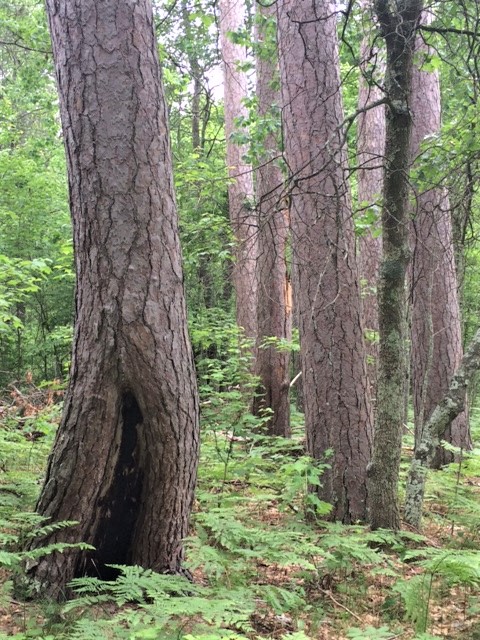
Overview
The Northern Pine Management Initiative (NPMI) is a federally funded project to develop new methods of managing pine forests that replicate historical spatial patterns and low severity fire to increase resilience and natural regeneration of pine.
The operational approach is to adapt ICO (Individuals, Clumps and Openings) harvest, which was developed by Jerry Franklin and others to add greater spatial complexity to forests on the west coast, to Wisconsin pine forests.
Management Implications
Historically, northern forests had greater complexity (e.g., irregular spatial patterns of living trees, dead wood, forest openings), resulting from many factors including disturbances such as windthrow and especially frequent low-severity surface fires. These irregular spatial patterns and complexity had a role in reducing crown fire spread and made it less likely for a forest to sustain dangerous high-severity wildfires, among many other benefits. Most forest management today aims to maximize yield, resulting in dense stands with regular spatial patterns and more homogeneous forests, more at risk to dangerous fires. Additionally, more uniform dense stands lack natural regeneration of red pine.
The ICO approach aims to:
- Demonstrate new silvicultural prescriptions to increase forest complexity and resilience and reduce wildfire hazard.
- Maintain and increase fire-dependent plant communities and promote natural regeneration of red pine.
- Reduce hazardous fuels and crown fire potential using silviculture and prescribed burning.
Study Area
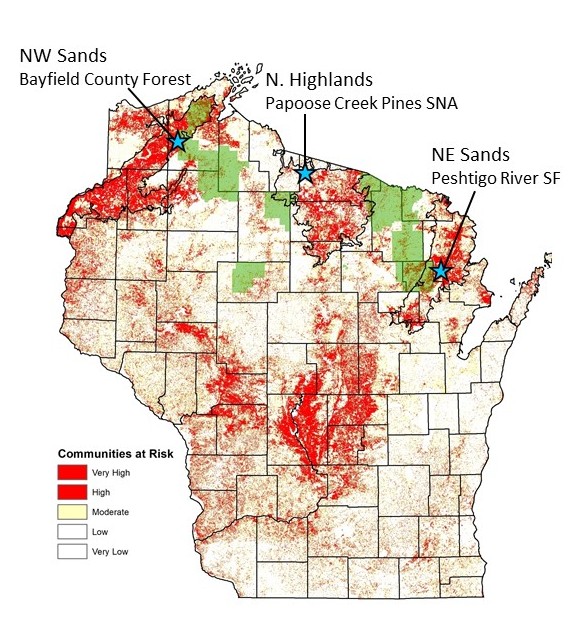
The Northern Pine Management Initiative has been established on three sites in northern Wisconsin: Bayfield County Forest, Papoose Creek Pines State Natural Area in Vilas County, and the Peshtigo River State Forest in Marinette County.
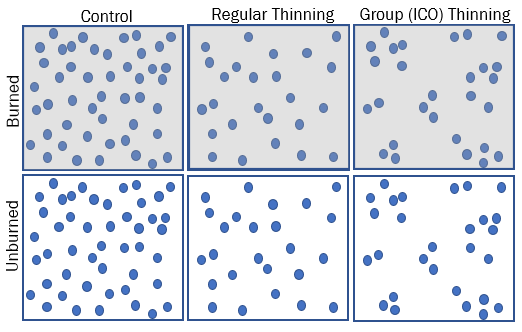
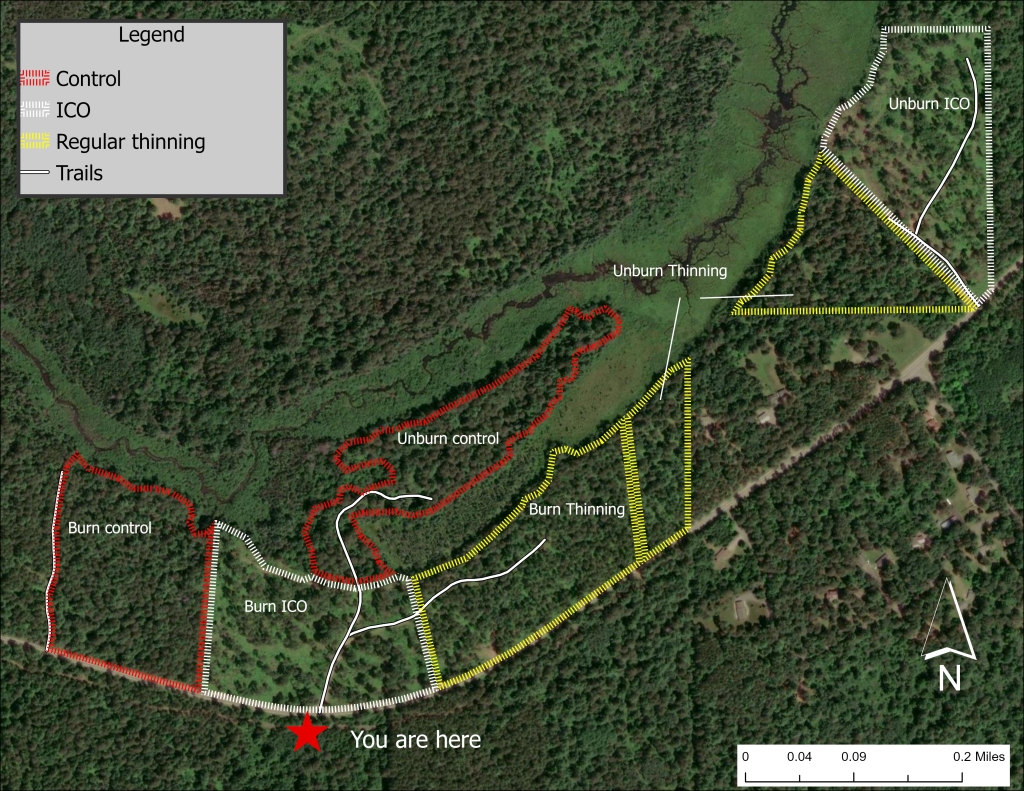
In each of the three established sites, different treatment combinations were implemented, including controls, regular thinning and harvests using the ICO approach, both with and without prescribed fire.
The ICO approach uses historical reference data to estimate the numbers and sizes of small (2-4), medium (5-9) and large (>10) groups of trees as well as individual trees (far enough for separate crowns from neighbors) to help achieve spatial patterning, which can add heterogeneity and resilience.
Papoose Creek Study Site
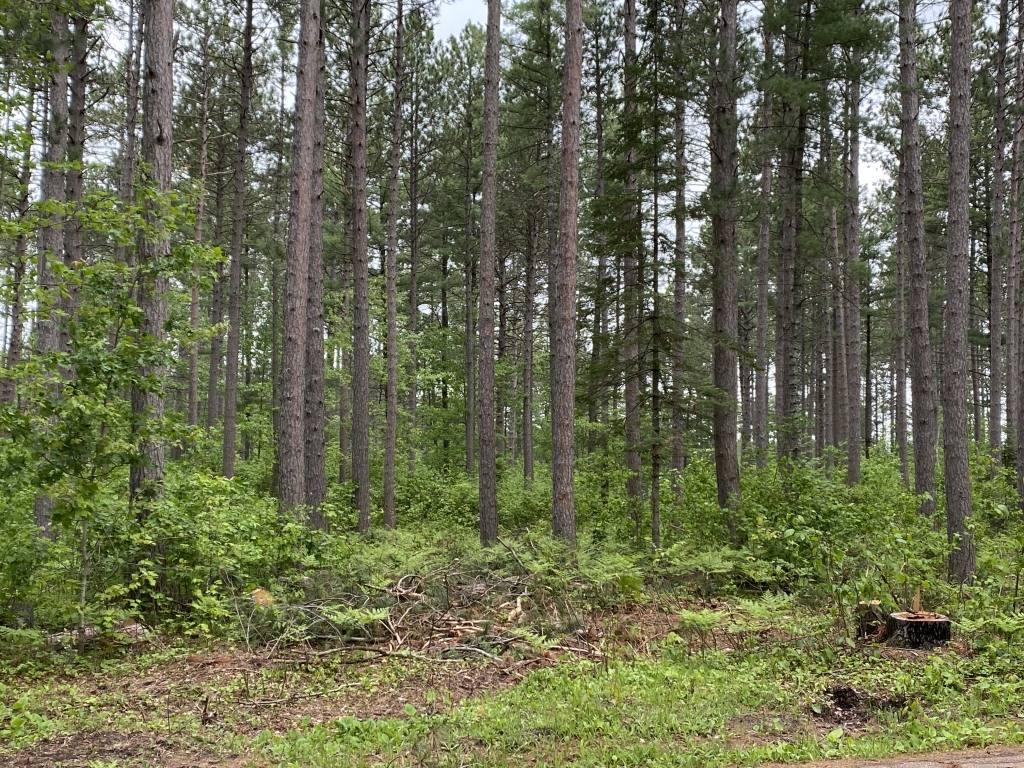
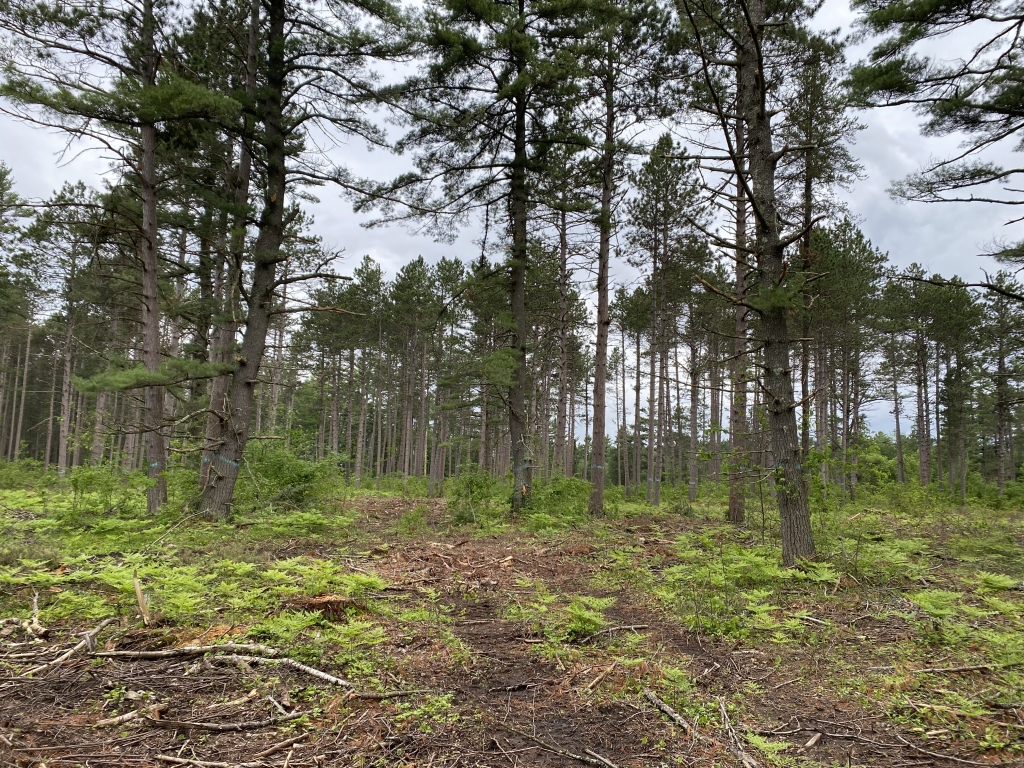
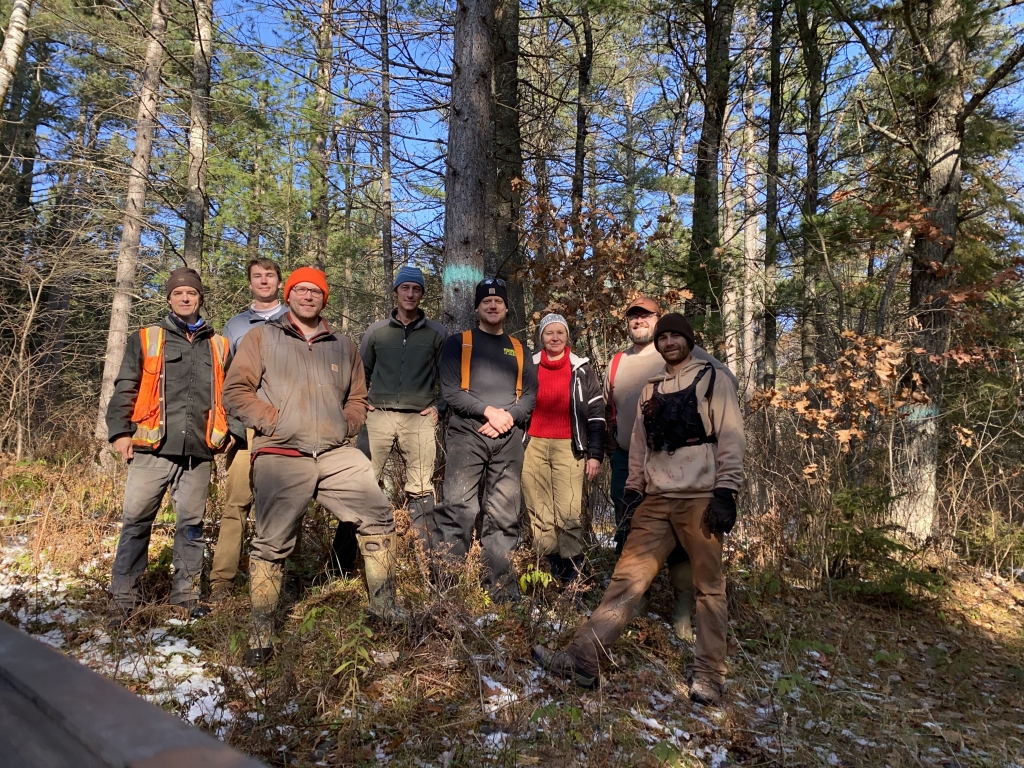
The Northern Highlands American Legion State Forest (NHAL) study site is located at Papoose Creek Pines State Natural Area and can easily be viewed from the adjacent bike path. If you’re visiting this page after following the QR code found on the information kiosk along the bike bath, you are standing at the red star indicated on the map below. This stand is natural origin pine with many of the trees around 130 years old. The other two sites (Bayfield County and Peshtigo River State Forest) are 68- and 59-year-old plantations. ICO was implemented at the Papoose Creek site in 2024. The stand was marked for harvest by a team of DNR foresters and research scientists and harvested shortly after. The locations of the various treatment types are illustrated on the map. Prescribed burns are planned for the growing season at each site to reduce competition and brush and promote regeneration of fire dependent pines.
Research In Practice
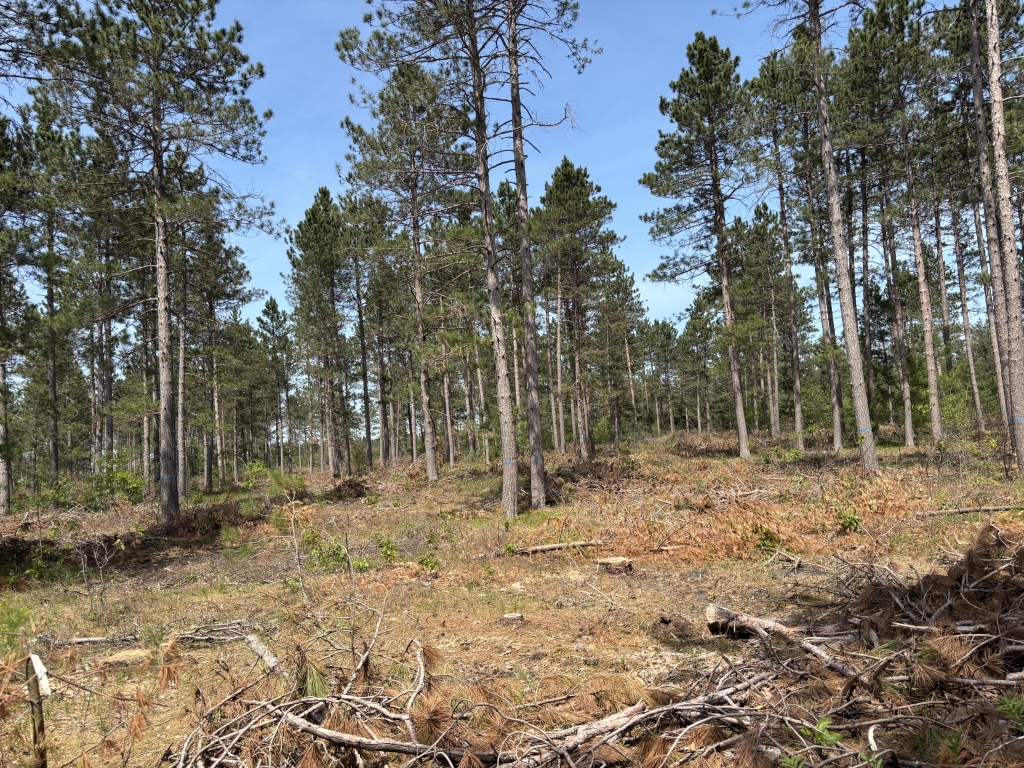
In 2025, foresters and habitat managers from the Wisconsin DNR implemented ICO on a red pine plantation in the Black River State Forest. The site and management highlights the collaborative work conducted within the DNR between foresters, habitat managers, silviculturists and research scientists to carry out high-quality management of the state’s natural resources. ICO was selected as the management tool at this site due to its location within a state natural area emphasizing management of open pine barrens.
Working with a team of research scientists and silviculturists, foresters marked the stand, incorporating diversity in structure and composition to the site following ICO guidelines. The stand was harvested in 2025, and the results reflect a more natural looking red pine stand resemblant of historical spatial patterns. Managers will use low severity prescribed fire on this site as part of their management strategy.
Timeline
Launch: May 2023
Expected Completion Date: 2030
Status: Ongoing
Project Partners And Support
Funded By: USDA Forest Service Eastern Region, State and Private Forestry Northeastern Area
Principle Investigator: Wisconsin DNR, Division of Forestry
Internal and External Partners:
- Bayfield County
- Wisconsin DNR Natural Heritage Conservation Program
Publications And Resources
Publications
Meunier, J., N. S. Holoubek, P. M. Brown, and M. Sebasky. 2019. Re-evaluating pattern and process to understand resilience in transitional mixed conifer forests. Ecology 100 (11): e02839. https://doi.org/10.1002/ecy.2839
Razenkova, E., Fraver, S., Palik, B., Peepo, E., & Meunier, J. 2025. Analyzing spatial patterns of old-growth red pine dominated forests in Wisconsin and Minnesota as a tool to increase forest resilience. Forest Ecology and Management, 576, 122404. https://doi.org/10.1016/j.foreco.2024.122404