
Forest Regeneration
Forestry
Forest regeneration is the process of renewing tree cover by establishing young trees. The process can happen naturally in a forest, typically following some type of disturbance, such as a windstorm, fire or timber harvest, or it can happen artificially with tree planting or direct seeding. Successful and desirable forest regeneration is vital to sustainable forest management. The composition, quality, health and vigor of tree regeneration will determine the future of Wisconsin’s forests.
Forest research is needed to answer a diverse set of ecological and management questions related to sustainable forest regeneration. Current research areas include regeneration harvest systems, tree planting, natural disturbance, deer browse, seed dispersal, climate change, insects and disease, land-use and forest genetics.
Regeneration Studies
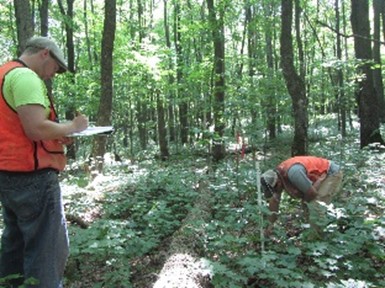
Forest Regeneration Monitoring
Wisconsin’s forests rely on successful regeneration to maintain long-term health and productivity. Monitoring this regeneration is essential after harvesting or natural disturbance to ensure young trees are establishing and growing as expected.
The Forest Regeneration Monitoring Program, launched in 2018, uses the Forest Regeneration Metric (FRM) to assess seedling and sapling growth across 46 forested counties. This study aims to develop Wisconsin-specific regeneration standards, monitor long-term forest composition changes and evaluate forest management practices.
The program also equips local County Deer Advisory Councils (CDACs) and resource managers with science-based data to inform deer population goal-setting efforts.
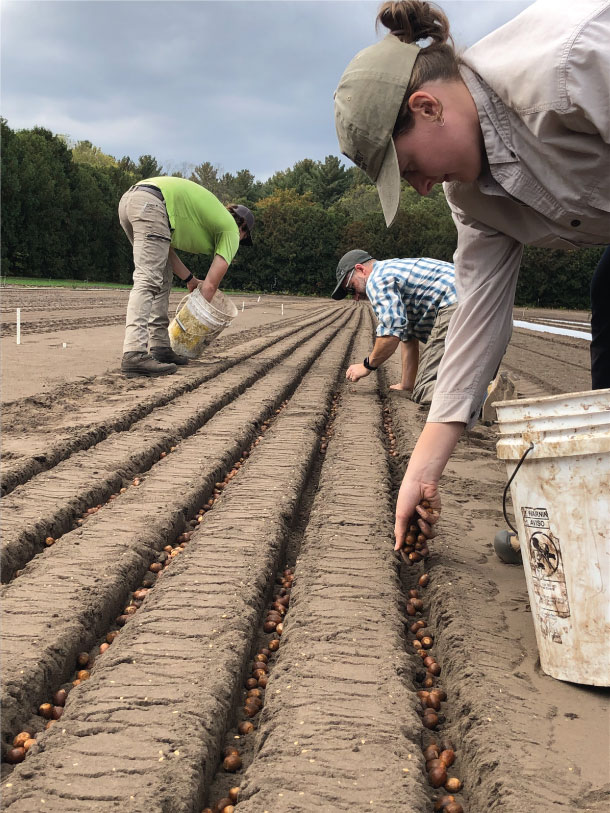
Desired Regeneration through Assisted Migration (DREAM)
Rising temperatures and shifting precipitation patterns resulting from climate change threaten forest health, structure, composition and regeneration success. Current projections indicate that these changes will outpace the species’ ability to migrate and adapt to more favorable conditions, challenging resource managers as they decide which species to invest resources in during reforestation and restoration projects.
DREAM is an international collaborative study investigating forest-assisted migration. The goal of this study is to identify which species and management techniques are most likely to be successful, providing valuable knowledge to land managers as they manage for forests that are more resilient to future climate conditions.
Desired Regeneration through Assisted Migration (DREAM)
Desired Regeneration through Assisted Migration - Research Brief
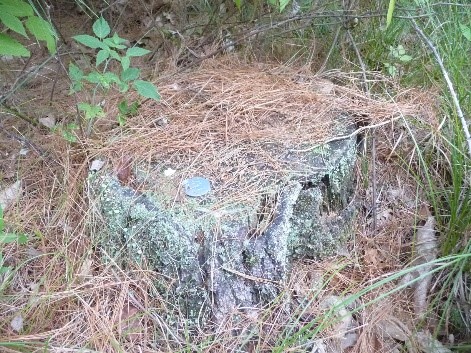
Persistence of Oak Wilt in Clearcut Stands
Oak management commonly includes clearcut harvesting, particularly on lower-quality sites where stump sprouting is a viable regeneration method, but also where oak wilt is most problematic. It is not known if clearcutting, where oak is a desirable species to regenerate, could exacerbate oak wilt spread and mortality or serve as an effective control. This project evaluated long-term (10-year) persistence of oak wilt, as well as stump survival and vigor over time.
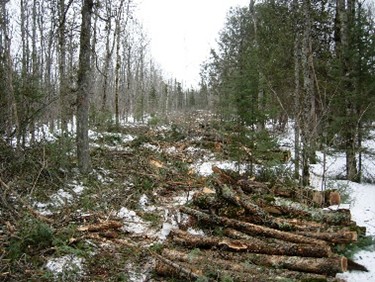
Evaluating Adaptive Management Options for Black Ash Forests in the Face of Emerald Ash Borer Invasion
The emerald ash borer (EAB) threatens the future of black ash wetlands, which are important to the hydrologic and ecological health of the Great Lakes’ forests. As black ash often dominates wetland forests, its loss can shift ecosystems toward marsh-like, non-forested conditions.
This review compiles research from multiple adaptive silvicultural studies and field trials across Minnesota, Michigan and Wisconsin. It evaluates preemptive harvest strategies and the planting of replacement species, such as swamp white oak and tamarack, to retain forested conditions post-EAB invasion.
This study guides resource managers in building forest resilience before EAB arrival, emphasizing the importance of site-specific approaches to preserve wetland function, maintain tree canopy and reduce long-term ecological disruption. This is a collaborative study with the University of Vermont, U.S. Forest Service and Minnesota Forest Resources Council.
UAV-Based Forest Inventories
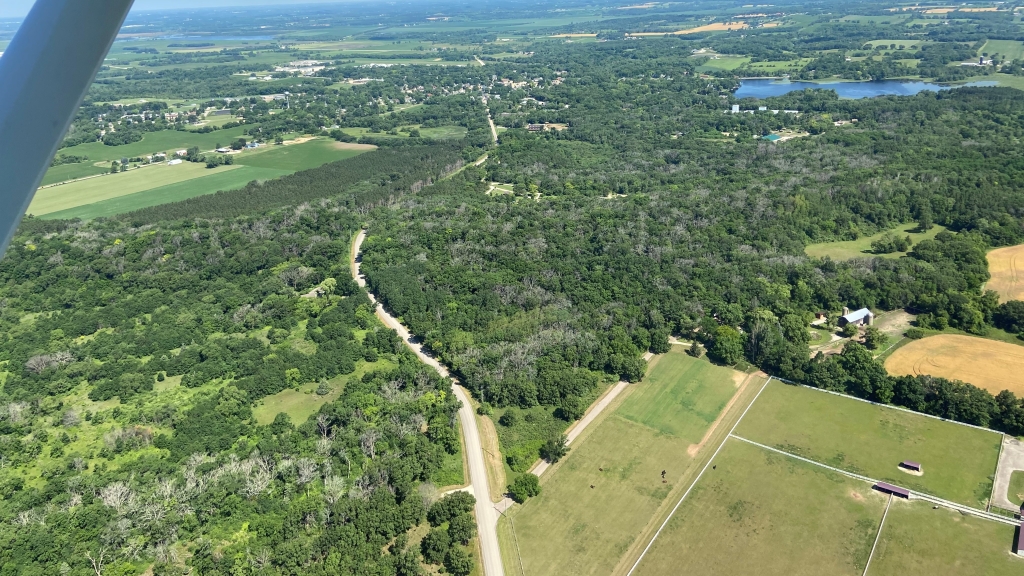
The Wisconsin Continuous Forest Inventory manually samples plots on Wisconsin state forests to estimate the distribution of quantity of trees and species at the property level. While this approach is time-tested, new methods of collecting inventory data are being developed using UAV-based remote sensing tools. This project will test and demonstrate the capacity of UAV-based LiDAR and hyperspectral imagery to inventory a portion of the Southern Kettle Moraine State Forest that includes several CFI plot locations. Results from this project will show if and how these new technologies can be used to supplement and enhance our current manual inventory processes.