
Fire
Forestry
Fire is an essential component of ecosystem dynamics, and recognition of its importance for maintaining natural communities is growing. At the same time, concern for its impacts on human communities grows as well. An understanding of disturbance regimes is critical for communities and a safe, secure, healthy and durable environment.
“Present-day problems in conservation and land use, viewed in the light of contemporary evidence alone, often baffle the investigator. The same problem, viewed in the light of history, may often be deciphered as the repetition of some historic pattern.” – Aldo Leopold
Historical Fire Ecology
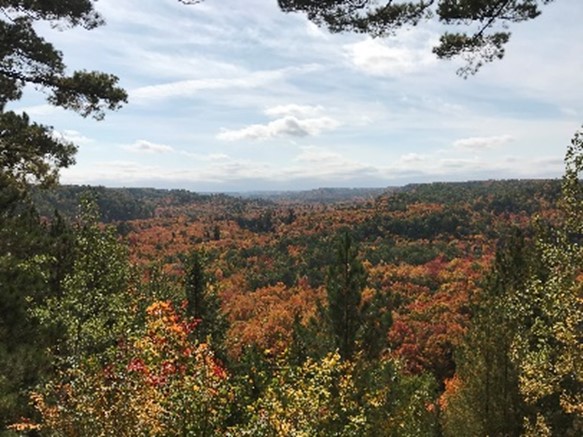
Widespread Fire Years Across Regions and Forest Types
Historically, climate-driven regional fires were common, and the conditions that promoted widespread fires may be consistent with anticipated climate change-fire interactions. This project explored regional-scale historical fires that burned across the Upper Peninsula of Michigan, including many different landscapes and forest types (e.g., northern hardwoods, peatlands, pine plains, dunes). It also evaluated fire seasonality and climate-fire relationships.
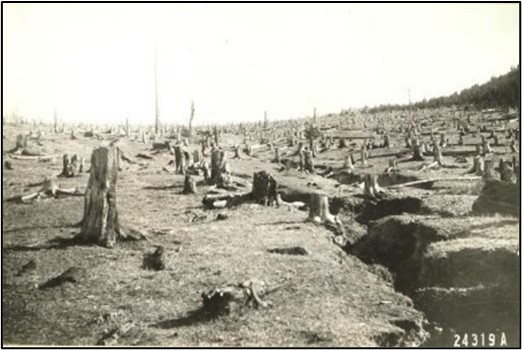
Historical Context to Euro-settlement Era Fires
The Lake States experienced unprecedented land use changes during Euro-American settlement, including large, destructive wildfires. These fires were considered anomalous and attributed to high pine slash fuel loading. This study evaluated these settlement-era fires in the context of a longer 400-year history and the associated climate conditions.
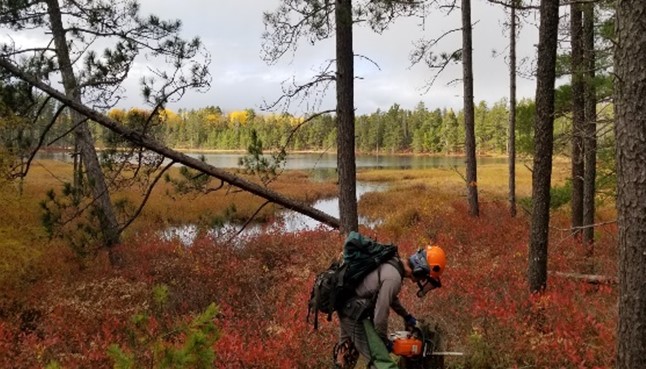
Fire Ecology of Peatlands
Peatlands comprise around 3% of Earth’s terrestrial surface yet sequester more than twice the carbon of all of Earth’s forests combined. They are critically important ecosystems, yet we know very little about their fire history or fire ecology. This project combined paleo sediments from peats, lakes and tree-ring data to help determine fire ecology for peatlands across northern Wisconsin and Michigan.
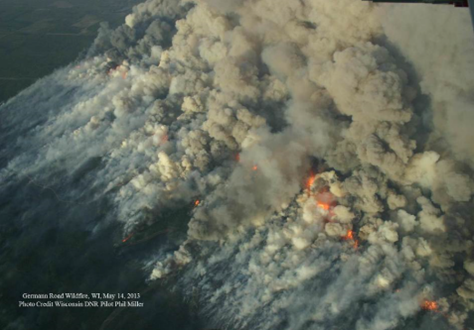
Fire Rotation In Great Lakes Forests
Fire rotation is often reconstructed based on Euro-settlement era survey notes, which depend on the ability of surveyors to detect fires. This project evaluated that and compared tree-ring-based fire history, which detects low-severity fires, to surveyor-based fire observations, which were limited to high-severity fires.
Climate Controls of Fire Activity Across Eastern North America
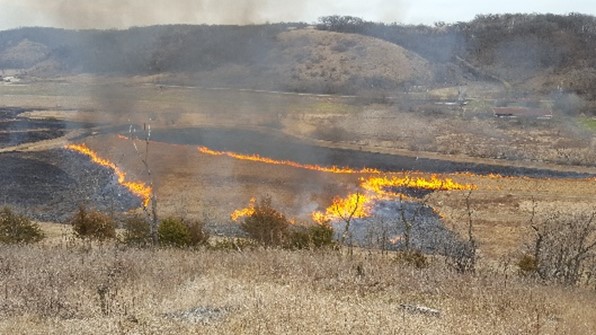
Across much of the western U.S., climate teleconnections (e.g., ENSO, PDO) are highly correlated with fire activity. These relationships across the eastern U.S. are less well understood. This project compiled data from historical (1675-1900) and contemporary (1959-2021) fires across the eastern U.S. and Canada to evaluate climate states associated with high fire activity years.
Climate Controls of Fire Activity Across Eastern North America
Landscape Controls of Historical Wildfires
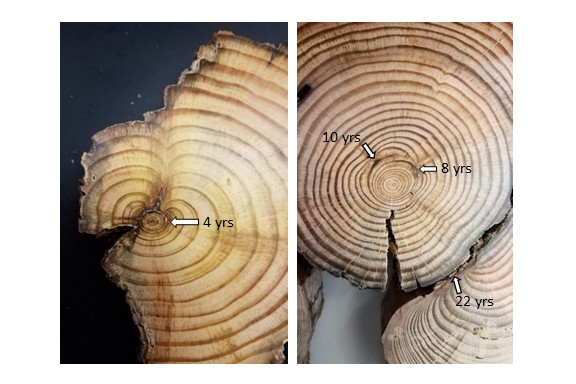
In the Lake States, there is a tendency for small trees to record fire scars, which appears to be unique among various regions of the U.S. In this study, we evaluated fire scar formation and fire frequency in relation to landscape physiography (e.g., topography, lakes, streams) at different scales (site and ecological landscapes).
Historical Spatial Patterns of Conifer Forests Adds Resilience
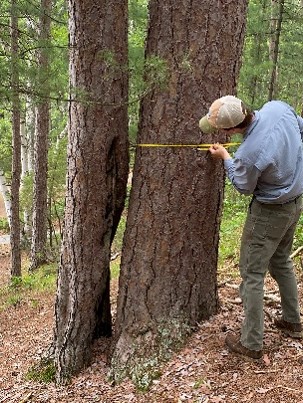
Most pine forests are managed similarly – regular spacing to maximize yield, which results in homogeneous stands, whether plantation or natural origin. Historically, pines had a much more complex spatial pattern with trees in various size clumps among various size openings. This complexity had a role in reducing crown fire spread among many other benefits. This research aims to understand and replicate the sorts of complexity in pine forests.
Historical Spatial Patterns of Conifer Forests Adds Resilience
Increasing Efficacy of Prescribed Burning with Seasonality of Burning
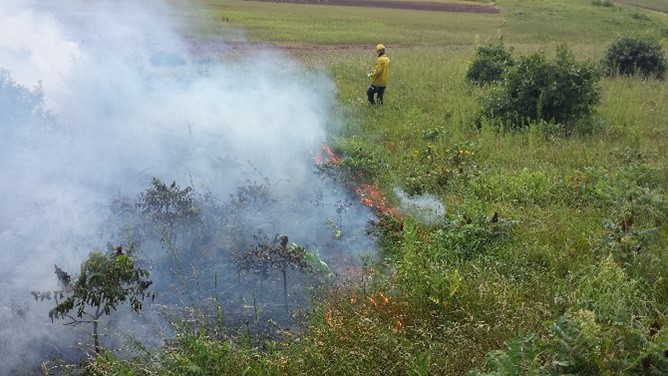
Woody plant invasion is one of the greatest threats to fire-dependent communities. Reducing woody plants is often a primary objective of prescribed burns. Burn intensity and frequency are constrained by suitable prescriptions and capacity, whereas little is known about altering the seasonality of prescribed fire to reduce woody plants. This study identified significant opportunities for meeting management objectives by adjusting the seasonality of burning.
Increasing Efficacy of Prescribed Burning with Seasonality of Burning
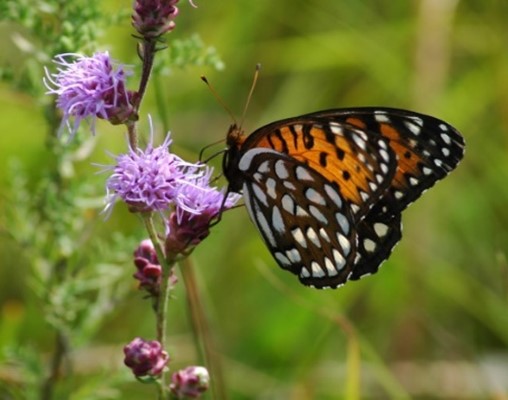
Long-Term Impacts of Prescribed Burning on Regal Fritillary Butterflies
The paradox of specialist prairie invertebrates is that they are dependent on fire-dependent vegetation, which has been reduced to such small fragments that using fire can result in direct mortality of the insects themselves. A problem when they are already rare and vulnerable. This study took a long-term (20-year) look at the impacts of using prescribed fire on a rare butterfly – the regal fritillary.
Long-Term Impacts of Prescribed Burning on Regal Fritillary Butterflies