
Wisconsin Hunting Regulations, Fall 2026-Spring 2027
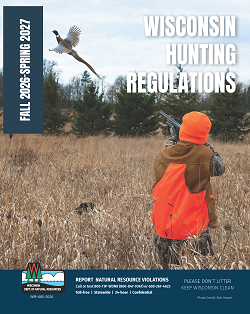
The Fall 2026-Spring 2027 Wisconsin Hunting Regulations are now available for hunters to look through. In addition to this web version of the regulations, a print copy is available at most license agent locations. Both versions contain the same information.
To use the online regulations, you must first choose a Section or click the "View All Regulations" button to see everything. You may then choose a Subsection to narrow your search and then press the View Regulation button to display the regulatory information you selected. If you'd like to see all info related to a section, select the first option ("-") to see everything under that section. You may also press Reset for a brand new search.
Please be aware that hunters are responsible for reading and following all the hunting regulations. Regulations that apply to all species are found within the "General Hunting" and "Licensing Requirements" sections, meanwhile species-specific regulations are found in the respective species sections.
DNR-Managed Lands
DNR-Managed Lands
DNR-managed lands are all lands and properties owned by or under control of the DNR. This includes lands under easement to or leased by the DNR and that the DNR manages and controls. The following regulations apply to all DNR-managed lands. See the Other Lands webpage for rules regarding lands enrolled in the Managed Forest Law or Forest Crop Law programs or private lands leased to provide public access hunting.
General Rules on DNR-Managed Lands
Firearm Possession
It is illegal to:
- Hunt or possess a firearm, airgun, bow or crossbow in an area closed to hunting unless it is unloaded or unstrung and enclosed within a carrying case.
Note: Those authorized to possess a concealed weapon may possess a loaded, uncased handgun on these properties. Hunters may possess a loaded or uncased firearm, airgun, bow or crossbow in areas of state parks closed to hunting for the purpose of accessing areas within the park that are open to hunting. - Discharge any firearm or airgun while within the exterior boundary of state-owned lands posted with DNR signs in Brown, Columbia, Dane, Dodge, Fond du Lac, Jefferson, Juneau, Kenosha, La Crosse, Manitowoc, Milwaukee, Outagamie, Ozaukee, Racine, Rock, Sauk, Sheboygan, Walworth, Washington, Waukesha and Winnebago counties or on state recreation areas, state natural areas or on state trails established on railroad grades, except:
- While engaged in hunting in accordance with the open seasons.
- While shooting at an established shooting range. This is the only target shooting permitted on these state lands.
- While training or trialing dogs under DNR license within designated areas.
Blinds
Placement of blinds/stands on public land does not restrict others from using the blind/stand or hunting the public land where the blind/stand is located.
It is illegal to:
- Use a ground blind during any open deer season or special deer hunt with firearms unless a minimum of 144 square inches of solid blaze orange or fluorescent pink material is visible from all directions.
Note: Blinds used for waterfowl hunting are exempt from this rule. - Build or use a ground blind or any elevated device unless in compliance with the following:
- The device does not damage the tree. Damage includes cutting shooting lanes and the use of screw-in tree stands, but excludes careful pruning, flush with the trunk of the tree, of limbs less than 1 inch in diameter.
- North of State Highway 64: Overnight placement occurs only from Sept. 1, 2026 – Jan. 31, 2027, except that on any land that is part of the state park system, overnight placement may only occur during the time frame beginning seven days prior to and ending seven days after an established fall hunting period.
- No more than two portable devices per hunter per county may be left overnight.
- South of State Highway 64: The device remains placed only during the daily time frame beginning one hour prior to, and ending one hour after, the shooting hours on the Shooting Hours webpages (linked below).
- Note: Blinds used for waterfowl hunting do not need to be removed daily. See the Migratory Bird Regulations webpage for more information.
- Leave a tree stand or ground blind unoccupied unless the owner’s DNR customer ID number or name and address has been attached in a manner that is visible and legible to a person on the ground or near the entrance of the ground blind.
Note: Ground blinds constructed entirely of dead vegetation found on the property do not need to be removed at the end of each day, do not need to display blaze orange/pink and do not need to have the hunter’s name and address displayed.
Dogs
- Individuals may not allow dogs to run on DNR lands from April 15 – July 31 unless the dog is on a leash no longer than eight feet.
- This rule does not apply to Class 1 field trial grounds, DNR lands open to dog training or training dogs to track bear after June 30.
For information about dog training and trialing opportunities on DNR lands, regulations and license information, visit the DNR's Dog Training webpage.
Trail Cameras
The placement and unattended, overnight use of trail cameras is authorized on DNR lands only under the following conditions:
- Placement occurs in areas where hunting is allowed.
- Trail cameras bear the name and address or DNR customer ID number of the owner or operator permanently attached or engraved to the outside of the camera so that it is clearly visible without the need to move or adjust the camera.
- The camera does not cause damage to natural vegetation or other DNR property.
Placement of trail cameras on DNR-managed lands is done at your own risk. The DNR will not be responsible for theft or damage of trail cameras on DNR-managed lands.
Other Restrictions
It is illegal to:
- Pursue, drive or chase animals on lands that are closed to hunting.
- Camp on any state lands except in designated campgrounds unless a special camp registration permit is obtained from the DNR prior to setting up camp.
- Operate motor vehicles, including ATVs, UTVs and snowmobiles, except in areas posted open to such use.
- Operate any vehicle, including but not limited to snowmobiles, bicycles, trail bikes and all-terrain vehicles except where their use is authorized by posted notice or permit.
State Park Hunting
Most state park properties have some areas open to hunting but may have variations in weapons restrictions, season dates and closed areas. Check online for specific property regulations and to obtain a map of the state park property prior to hunting there. Maps will also be posted at the property. Visit dnr.wisconsin.gov/topic/parks/hunt for maps and specific property regulations.
- All legal hunting methods are allowed during the open seasons at properties that do not otherwise have restrictions on dates or methods of hunting.
- Spring turkey hunting is allowed in state parks during the 2-day spring youth turkey hunt and until the Tuesday nearest May 3.
- The season dates for state parks do not apply to state forests, state recreation areas or other DNR properties. Wisconsin state park properties include state parks, state trails, state ice age trail areas (SIATAs) and north country trail areas (NCTAs).
State Park Admission
- A state park sticker is required for all vehicles in any state park. Visit the Parks Admission webpage for more information.
- No special hunting access permit is needed to hunt with a firearm, airgun, bow or crossbow in state park or trail properties open to hunting. All hunting license requirements apply.
- State park property access for the purpose of hunting is allowed starting at 6 a.m. or one hour prior to the shooting hours for the species being pursued, whichever is earlier, until 11 p.m.
Shooting Hours
- Normal shooting opening and closing hours apply.
- All hunting, including hunting for those species legal to hunt at night, ends at 11 p.m.
It is illegal to:
- Discharge a firearm, airgun, bow or crossbow from, on or across any state trail or other area in a state park that is closed to hunting.
- Hunt within any areas indicated as closed to hunting on that property’s hunting area map or within 100 yards of designated use areas such as picnic areas, campgrounds, beaches, buildings and certain designated trails, appearing on that property’s hunting area map.
- Hunt with a firearm or airgun in any park area restricted to bow and crossbow only.
Other Lands
Other Lands
Private Lands with Public Access
Managed Forest Law (MFL), Forest Crop Law (FCL), Voluntary Public Access (VPA) And Turkey Hunter Access Program (THAP)
This section refers to rules that apply to private lands enrolled in either the Managed Forest Law or Forest Crop Law programs, or the Voluntary Public Access (VPA) Program and the Turkey Hunter Access Program (THAP).
For those wishing to fill an antlerless deer harvest authorization on lands enrolled in MFL, FCL or VPA that are open to public hunting, the harvest authorization must be specified for use on public-access land.
It is illegal to:
- Build or use a ground blind or any elevated device unless it does not damage the tree and is completely removed from the property each day at the close of shooting hours.
- Damage trees. Cutting shooting lanes and use of screw-in tree stands or steps are considered damaging and are illegal.
- Operate any vehicle, including but not limited to snowmobiles, bicycles, trail bikes and all-terrain vehicles except where their use is authorized by landowner or posted notice.
Note: This does not apply to the owners of lands enrolled in the program or those who have the landowner’s authorization. - Use trail cameras on lands enrolled in the MFL/FCL and VPA programs without the permission of the landowner.
The Turkey Hunter Access Program (THAP) is only open from March 1 through the end of the spring turkey season. All of the above rules apply on THAP properties.
Federal Lands
Federal lands, including national wildlife refuges, waterfowl production areas, national forests and national park service areas are subject to additional regulations. Contact the property of interest or visit the property’s website for these regulations. Additional information can be found on the website.
Fort McCoy
Fort McCoy conducts its own hunting seasons, independent of the DNR’s seasons. Anyone interested in hunting on Fort McCoy must have the appropriate Fort McCoy permit/harvest authorization and applicable State of Wisconsin hunting approvals. To purchase Fort McCoy approvals, register game harvested on Fort McCoy or for season dates and regulation information, visit their website.
County Forests
County forests make up the largest combined public landowner in the state. Thirty counties currently enroll over 2.4 million acres in County Forest Law. These properties are open to hunting, fishing and trapping and offer other recreational opportunities including campsites, ATV trails and shooting ranges.
Tribal Lands
Persons wishing to hunt on lands owned by or held in trust for a tribe must first obtain permission from the tribe. For more information, contact the appropriate tribe. All state regulations and license requirements still apply, in addition to property-specific restrictions.
Finding Land Open to Hunt
Wisconsin has an abundance of land open to hunting, including state-managed wildlife areas, fisheries areas, natural areas, forests and private land enrolled in the Managed Forest Law (MFL), Forest Crop Law (FCL), Voluntary Public Access (VPA) or Wisconsin Damage Abatement and Claims (WDACP) programs. Combined, hunters have access to nearly seven million acres of land throughout Wisconsin. To find a place to hunt, visit the DNR's website.
Find Land With FFlight
The Fields & Forest Lands Interactive Gamebird Hunting Tool (FFLIGHT) is an online mapping application designed to help upland game bird hunters locate cover suitable for ruffed grouse and woodcock, managed dove fields and properties stocked with game farm pheasants.