
Wisconsin Trapping Regulations, Fall 2026-Spring 2027
The Fall 2026-Spring 2027 Wisconsin Trapping Regulations are now available for trappers to look through. In addition to this web version of the regulations, a print copy is available at most license agent locations. Both versions contain the same information.
To use the online regulations, you must first choose a Section or click the "View All Regulations" button to see everything. You may then choose a Subsection to narrow your search and then press the View Regulation button to display the regulatory information you selected. If you'd like to see all info related to a section, select the first option ("-") to see everything under that section. You may also press Reset for a brand new search.
Please be aware that trappers are responsible for reading and following all the hunting regulations. Please read all sections in their entirety, as some of the information to trap a specific species may fall within multiple sections.
Body-Grip Traps
No person may:
- Set, place or operate any body-grip trap that is 60 square inches or less:
- On dry land, unless the maximum vertical jaw measurement is 7 ½ inches or less when set. The vertical measurement is taken from the widest points on the trap in the set position (Figure 2).
- As a water set, except when the muskrat or mink season is open in the zone in which you are trapping.
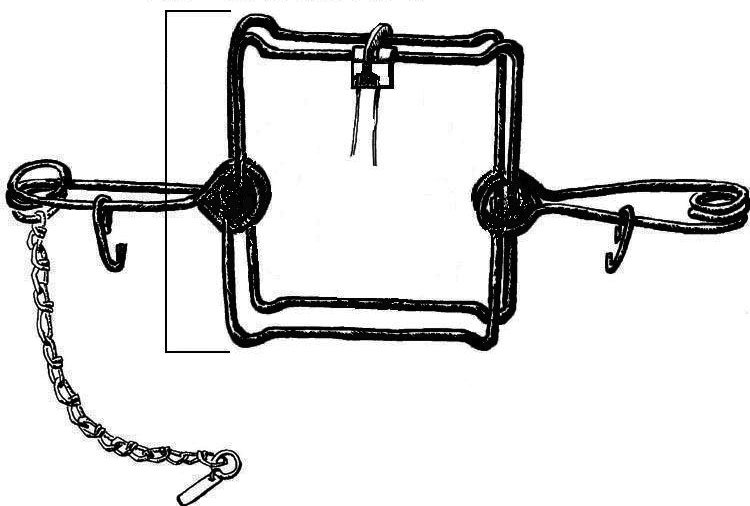
Figure 2. An example of how to measure the vertical height measurement of a trap when set.
- Set, place or operate any body-grip trap greater than 60 square inches in the following locations:
- Within 3 feet of any federal, state or county road right-of-way culvert unless completely submerged in water.
- Within 3 feet of any woven or welded wire fence.
- Within 100 yards of any building devoted to human occupancy without the owner’s consent.
- Set, place or operate any body-grip trap greater than 60 but less than 75 square inches, measured from the widest points on the outside of the jaws (Figure 3) as a:
- Water set, unless at least half of the set trap is located underwater at all times.
- Elevated set, unless the trap is placed at least 5 feet above the surface.*
- Bottom entry enclosure set, unless the entire opening of the enclosure is no more than 7 inches above the surface.
- Baited and/or scented set in or on the ground, unless the trap trigger is within an enclosure with openings no greater than 50 square inches for a 7-inch recess or an opening of 8 inches high by 10 inches wide with a 10-inch minimum recess from the enclosure openings.
Unbaited and/or unscented trail set, unless the trap is within an enclosure that provides openings no greater than 10 inches high and 10 inches wide and is recessed a minimum of 15 inches from the enclosure openings.
*Surface is the first surface that is ground, ice, crusted or packed snow or any other hard material beneath the trap or opening. For the purposes of this section, “enclosure” means any single-unit device that creates a barrier to the trap allowing entry only through designated openings.
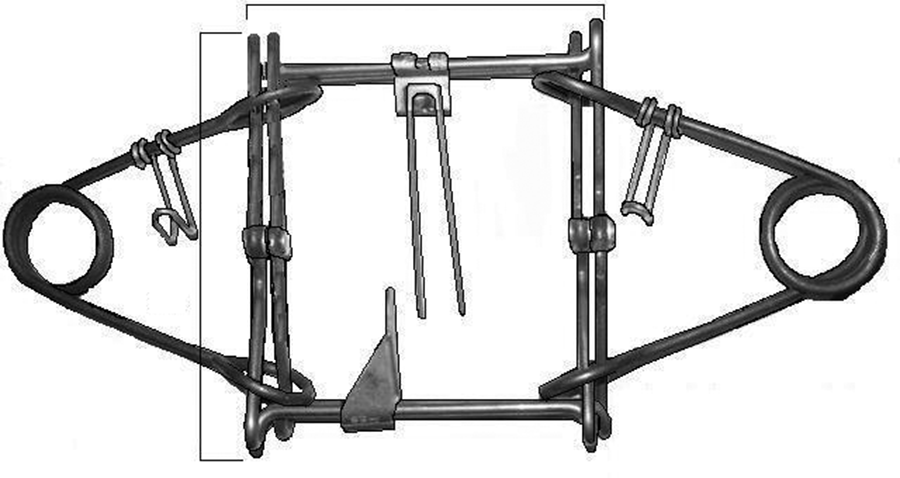
Figure 3. To determine the maximum square inches of an unset trap, multiply the maximum width of the trap jaws (A) by the height of the trap jaws (B). Body-grip trap designs vary.
- Set, place or operate any body-grip trap that is 75 square inches or larger, unless ½ of the trap is located underwater at all times.
| Body-Grip Trap Size | Dry Land | Water |
| Less than or equal to 60 square inches | Legal | Legal |
| Between 60 and 75 square inches | Legal if enclosed or at least 5 feet off the ground | Legal |
| 75 square inches or greater | NOT Legal | Legal |
Square Inches of Commonly Available Round Body-Grip Traps
| Diameter | Total Square Inches |
| 6 | 28 |
| 7 | 38 |
| 8 | 50 |
| 10 | 79 |
| 12 | 113 |
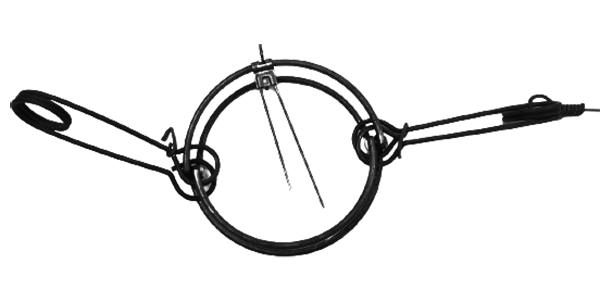
Figure 4. The diameter of a trap is the measurement from one side of the round trap to the other side.
Colony Traps
Colony Traps: Mink that are incidentally captured in colony traps placed for muskrats can be retained.
Enclosure-type devices that allow for the capture of one or more animals in a single set are only legal to use for trapping muskrat.
You may not:
- Set, place or operate a colony trap with a length exceeding 36 ½ inches or with a height or width exceeding 6 ½ inches (Figure 5). If using a round (tube-shaped) trap, the diameter cannot exceed 6 ½ inches.
- Set, place or operate a colony trap within 3 feet of any culvert.
- Place bait, including scent, in the trap or at the set location.
- Set, place or operate a colony trap that is not completely underwater.
- Use a colony trap in conjunction with any fencing, netting or other material placed in the water (including other colony traps) that create an underwater obstruction designed to force or channel any wild animal into the trap.
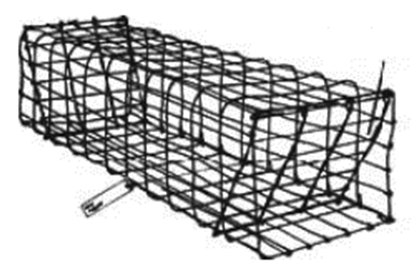
Figure 5. No person may set, place or operate a colony trap with a length exceeding 36 ½ inches or with a height or width exceeding 6 ½ inches.
Cable Restraints
You may not:
- Set, place or operate cable restraints for any species other than fox, coyote and bobcat. Cable restraints may only be placed, set or sprung during the open trapping seasons for the previously listed species.
- Use cable restraints for removal of nuisance wildlife except for during the open seasons for coyote and fox.
- Stake a cable restraint in a manner that allows the restraint device to reach any part of a fence, rooted woody vegetation greater than ½ inch in diameter or any other immovable object or stake that could cause entanglement.
- Set, place or operate any cable restraint, regardless of the size of the loop, in the following locations:
- Within 3 feet of any federal, state or county road right-of-way culvert.
- Within 3 feet of any woven or welded wire fence.
- Within 100 yards of any building devoted to human occupancy without the owner’s consent.
- Set, place or operate any cable restraint with the bottom of the loop less than 6 inches or greater than 12 inches above the first surface beneath the bottom of the set cable restraint loop (Figure 6), where the surface is ground, ice, crusted or packed snow or any other hard surface.
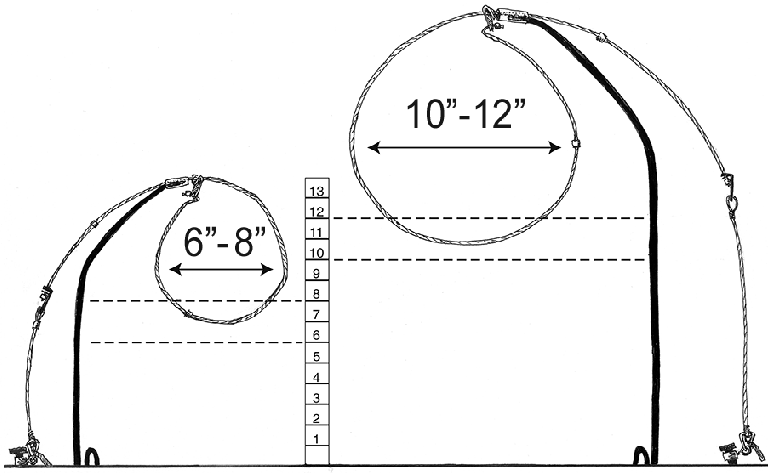
Figure 6. Loop heights and size vary depending on the intended species: coyote, bobcat or fox. Multiple swivels are recommended on a cable restraint. However, only a single swivel is required.
- Set, place or operate any cable restraint unless the noose cable and noose attachments conform to the following specifications (Figure 7):
- The cable length may not exceed 7 feet.
- The cable must be galvanized aircraft cable and include a swivel.
- The set must be non-spring activated with the exception of the foot-activated cable restraint.
- The cable must be made of multiple strands of wire, with a diameter of 3/32 inches or larger.
- The set must include a breakaway device or be stop-rated at 350 pounds or less.
- The set must include a relaxing reverse-bend washer lock with a minimum outside diameter of 1¼ inches.
- The set must include cable stops affixed to the cable to ensure that the portion of the cable that makes up the noose loop may not be longer than 38 inches or less than 8 inches.
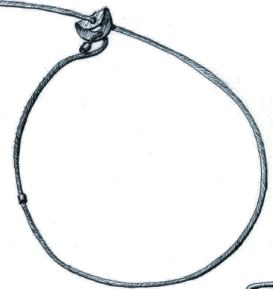
Figure 7. The maximum and minimum loop size for cable restraints is easily measured by circumference. The minimum loop stop is set at 8 inches and the maximum loop stop is set at 38 inches from the reverse-bend washer end of the cable. This results in a loop no smaller than 2½ inches in diameter and no larger than 12 inches in diameter.
Foot-Activated Cable Restraints
You may not:
- Set, place or operate foot-activated cable restraints for any species other than fox, coyote and bobcat.
- Set out or place a cable restraint, whether set or sprung, on public or private land, except during the following dates:
- Dec. 1, 2026 – Jan. 31, 2027 for bobcat
- Dec. 1, 2026 – Feb. 15, 2027 for coyote and fox
- Use foot-activated cable restraints for removal of nuisance wildlife, except for coyote and fox during the dates listed above.
- Stake a cable restraint in a manner that allows the restraint device to reach any part of a fence, rooted woody vegetation greater than ½-inch in diameter or any other immovable object or stake that could cause entanglement.
- Set, place or operate any foot-activated cable restraint unless the noose cable and attachments conform to the following specifications:
- The cable length may not exceed 7 feet, must be 3/32-inch or larger and consist of multiple wires.
- The set must include a breakaway device or stop rated at 350 pounds or less.
- The set must include a roller or barrel in-line swivel that ensures that the portion of the cable that makes up the noose loop may not be longer than 22 inches.
- The set must include an in-line shock spring.
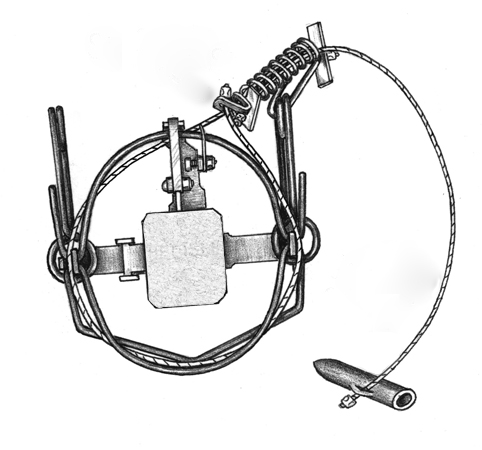
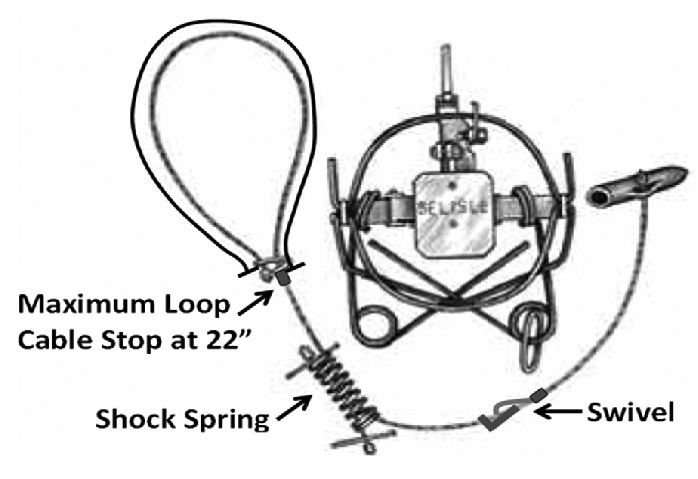
Figure 8. Foot-activated cable restraint. The maximum loop stop is set at 22 inches from the lock.
Snares
You may not:
- Set, place or operate any snare, regardless of the noose size unless half of the snare noose is located underwater at all times.
- Set, place or operate any snare, regardless of the size of the noose, in the following locations:
- Within 3 feet of any federal, state or county road right-of-way culvert unless completely submerged in water.
- Within 3 feet of any woven or welded wire fence.
- Within 100 yards of any building devoted to human occupancy without the owner’s consent.
- Set, place or operate any snare unless the noose cable and noose attachments conform to the following specifications:
- The cable length may not exceed 5 feet.
- The cable must be galvanized aircraft cable.
- The cable or wire diameter may not exceed 1/8 inch.
- The cable must be non-spring activated.
- Must include a swivel.