
Wisconsin Trapping Regulations, Fall 2026-Spring 2027
The Fall 2026-Spring 2027 Wisconsin Trapping Regulations are now available for trappers to look through. In addition to this web version of the regulations, a print copy is available at most license agent locations. Both versions contain the same information.
To use the online regulations, you must first choose a Section or click the "View All Regulations" button to see everything. You may then choose a Subsection to narrow your search and then press the View Regulation button to display the regulatory information you selected. If you'd like to see all info related to a section, select the first option ("-") to see everything under that section. You may also press Reset for a brand new search.
Please be aware that trappers are responsible for reading and following all the hunting regulations. Please read all sections in their entirety, as some of the information to trap a specific species may fall within multiple sections.
Definitions
Body-Grip Trap: a steel trap designed to allow the animal’s head, neck or torso to enter the trap opening and be held by compression of the jaws when sprung.
Cable Restraint: a cable noose used for restraining furbearing animals that does not allow the device or trapped animal to reach unfrozen water.
Cage or Box Trap: a trap that is designed to allow an animal to enter the trap enclosure, be captured and remain alive inside the cage or box-type enclosure until it can be released unharmed or reduced to possession by the operator of the trap. This trap may not be used as a water set.
Capable of Submersing: a set designed to allow the trapped animal to travel to water of sufficient depth to cause irreversible complete submersion.
Colony Trap: an enclosure-type device that allows for the capture of one or more furbearing animals in a single setting as a submersion set.
Enclosed Trigger Trap: any trap with a push- or pull-activated trigger located inside an enclosure and recessed 1¼ inches or more from an opening that is no greater than 1¾ inches in diameter. The diameter of the opening is measured as the straight-line distance across the opening between the two inside points that are farthest apart. If the opening is square or rectangular, this measurement must be made from the two opposite corners that are furthest apart.
Foot-Activated Cable Restraint: a passive- or spring-activated cable noose used for restraining furbearing animals by the foot that does not allow the device or trapped animal to reach unfrozen water.
Furbearing Animal: for the purpose of this pamphlet, bobcat, fisher, otter, coyote, raccoon, red fox, gray fox, mink, muskrat, beaver, skunk, weasel, woodchuck and opossum are included in this definition.
Green Pelts: a skin that has not been removed from the carcass or the pelt of any furbearing animal that has been removed but has not been tanned or fleshed, stretched and dried.
Jawed Trap: a trap designed to catch an animal by the foot but does not include enclosed trigger traps, cable restraints or body-gripping traps.
Non-Submersion Set: any trap set that is capable of capturing an animal and not capable of submersing the captured animal.
Raw Fur: the undressed or untanned skins or pelts of any furbearing animal that have been stretched and dried.
Reverse-Bend Washer Lock: a mechanical washer lock with a minimum outside diameter of 1¼ inches and includes a bend in the washer sufficient enough to allow the lock to relax or release pressure on the captured animal when the animal stops pulling. Pictured below.
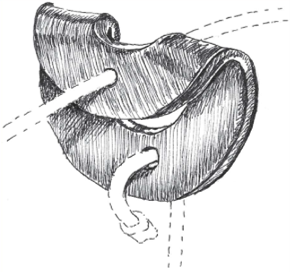
Photo Credit: Natalene Cummings
Snare: a wire noose used for restraining furbearing animals in a water set.
Submersion Set: any trap set capable of capturing an animal and capable of submersing the captured animal. A body-grip trap is not a submersion set when more than one-half of the trap is located above water after the trap has been fired.
Water Set: a trap or snare that is set or staked in a manner to permit the trap, snare or trapped animal to reach unfrozen water.
Protected Wild Animals
Protected Wild Animals
The following wild animals are designated protected and have no open season: badger, Canada lynx, cougar, flying squirrel, American marten, wolverine and any other species designated protected, endangered or threatened.
Unprotected Wild Animals
Opossums, skunks, porcupines, red squirrels, woodchucks and weasels are unprotected and may be trapped year-round by persons possessing a trapping license. A trapping license is not required for landowners or occupants trapping unprotected species causing damage or which are otherwise a nuisance.
Trap Checking Requirements
Trapping Hours: Except in state parks, it is legal to set, place, check and operate traps from 12 a.m. (midnight) to 11:59 p.m. (24 hours a day) when the appropriate season is open. See Land Type-Specific Regulations for state park trapping hour restrictions.
- A person who is not the operator of a trap and does not have a valid trapping license or authorization may check a trap. If the person physically checking the trap will also be setting, resetting or handling the traps, removing the animals from the traps, or possessing furbearing animals caught by trapping, that person shall possess a valid trapping license or authorization for the species being targeted unless that person is otherwise exempt.
- All captured animals must be removed from the set once the trap is checked unless it is an under-ice set.
| Trap Type | Non-Submersion Set | Water Set | Submersion Set | Under-Ice Set |
| Checking Requirement | Once each day* | Once each day | At least every 4 days** | None |
*Weasel boxes that use a body-grip trap have no opening larger than 1 3/8 inch in diameter and are anchored to an immovable object shall be tended within a four-day period following the last tending of the set.
**Trappers must monitor water levels to ensure the trap qualifies as a submersion set.
Remote Trap Checking
Trap checking requirements may be met by the use of technology. This includes drones when flown in a legal manner.
In order for remote trap checking to be utilized, the system must meet the following criteria:
It has a control unit or remote camera that reports the trap status to a centralized application at least once every 24 hours.
It must be able to provide notifications of trap closures or activity at the trap site and system health issues within one hour of detection via email or text-based messaging systems.
It must have on-demand capabilities for determining signal strength and battery condition via a remote system check-in.
When the control unit reports a trap closure or the camera sends a photo of an animal in a trap, the operator of the trap shall physically visit the trap within 24 hours of the time the trap was reported closed or the photo was received.
If the control unit or camera of the remote trap checking system fails to report its current status within a 24-hour check-in period or reports a system health issue, the operator of the trap shall physically check the trap within 24 hours of the last communication with the device. The trap operator must follow in-person trap checking requirements until the technology is working again.
The operator of the trap shall keep records of notifications from the remote trap checking system for as long as the camera or the control unit is in use. If requested by the department, the operator of the trap shall provide the records of notifications from the remote trap checking system.
Methods
All live furbearing animals taken during the open season for such species shall be released unharmed or dispatched immediately and made part of the daily bag. It is unlawful to keep such animals alive after their capture unless you have first obtained a DNR permit, license or authorization to possess the animal alive.
Note: A trapping license does not allow the possession of live wild animals obtained by trapping.
You may not:
- Set any trap for which a trapping license is required, unless a metal tag is attached to the trap. The tag must be stamped or engraved legibly with the name and address of the operator or with their customer ID number. Heavy-duty stamped tags are recommended. Note: Landowners trapping under the landowner exemption do not need to tag traps.
- Possess any trap for the purpose of catching furbearing animals other than a jawed trap, cage/box trap, enclosed trigger trap, body-grip trap, cable restraint, foot-activated cable restraint, snare or colony trap. Cage or box traps shall be constructed so that no additional animals may enter the trap after an animal has been captured until that animal is removed and the trap has been reset.
- Place any set or sprung trap, snare or cable restraint for furbearing animals during the closed season, unless conducting nuisance wildlife control work. Note: Using stakes or other devices to mark a trap site prior to the season opener is not allowed on DNR-managed lands and is not recommended on other public lands. It does not legally reserve the site for the person placing the stake or markers. Note: Cable restraints can only be used for nuisance wildlife control work during the closed season if a permit is issued by the department.
- Take or attempt to take beaver, fisher, mink, muskrat or otter by any means other than trapping or snaring. It is illegal to dispatch a fisher, mink, muskrat or otter by means of a firearm or spear. Beaver may be dispatched by firearm only if held in a trap or snare. Note: Landowners, occupants or their family members who live with the landowner or occupant may take beaver by firearm on their land. Shooting hour restrictions apply.
- Operate trap sets that permit the trapped animal to reach water except when the muskrat, mink, beaver or otter trapping season is open in the zone you are trapping in or unless using a commercially manufactured enclosed trigger trap.
- Set, place or operate more than 3 feet above the ground any trap or device designed or used to capture or kill birds.
- Use sight-exposed bait consisting of feathers, animal flesh, fur, hide or entrails within 25 feet of any trap, snare or cable restraint, except for enclosed trigger traps and cage traps. Sight-exposed bait is any bait that can be seen from above.
- Place bait or scent for furbearing animals during the closed season, except for efforts specific to nuisance wildlife control.
- Physically damage or destroy any mink den, muskrat house, muskrat feeding house or beaver dam (DNR Publication WM-007 Beaver Damage Control Guidelines).
- Place on the ice any artificial house or den (not including weasel boxes) for the purpose of catching any furbearing animal.
- Molest or take traps, cable restraints, snares or trapped animals that belong to someone else.
Jawed Traps
No person may:
- Set, place or operate any jawed trap with teeth unless such traps are located completely underwater at all times.
- Set, place or operate any jawed trap with a jaw spread width of more than 7 inches on dryland or 8 inches in the water from the opening of the trapping season until Nov. 30. After Nov. 30, traps with a jaw spread of 8 inches or less may be placed on both dryland or in the water.
- Set, place or operate any jawed trap with a jaw spread smaller than 5 ½ inches as a water set, except when the muskrat or mink season is open in the zone in which you are trapping.
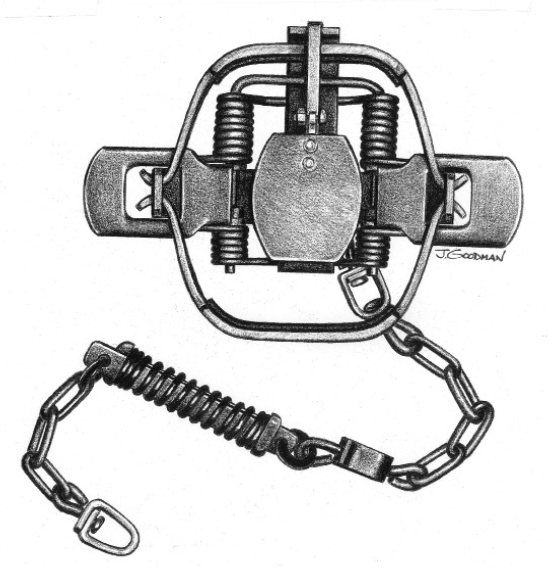
Figure 1. Spread width for a jawed trap is measured from the widest points on the outside of the jaws as shown above. Photo Credit: Joe Goodman.