
Field Operations
Forest Protection
Our Role
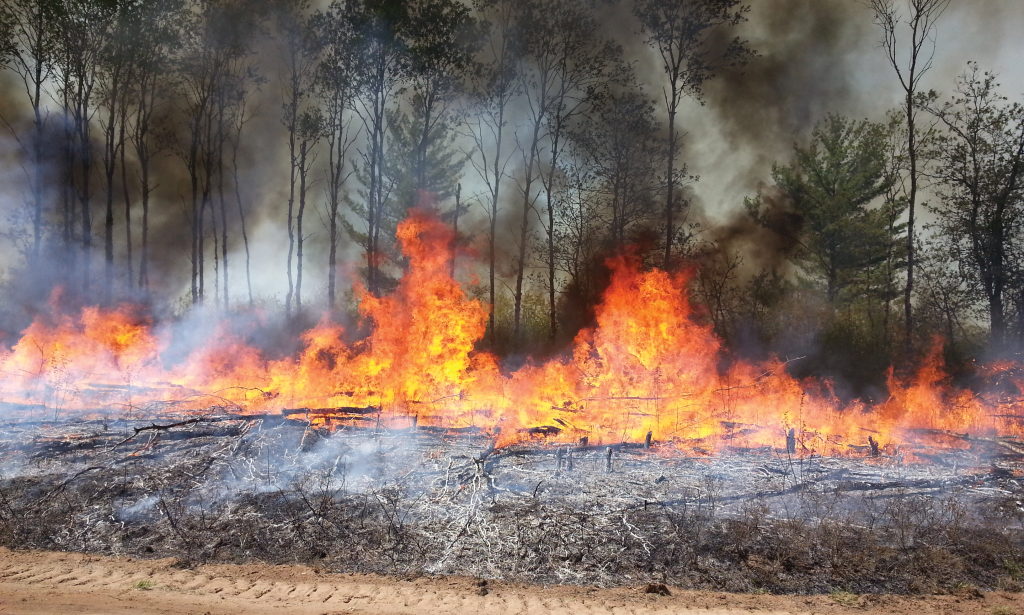
The division’s role is to prevent, detect and rapidly suppress wildland fires and strategically use prescribed fire to enhance and sustain fire-dependent ecosystems managed by the department. The division works with an extensive network of partners to provide wildland fire and emergency management support, public education, and outreach, and promote safe prescribed burning throughout the state.
Our Direction
Fire Suppression
We will work in partnership to prevent, detect, and rapidly suppress wildland fires in areas of the state that have the greatest potential for significant loss of property and natural resources.
Strategy
Increase capacity and flexibility in staffing heavy units by positioning a second statewide back-up operator at the LeMay Center.
Tactic
Dedicate a LeMay Fabrication Technician as a backup operator with a heavy unit. Move the heavy unit (Black River Falls 3) from Black River Falls to Tomahawk.
Strategy
Continue to maintain an effective and efficient fire program.
Tactic
Update the 2011 Wildland Fire Program Assessment to ensure fire program operations and resources continue to align with the program needs.
Context and Description
- The WI SFAP defines goals around ensuring all authorities make and implement safe, effective, and efficient risk-based wildfire management decisions, and maintaining our commitment to safety and ensuring people, property, infrastructure, and forested lands are resilient to wildfire.
- The division supplies a significant commitment of fire suppression equipment and staff for forest fire management in Wisconsin.
- The Fire Department Advisory Committee and local fire departments are vital partners and look to the division for wildfire training and expertise.
- Shifting an existing heavy unit resource to a central location, to serve as a second statewide backup, will provide additional flexibility to cover fire suppression needs.
Fire Prevention and Wildland Urban Interface
We will provide the public and partners with the information and resources they need related to fire prevention, community planning, and wildfire resilience to reasonably prevent as many wildland fire ignitions as possible and reduce damage associated with those ignitions.
Context and Description
- Debris burning is the number one cause of wildfire in Wisconsin. It is important the public understands the risks of wildland fire, are aware of fire prevention methods, and know where they live in relation to high fire risk areas.
- Suppressing wildland urban interface (WUI) fires requires effective coordination between government agency responders and fire departments to limit damage to property and natural resources.
- We will continue to implement the WUI Program Strategy and initiatives in Community Wildfire Protection Plans, Firewise Sites and Wildfire Risk Reduction Grants through prioritization of staff and financial resources.
Prescribed Fire
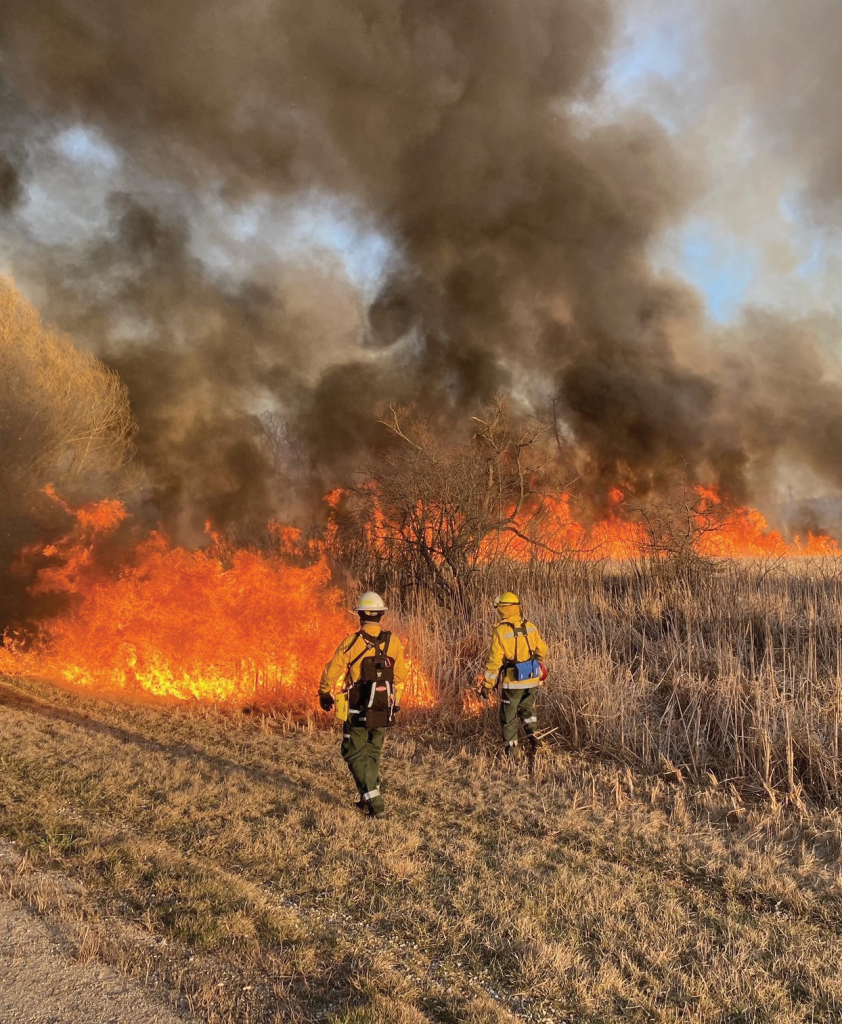
We will promote and utilize prescribed fire as an efficient, safe, and scientifically based tool to achieve resource management objectives, while implementing program efficiencies and exploring opportunities to support expansion of statewide, cross partnership, capacity.
Strategy
Adjust implementation of the prescribed burn program while maintaining the division’s current investment.
Tactic
- Focus the Division of Forestry commitment of 16,780 hours to the prescribed burn program, on state owned lands, in high priority areas defined by the Division of Fish, Wildlife, and Park’s (FWP) needs and priority landscapes. Silviculture burns on state and county forests remain division priorities and are above and beyond this commitment to FWP priority burns.
- While maintaining the current number of qualified staff in FWP, the Division of Forestry will provide administrative support to FWP for their additional priority burns.
- Work with FWP on developing priority statewide metrics and outcomes that reflect long-term investment needs.
Strategy
Explore opportunities to support the expansion of state-wide prescribed burning capacity.
Tactic
- Look to engage both private, non-governmental organizations, and other agencies within the prescribed burn community to increase burn acreage across all ownerships.
- Continue to explore expansion of prescribed burning into the growing season.
Context and Description
- The WI SFAP cites the significance of prescribed burning to the ecological integrity of fire-dependent ecosystems.
- As part of the 2016 Department Alignment, the Division of Forestry became the central administrator for the entire agency’s prescribed burning program. The division has learned much about the program over the past five years. Based on this experience and feedback from staff and partners, the division is aligning the program administration and implementation to maintain success and increase effectiveness.
Law Enforcement
We will protect Wisconsin’s forests, both public and private, from damage and destruction from forest fires and illegal timber harvesting.
Context and Description
- As part of the 2016 Department Alignment, the Bureau of Law Enforcement, now the Division of Public Safety and Resource protection, became the central administrator for the entire agency’s credentialed law enforcement programs and activities.
- The division works collaboratively with the Division of Public Safety and Resource Protection to set out objectives and expectations for specific law enforcement activities that involve timber theft, arson and other forestry specific matters while meeting our statutory requirements outlined in Chapter 26 Wis. Stats.
Emergency Management
We will provide Wisconsin with three Type 3 Incident Management Teams (IMT), one located in each division district, for the duration of a Type 3 wildfire, all-hazard natural disaster, or Governor declared emergency to ensure safe, effective, and efficient operations.
Context and Description
- The division has been and will continue to be a leader in the management of wildland fire and all-risk incidents in Wisconsin.
- The division will support other Emergency Management agencies and partners
- The division’s Type 3 IMT is designed to support extended (e.g. 24-72+ hours) complex incidents requiring a significant number of local, state, and other resources.
- We will continue our commitment to IMT staff training and qualifications, which will be further supported through the creation of the Protection Training Officer.
Action Plan Goals
Our direction supports the following State Forest Action Plan goals:
- D. All authorities make and implement safe, effective, efficient risk-based wildfire management decisions.
- E. People, property, infrastructure, and forested lands are resilient to wildfire.
- F. Fire-dependent forested landscapes are efficiently and effectively managed with prescribed fire.
- G. Wisconsin’s fire culture values the use and benefits of prescribed fire and works to remove barriers to increase prescribed burning among stakeholders.
Forest Tax Law
Our Role
The division’s role is to ensure sound forestry practices and public benefits, including public hunting, fishing and recreation, on lands enrolled in Wisconsin’s Forest Tax Law programs (Managed Forest Law, Forest Crop Law) through program administration, certification and management of Certified Plan Writer (CPW) credentials, and facilitation of technical assistance to landowners through referrals.
Our Direction
Program Management
We will provide direction and oversight for statewide administration of the Tax Law Program by developing policy, standard operating procedures, and guidance for implementation by staff and partners; and ensuring enrolled landowners meet program requirements, as established and defined in Wis. Stats. Ch. 77 and NR 46.
Strategy
Increase communication with tax law landowners.
Tactic
The Private Forest Landowner Outreach Specialist will address private forestry communications in a more holistic manner, with both non-tax law and tax law landowners in mind, providing support on the informational side of tax law communications.
Context and Description
- Forest Tax Law continues to remain a significant tool to incentivize sustainable forestry on private lands with an average of 1,600 new enrollments annually.
- Lands enrolled in Tax Law programs provide an array of benefits to the public for hunting, fishing, and other recreational activities with around 1 million acres open to the public across the state.
- Lands enrolled in tax law programs support the forest products industry by supplying a steady predictable wood resource, with an average of 1,400 harvests occurring every year.
- Increasing our current investment in communications will in turn increase landowner and partner knowledge and understanding of program requirements and responsibilities and allow for a more holistic approach to private forestry communications.
Implementation
We will align resources to provide effective and efficient administration of the Forest Tax Law programs throughout the state to meet customer needs and ensure program compliance and eligibility.
Strategy
Adjust the Tax Law program’s positions to meet growing administrative needs.
Tactic
Assess options for increasing administrative capacity within the existing program staff allocation. This may include whole FTE conversion, partial FTE conversion, and/or additional administrative workload assigned to existing Forestry Specialists.
Strategy
Integrated forestry staff will provide technical assistance to the Tax Law program by completing reconnaissance updates upon completion of a practice.
Tactic
Tax Law program will receive assistance from division integrated forestry staff to perform technical field forestry services. This request will be incorporated into annual work planning.
Context and Description
- Over 2,500 administrative Tax Law transactions occur every year and they continue to increase.
- Further specialization of staff within the section will increase efficiency and improve customer service by providing better coordination with Department of Revenue and towns/ counties for payments, while allowing Forestry Specialists to focus on the execution of sound forestry within MFL plans and implementation of mandatory practices.
- Ensuring management plans are up to date is a key component of the program and provides the most up to date information for landowners.
- The reconnaissance work that will be completed by integrated forestry staff for the tax law programs aligns with existing priority work for private and public lands.
Certified Plan Writer Program
We will certify and train Certified Plan Writers (CPWs) on program procedures and policies and connect them with landowners.
Context and Description
- There are currently 210 CPWs who are integral to the administration and execution of the MFL program.
- CPWs increase the capacity to provide service to landowners currently enrolled in or interested in enrolling in the MFL program.
Action Plan Goals
Our direction supports the following State Forest Action Plan goals:
- L. Wisconsin is a hub for diversified forest markets and non-market forest benefits.
- M. The forest products industry remains competitive in both domestic and global/international markets.
- O. Forests provide a balance of social, ecological, economic benefits across all ownerships for current and future generations.
- Q. More landowners are actively engaged in making informed decisions about the management of their woodland.
Private Forestry
Our Role
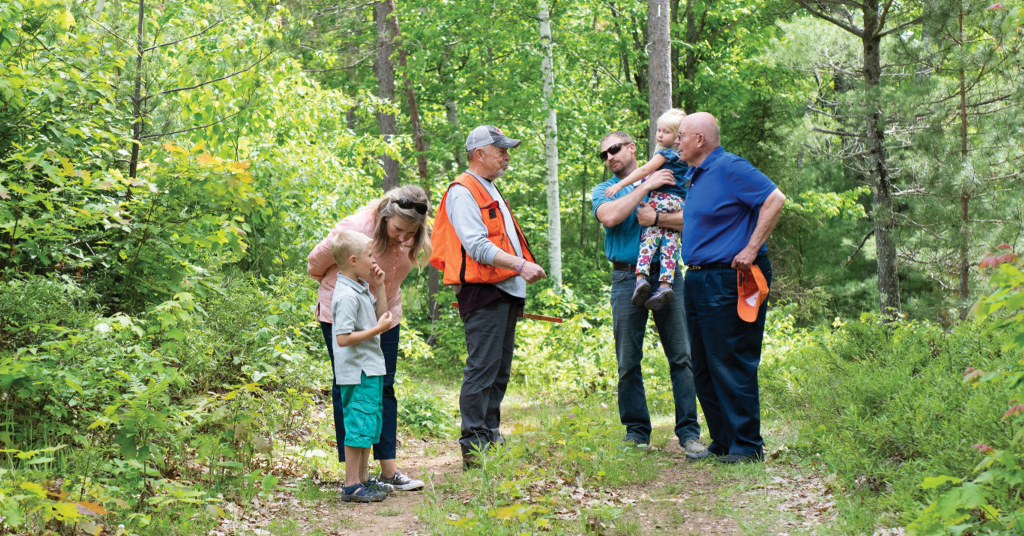
The division’s role is to encourage private landowners to sustainably manage their forests by providing technical assistance, financial assistance, and information on a wide variety of issues affecting land management decisions, and through connecting landowners to consulting foresters, other natural resource professionals and forest industry.
Our Direction
Technical Forestry Assistance
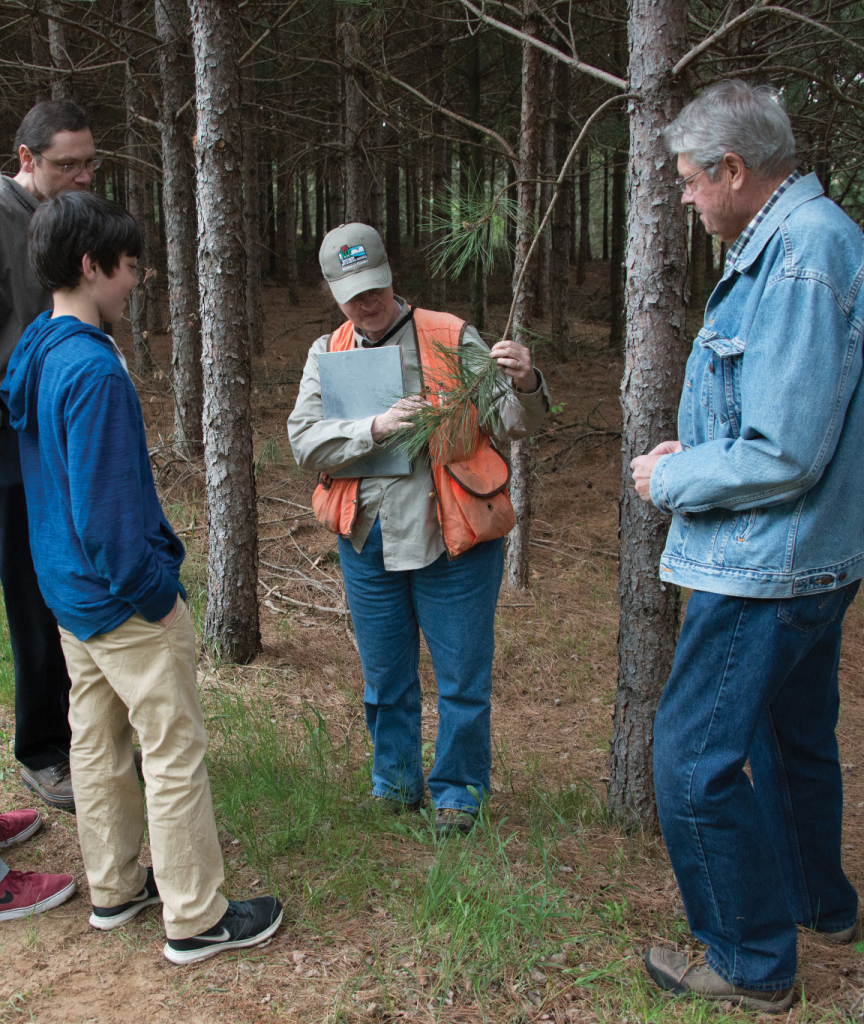
We will provide forest management services to private forest landowners, including technical assistance, expertise, advice and information on a wide variety of issues affecting land management decisions, working closely with consulting foresters, and other professionals in the forestry community.
Strategy
Prioritize technical forestry assistance in accordance with NR 1.212 Administrative Code to focus the division’s capacity to work with landowners as they move beyond a first walkthrough and towards active sustainable management on their properties.
Tactic
- Align the division’s work planning process with these activities as being the highest priority to complete for the Private Forestry program. Priority can be modified based on other division or department initiatives.
- Re-engage with landowners with whom we have done a walk-through to further cultivate our relationship and to identify and remove landowner’s barriers to action.
Context and Description
- Priority technical forestry assistance activities as defined in NR 1.212 Administrative Code, includes guidance to first time requests from landowners, timber sale guidance, administration of the Wisconsin Forest Landowner Grant Program (WFLGP) and federal financial assistance programs, landowner education, school forest assistance, and coordination of state tree nursery orders. While this list will be used as a guide to assist with focusing program work and prioritization, is not intended to limit work from other program, division, or department priorities.
- The WI SFAP identified the importance of increasing the number of landowners who are actively engaged in making informed decisions about the management of their woodland to ensure forest ownership remains a viable investment for family and institutional forest owners.
- There are a growing number of private forest landowners and corresponding increased need for technical forestry assistance, landowner education and outreach, and tools that encourage these new landowners to engage in sustainable forest management.
- The division will overtly communicate activities that will not be completed unless time becomes available.
- Over the past five years, we have increased our investment in reaching woodland owners and targeting the engagement of 20,000 landowners as a collaborative initiative with partners. This remains an important goal for the division.
- As we have evaluated our niche and the progress made towards engaging landowners, we will now increase efforts to grow relationships and assist landowners in taking action.
Partnerships
We will prioritize support and growth of partnerships with other natural resource agencies, organizations and professionals who offer services to woodland owners, improving private forest landowner access to forestry assistance by well-qualified, highly skilled professionals.
Strategy
Prioritize focus of Private Forestry program staff towards building partnerships with forestry professionals who offer services to private landowners.
Tactic
- Pursue new partnerships and build upon existing partnerships; identify the strengths and niche of each partner so as to form a forestry community that is strategically engaging landowners.
- Explore joint-funding opportunities with other agencies and organizations to hire specialists to assist forest landowners.
Strategy
Invest time and resources to continue developing the Cooperating Forester program.
Tactic
Investigate developing a mentorship program, onboard training, and increasing awareness of the complaint policy and process.
Context and Description
- There is a wide array of natural resource organizations and professionals working to increase engagement of woodland owners statewide.
- Landowners are at different stages of implementing their management plan. Expanding the capacity of professionals and honing the niche of service providers will provide increased customer service, and ultimately increased sustainable forest management.
- The WI SFAP encourages collaboration and cooperation among organizations and agencies with the goal of engaging woodland owners and creating greater community, encouraging more on-the-ground management, and strengthening Wisconsin’s forestry economy.
Financial Assistance
We will administer and provide technical assistance to State, Federal, and partner financial incentive programs that encourage landowners to implement forest management activities on their properties.
Context and Description
- Private woodland owners own over half of Wisconsin's forested land. Properly managed forests provide important social and economic benefits like clean water, wildlife habitat, aesthetics, and recreation.
- WFLGP assists nearly 450 woodland owners annually in protecting and enhancing their woodlands by providing financial support to help incentivize implementation of practices that promote sustainable forestry.
- Division staff have a critical role providing technical forestry assistance to our federal partners Natural Resources Conservation Service (NRCS) and Farm Services Agency (FSA) in implementing federal financial assistance programs.
- The division is committed to continuing to explore other funding sources and programs that can assist private woodland owners in managing their lands.
Conservation Easements
We will use the Federal Forest Legacy and Knowles-Nelson Stewardship programs as tools for strategically increasing conserved acres on large block (continuous) forest lands threatened by conversion to non-forest uses.
Context and Description
- Large contiguous acreages owned by private landowners, companies, and investment groups continue to be fragmented into smaller parcels.
- Conservation easements increase the acreage of large block forest lands open to public recreation and managed sustainably for forest products, while maintaining unique landscapes and rare species.
- Government agencies and non-profit land trusts provide a significant amount of conserved land through easement acquisition and other conservation programs.
- The division oversees over 300,000 acres of land under conservation easements, contributing to the state’s complement of outdoor recreation and providing raw material to our forest products industry.
Action Plan Goals
Our direction supports the following State Forest Action Plan goals:
- B. Forested landscapes provide connectivity between patches of forests of all seral stages and types for forest-dependent species and related natural communities.
- C. Keep forests as forests to maintain the long-term value and benefits they provide.
- O. Forests provide a balance of social, ecological, economic benefits across all ownerships for current and future generations.
- Q. More landowners are actively engaged in making informed decisions about the management of their woodland.
- R. Private forest landowners are better connected to each other through peer groups and networking opportunities.
Public Lands
Our Role
The division’s role is to work in partnership to ensure that public forested lands are sustainably managed, balancing the economic, ecological, and social benefits derived from forests through active management.
Our Direction
County Forests
We will support Wisconsin’s County Forest program through our time standard hour commitment, grants, aids, and loans, ensuring the division is providing a strategic suite of services and supporting expansion of the County Forest program where opportunities exist.
Strategy
Increase efforts to promote and support additional counties enrolled in the County Forest program.
Tactic
Allocate staff time to engage with counties where there may be a benefit to enroll in the County Forest program.
Context and Description
- The division supports the County Forest program and provides resources to help meet the ever-changing needs and challenges that are in front of the County Forests.
- Our partnership with the County Forests provides outcomes that all Wisconsin citizens value and benefit from. County forests sustain large blocks of forest land across the landscape and are significant contributors to the local and statewide economy, forest products industry and recreation economy.
- Growing enrollment in the County Forest program will promote large blocks of sustainable management and support critical initiatives such as those around climate change, protection of unique and rare forested habitats, tree planting, forest recreation, and forest carbon.
State Lands
We will provide sustainable forest management services on all department lands, adhering and adapting to property objectives and master plans, while increasing and expanding efforts in regeneration, afforestation, and timber stand improvement.
Strategy
Increase regeneration, afforestation, and cultural practices on state lands.
Tactic
- Increase training and support for contracting on state lands management work to increase department capacity for regeneration, afforestation, and cultural work.
- Improve scheduling in WisFIRS of non-commercial practices from the current “as needed” basis to better reflect the priorities on-the-ground.
- The Public Lands Specialist Team will evaluate the division’s return frequency for reconnaissance.
- Improve and increase regeneration project implementation by assigning Area Forestry Staff Specialists in each district to serve as the lead for regeneration project financials including bidding, contracting, purchase order processing and payments.
Context and Description
- By increasing and expanding efforts in regeneration, afforestation, and timber stand improvement, we will be able to 1) account for the regeneration and improvement work already being accomplished and prioritize this work going forward, 2) empower field staff to increase their efforts in regeneration/cultural practices, and 3) position the division to meet commitments such as the Trillion Trees Initiative as well as address climate change adaptation and mitigation.
- Reducing the time foresters spend on the financial aspects of regeneration projects will allow for more time to focus on developing practice prescriptions and administering the contracts, providing the opportunity to increase regeneration accomplishments.
Master Planning
We will assist with developing and implementing master plans on all forested state lands by providing forest management expertise through inventories and management options and ensuring WisFIRS data is accurate and up to date.
Strategy
The division will increase time spent organizing and coordinating forestry efforts related to the development of master plans.
Tactic
- The State Forest Specialist will lead the coordination of master planning activities for the division.
- Staff tasked with master planning will be provided orientation to the process, division priorities within the specific ecological region, tools, and other resources to effectively participate.
Context and Description
- The division plays a vital role in master planning by bringing expertise in sustainable forestry, ecological processes in forest communities and how these can positively influence desired outcomes.
- The division’s role with master planning changed in the last Strategic Direction due to the department’s Alignment efforts in 2016.
Good Neighbor Authority
We will implement the Good Neighbor Authority (GNA) program by working cooperatively with partners and contractors to administer both timber sales and conduct forest restoration projects on the Chequamegon-Nicolet National Forest (CNNF).
Strategy
Formalize the division’s implementation of the Good Neighbor Authority agreement to achieve 25 million board feet of timber projects annually and associated restoration projects.
Tactic
- Bureau specialists will manage administration of the program. Create a second National Forest Specialist, focusing on restoration projects, to work alongside the existing National Forest Specialist for a total of two bureau specialists.
- GNA workload (timber and restoration projects) will be a shared work responsibility across organizational boundaries and will be incorporated into forester and technician work planning so that it is adequately planned and accounted for.
- Each CNNF National Forest District will have a lead with a minimum of 50% GNA workload assigned (five positions). Two AFSS will also serve as leads for field restoration projects. Within the field, the remaining GNA workload will be distributed among as few positions as possible.
- The division will improve how we share information and decisions on program priorities and project implementation with interested stakeholders.
Context and Description
- Through the authorities of the Farm Bill and implementation of the GNA program in Wisconsin, sustainable forest management on national forest lands in Wisconsin is increasing.
- GNA in Wisconsin provides 1) forest products to the local economy; 2) collaboration between federal, state, and county forest managers; and 3) improved health and resiliency of forestlands and watersheds within Wisconsin.
- Partners and stakeholders at both the state and federal level have voiced a strong desire for the division to continue in its role to support the GNA program.
- The division continues to make improvements to the program resulting in administrative efficiencies.
- The division will continue to utilize all the tools (counties, contractors, partners, LTEs) to ensure the program’s success.
Certification
We will support the state’s commitment to sustainable forest management through independent third-party forest certification which ensures department, County Forest, and Managed Forest Law (MFL) Certified Group lands meet certification standards.
Strategy
The division aims to maintain forest certification in the most efficient and feasible way possible.
Tactic
The division will evaluate forest certification in cooperation with forest industry, external partners and the Division of Fish, Wildlife, and Parks.
Context and Description
- Staff and partners have cited a need to evaluate continued investment in third-party forest certification as it relates to the value of outcomes it produces.
- A variety of forest-based industries depend on access to Wisconsin’s certified wood supply to remain competitive in a global market.
- Challenges exist to manage the certification audit process for all MFL lands as landowners have a choice as to whether they want to be certified or not.
Action Plan Goals
Our direction supports the following State Forest Action Plan goals:
- A. Forests are diverse in structure, composition, function and complexity across all forested landscapes.
- C. Keep forests as forests to maintain the long-term value and benefits they provide.
- H. Forested land and ecosystem functions are maximized, while losses due to forest health threats are minimized.
- J. Forests are resilient and adaptable to future conditions.
- K. Carbon storage in forests and forest products is increased.
- O. Forests provide a balance of social, ecological, economic benefits across all ownerships for current and future generations.
- P. Wisconsin’s public forest lands provide a broad range of forest-based recreation and tourism opportunities to meet growing and changing demands.
- S. Wisconsin’s public forests are planned and managed using best available science and by an informed and engaged public.