
Applied Forestry
Forest Economics and Ecology
Our Role
The division’s role is to inform and support the sustainable management of Wisconsin’s urban and rural forest resources by providing technical expertise and performing applied research across the field of forestry in collaboration with internal and external partners.
Our Direction
Forest Science and Research
We will monitor forest management activities, conduct applied silvicultural and other field trials, and perform applied research to assure that management outcomes match goals. This includes actively exploring existing and emerging forestry issues in ecology, socio-economics, silviculture, and hydrology, and increasing our efforts in genetics and climate change, in collaboration with internal and external partners.
Strategy
Create a new genetics program to provide needed knowledge, technical expertise, and applied research for our internal and external partners to ensure that Wisconsin’s forests remain resilient and adaptable to all forms of stressors.
Tactic
Pursue federal funding to allow the division to create a new permanent Forest Geneticist
position.
Context and Description
- The Wisconsin Statewide Forest Action Plan (SFAP) recognizes that forest management practices benefit from evaluation and revision to ensure that they are adaptive and effective in maintaining, conserving, and enhancing diverse forest ecosystems including diversity of structure, composition, function complexity, and genetics.
- Inadequate regeneration of many tree species was identified in the SFAP as signaling the need to assess current management and regeneration tactics to ensure that Wisconsin’s forests remain resilient and adaptive to new and existing threats.
- The 2017 Strategic Direction reduced our investment in genetics and tree improvement with the expectation that those services could be found elsewhere. The division was unable to generate support and the needed investment in forest genetics to provide that expertise in the Lake States Region.
- The division has received feedback on the need to invest in the fields of forest genetics, tree improvement and reforestation both to meet customer needs and position the state to meet emerging challenges and opportunities in reforestation.
Informed Forest Management
We will provide technical expertise, training, and consultation in the state of the science in ecology, socio-economics, silviculture, hydrology, genetics and climate change to ensure that forest management practices are meeting management goals.
Context and Description
- The WI SFAP defines a goal of maintaining forests as forests and the associated long-term values and benefits they provide, and informed landowners and land managers are needed to achieve that goal.
- Using the best available science and research on forest management strategies helps ensure resilient forests, including developing and supporting training and professional development opportunities for landowners and land managers.
Partnerships and Outreach
We will utilize new outreach tools and methods to communicate and disseminate the best available information in ecology, socio-economics, silviculture, hydrology, genetics and climate change to our internal and external partners so that they can better understand the costs and benefits of different management actions.
Context and Description
- The SFAP promotes working with the forestry community to develop, maintain, and support opportunities for collaboration and partnerships.
- The division received feedback on the need to sustain and strengthen relationships and communicate information between landowners, land managers, foresters, and researchers.
Action Plan Goals
Our direction supports the following State Forest Action Plan goals:
- A. Forests are diverse in structure, composition, function, and complexity across all forested landscapes.
- J. Forests are resilient and adaptable to future conditions.
- O. Forests provide a balance of social, ecological, economic benefits across all ownerships for current and future generations.
- S. Wisconsin’s public forests are planned and managed using best available science and by an informed and engaged public.
Forest Health
Our Role
The division’s role is to help Wisconsin’s forestry community maintain healthy and resilient forests by providing financial assistance, technical expertise, and information in the prevention, detection, assessment, management and monitoring of insects, diseases, and invasive plants.
Our Direction
Applied Management
We will support land managers and landowners in improving forest health through the evaluation of new management techniques, development of prevention guidelines, administration of grant funds, and sharing regulatory responsibilities, while being mindful of the economic impacts.
Context and Description
- The SFAP identified implementation of effective invasive species regulatory controls and best management practices as an effective way to adaptively manage forest health threats.
- The division has an important role helping landowners identify and manage forest health threats.
- The division will continue to promote forest management plans to landowners and encourage them to use available funding sources to complete forestry work.
Prevent, Detect and Monitor
We will improve on past successes in forest health prevention and mitigation strategies through the detection and monitoring of the incidence, severity, impact and location of insects, diseases, and invasive plants that damage forests, and increasing utilization of new tools and methods for mapping and tracking.
Context and Description
- To achieve the SFAP goal of maximizing forest land and related ecosystem benefits, the division is well positioned to inform efforts that prevent infestations of invasive species before they arrive and monitor stressors that impact forest functions.
- Utilizing the resources at the modernized DNR Forest Health Lab, the division works to detect new invasive species and diseases early and respond rapidly to minimize impacts to forests. The department also works closely with DATCP in detecting, monitoring, and slowing the spread of invasive species.
Partnerships and Outreach
We will work collaboratively with partners to promote the prevention, early detection, regulation, and control of insects, diseases, and invasive plants that damage forests, increasing outreach efforts with K-12 audiences and focusing on underrepresented communities and audiences.
Context and Description
- The division is well suited to act on strategies in the WI SFAP to expand and promote education and outreach on forest health threats and to encourage and promote multi-sector forest health partnerships and collaboration.
- The division has a long history of successfully working with the USDA APHIS and Forest Service, Wisconsin DATCP, and the UW Division of Extension on a variety of forest health initiatives.
Action Plan Goals
Our direction supports the following State Forest Action Plan goals:
- H. Forested land and ecosystem functions are maximized, while losses due to forest health threats are minimized.
- I. Forest health threats are identified and managed in a fashion that is adaptive and responsive to multiple values.
- V. Urban and community forests are increasingly healthy and resilient to current and emerging stressors.
Forest Product Services
Our Role
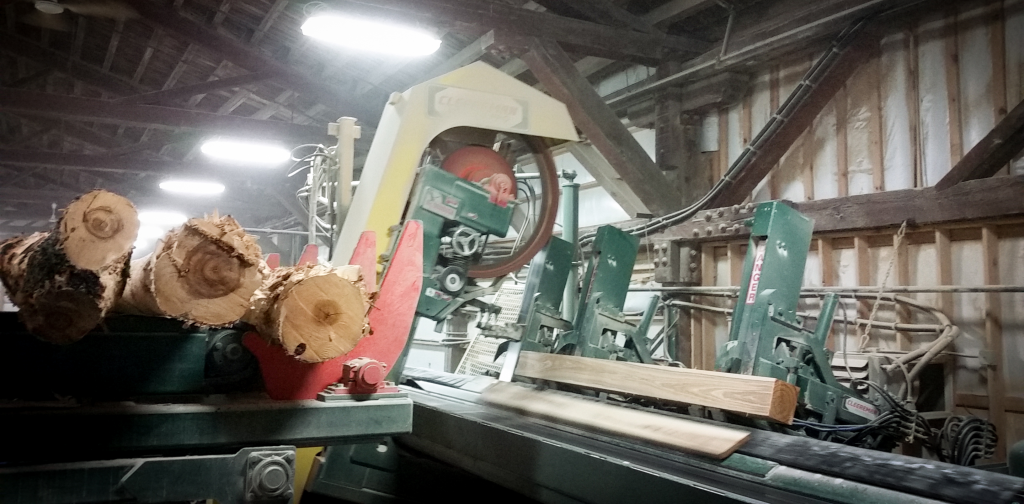
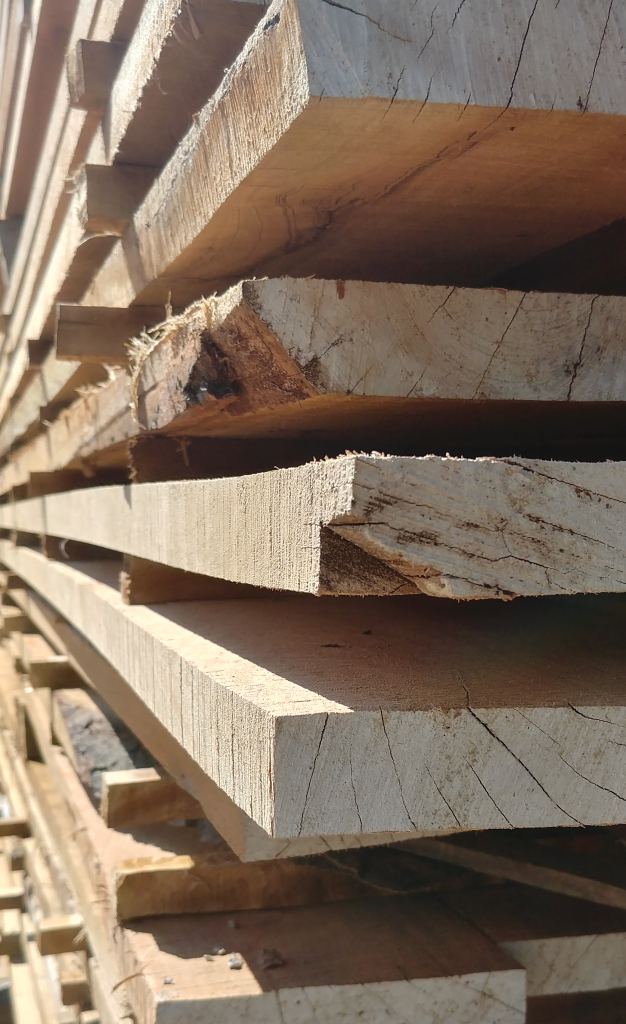
The division’s role is to foster growth of Wisconsin’s forest-based industries, while enhancing the management of Wisconsin’s urban and rural forest resources by providing technical assistance in wood utilization, market development, and statewide forest inventory and analysis.
Our Direction
Utilization and Marketing
We will provide services to retain, diversify, and grow Wisconsin’s forest-based industries, increasing efforts in providing analyses on emerging and priority needs, thereby enhancing forest markets and maximizing wood’s contribution to the state’s economy.
Strategy
Expand investigation of new and emerging forest markets in order to advise and support Wisconsin businesses.
Tactic
Focus on services that the Forest Products Team is best suited to provide and reduce duplication of services better provided by other agencies and partners.
Context and Description
- The SFAP defines a goal of establishing Wisconsin as a hub for diversified forest markets and supporting research on existing and emerging forest markets for diverse forest-based industries.
- Species and size classes of some tree species are underutilized and changes in forest composition may require forest-based industries to adapt to which species and sizes are more available and economical to use.
- The division received feedback that we should continue to support efforts to aid the industry in adopting new processing technologies and exploring forest product markets.
- The division will be working with the Council on Forestry to move forward initiatives such as the Forest Industry Roadmap.
Forest Inventory Analysis
We will administer and report on Wisconsin’s statewide forest inventory programs to assess the condition of the state’s forests and provide data to inform and monitor high-priority issues.
Context and Description
- The division is committed to providing information and tools needed by public and private landowners to inform management decisions regarding carbon and amenity-based markets, forest health concerns, deer, climate change, and other issues.
- The division received feedback that we should maintain our investment in our inventory programs, including Forest Inventory and Analysis, Urban Forest Assessments, Continuous Forest Inventory, and Forest Regeneration Monitoring.
Action Plan Goals
Our direction supports the following State Forest Action Plan goals:
- K. Carbon storage in forests and forest products is increased.
- L. Wisconsin is a hub for diversified forest markets and non-market forest benefits.
- M. The forest products industry remains competitive in both domestic and global/international markets.
- N. The forestry workforce, including rural and urban sectors, are thriving with high levels of compensation, training, safety, quality of life and diversity.
Reforestation
Our Role
The division’s role is to encourage afforestation and reforestation in Wisconsin by facilitating the availability of an adequate supply of high quality, genetically diverse and highly adaptable seed and seedlings of appropriate species and stock types at an economical price from public and private sources, and by providing solutions that improve success of afforestation and reforestation efforts.
Our Direction
Nursery and Seed Production
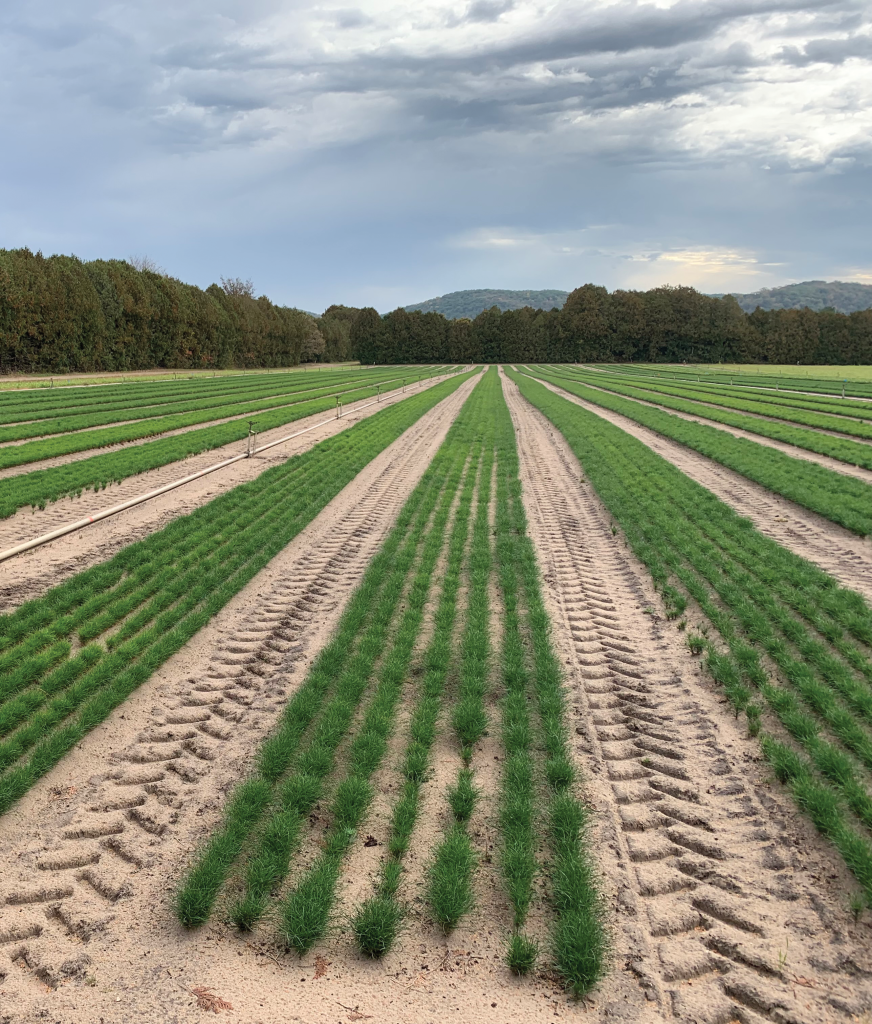
We will ensure public and private landowners have access to high quality, economically priced seed and seedlings, that are genetically diverse and highly adaptable by identifying, conserving, and managing diverse forest genetic resources and supporting high-priority regeneration and afforestation initiatives.
Context and Description
- The division received feedback that the Reforestation Program should serve as a seed bank for source-identified seed and seedlings and continue to provide seed and seedlings for both private and public reforestation efforts.
- State nursery facilities continue to scale production in relation to private sector capacity
and changing demand. - Wilson State Nursery is the primary nursery for seedling production, capable of producing approximately 7 million seedlings per year, and Griffith State Nursery has the capacity to return to production if demand necessitates. The Hayward State Nursery is the center of conifer seed cleaning operations and associated new seed orchards.
Landowner Support
We will encourage and support afforestation and reforestation efforts by providing tools and resources to landowners and by working collaboratively with partners on both urban and rural tree planting initiatives, including taking a lead role in helping coordinate the State’s Trillion Tree Pledge Initiative.
Context and Description
- The division will invest in tools and resources for landowners, land managers, and others so they can develop and maintain a depth of knowledge on reforestation.
- We received feedback that we need to ensure our investments in reforestation are setting up landowners for success by providing holistic tree planting plans which cover site preparations; tree planting and species recommendations, and steps for longer term care.
- The department is the lead agency in coordinating and administering the State’s Trillion Tree Pledge which includes planting 74 million trees in rural areas and 1 million trees in urban areas by 2030. The division is coordinating outreach and partnerships efforts with other state agencies, corporate partners, non-governmental organizations, and public and private landowners.
Tree Improvement
We will expand seed collection, seed orchard and seed cleaning efforts to support our continued effort to grow trees and conserve genetic materials that are diverse and well adapted to Wisconsin conditions and select and breed for increased productivity and tolerance to pests.
Strategy
Expand and enhance seed collection, seed orchard and seed cleaning.
Tactic
- Convert the Hayward Nursery Foreman position to a new Tree Improvement Specialist position.
- Establish a state-of-the-art Tree Improvement and Seed Cleaning Facility at Hayward
State Nursery and a Forest Regeneration Center at Griffith State Nursery.
Context and Description
- The SFAP identified the need for conservation of forest genetic resources in long-term breeding programs in order to maintain a broad genetic base that can provide future ecological benefits and accommodate potential future changes in climate, pest pressures, forest management practices, and demand for products.
Regeneration Monitoring
We will monitor the success of regeneration, both natural and artificial, to have the best information and data to inform recommended management practices.
Context and Description
- Regeneration monitoring helps to assess current management and regeneration tactics to ensure that Wisconsin’s forests remain resilient and adaptive to new and existing threats.
- For Wisconsin’s public forests to be planned and managed with the best available science and public input, the division is committed to monitoring and assessing forest conditions and providing predictable and sustainable timber harvest levels.
Action Plan Goals
Our direction supports the following State Forest Action Plan goals:
- C. Keep forests as forests to maintain the long-term value and benefits they provide.
- J. Forests are resilient and adaptable to future conditions.
- K. Carbon storage in forests and forest products is increased.
- T. Urban and community forests are more diverse, with increased tree canopy.
Urban Forestry
Our Role
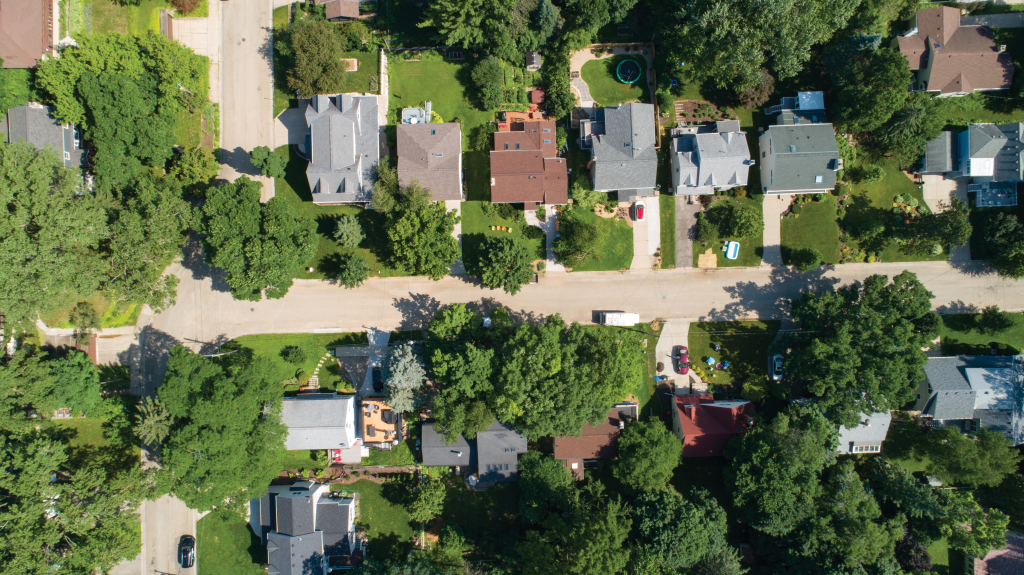
The division’s role is to maximize public benefits from urban and community forests by building the capacity of existing and new partners through direct assistance and encouraging and supporting partners in accomplishing their goals.
Our Direction
Financial Assistance
We will assist urban and community partners through State grant awards and share other funding opportunities to increase urban forestry efforts and to recover from catastrophic storm events.
Context and Description
- Equitable distribution of and access to urban forests is vital to the overall health of Wisconsin communities and their residents.
- To achieve economic, environmental, social, and public health goals, communities need the resources to plant and manage diverse and resilient urban forests.
Technical Assistance
We will increase support for urban and community partners in building and maintaining robust forestry programs and local capacity through technical assistance and education.
Strategy
Focus on the growing demand and need from communities for urban forest assessment data and to produce targeted data for urban and community forests relevant to climate change, environmental justice, health impacts and other issues.
Tactic
Pursue federal funding to create a new permanent Urban Forest Inventory Analyst position.
Context and Description
- The SFAP shared that Wisconsin’s urban forests continue to face threats from invasive plants, pests, diseases, and climate change that may change species composition, forest structure and associated environmental, social, and economic benefits. The urban forestry program works with the Urban Forestry Council to identify and move forward on shared priorities.
- Information is needed on Wisconsin’s urban forests to prioritize efforts, develop strategic community plans, and maximize associated benefits.
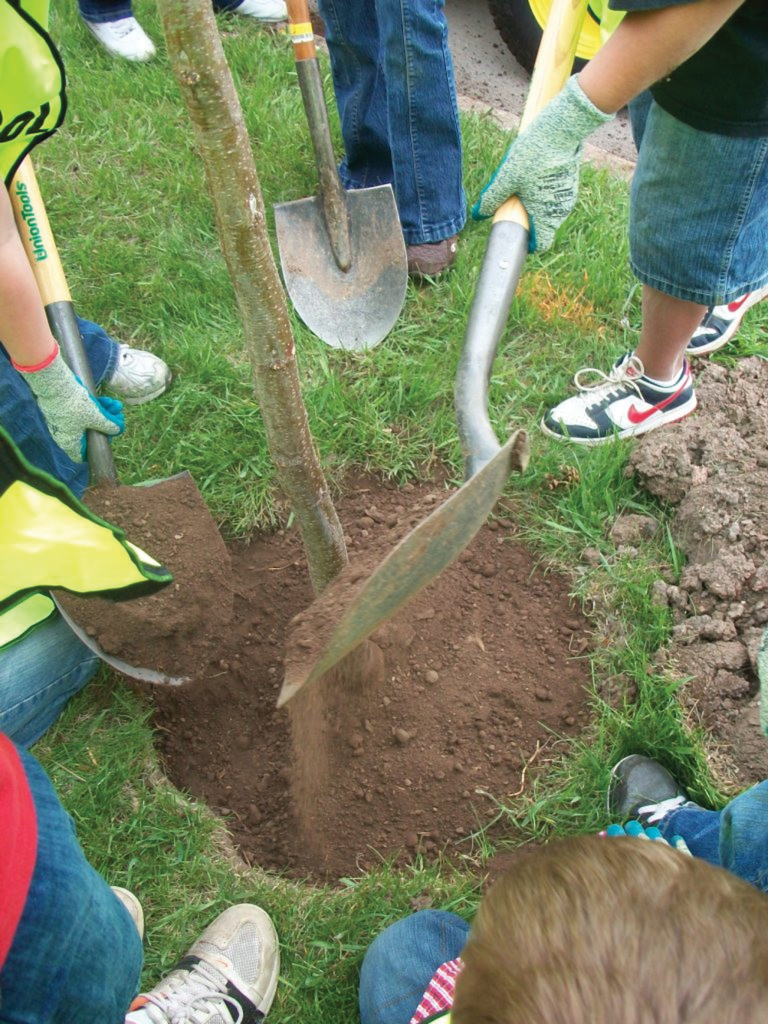
- The Wisconsin Trillion Tree pledge includes planting one million trees by 2030 in urban areas to help address environmental justice and tree equity issues. In most U.S. cities, the distribution of urban tree canopy often disproportionately benefits high income neighborhoods.
- Research has found that trees offer many positive attributes to urban residents, improving air quality and public health, reducing heat and heat illnesses, lowering utility bills, improving water quality, and reducing flooding and stormwater runoff.
- Urban tree planting combined with enhanced tree maintenance can substantially increase urban forest carbon storage and deliver additional benefits through energy savings, especially if tree planting programs are targeted to urban heat islands.
Action Plan Goals
Our direction supports the following State Forest Action Plan goals:
- T. Urban and community forests are more diverse, with increased tree canopy.
- U. Urban and community forests are increasingly used as essential tools to achieve economic, environmental, social and public health goals.
- V. Urban and community forests are increasingly healthy and resilient to current and emerging stressors.