
Business Services
Aeronautics
Our Role
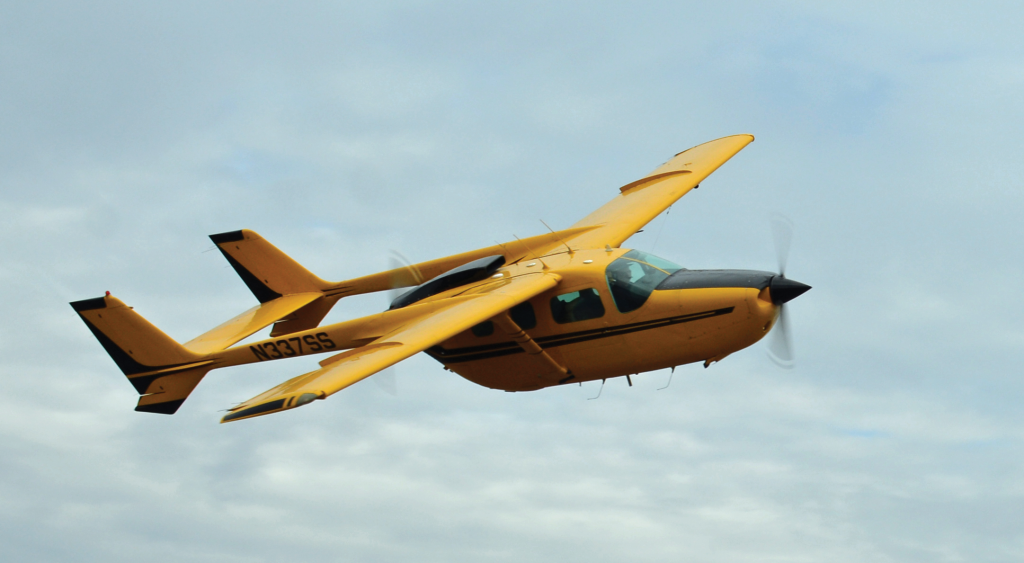
The division’s role is to support internal and external partners in fire detection and suppression, natural resources management, and public safety by safely and effectively using aircraft and Unmanned Aircraft Systems (UAS), in concert with leading-edge hardware and software.
Our Direction
Fire Detection and Suppression
We will provide aerial fire support in collaborative efforts to protect life, property, and natural resources across Wisconsin, while focusing on opportunities for efficiencies and growth in proficiencies.
Strategy
Decrease turn-around time for airplane maintenance, especially during fire season.
Tactic
Promote on-site maintenance locally at each regional hanger by working in collaboration with the Department of Administrations (DOA) to use a maintenance facility near each hangar site to conduct routine maintenance.
Strategy
Increase proficiency and consistency of air attack pilots by providing enhanced training.
Tactic
Work with the Forest Fire Protection Section to develop qualification standards and associated training for division pilots conducting fire detection and suppression support. Move all pilots towards completing the training and qualifications in a timely manner.
Strategy
Enhance aircraft consistency by modernizing and standardizing the aeronautics fleet, working in collaboration with DOA.
Tactic
Replace the existing Cessna 172 and 180/185 aircraft with Cessna 182S or newer aircraft at a rate of two per year.
Context and Description
- Feedback received identified a desire to evaluate the existing pilot qualifications as related to the most effective Wisconsin fire operations, including the use of UAS, adjust as needed, and move our pilots towards achieving the qualifications.
- Currently significant time is spent with flights to DOA in Madison for general maintenance. Conducting maintenance locally will reduce down time and increase availability during fire season and other mission critical periods, while improving efficiencies overall.
- The current fleet of department assigned aircraft are, on average, over 44 years old and comprised of four different types of aircraft. Fleet standardization will reduce aircraft transition training for pilots and fleet modernization will reduce maintenance costs, down time, and potential for mechanical failure.
Aviation Program Support
We will work to increase aerial support in collaborative efforts to help internal and external partners achieve their research, resource conservation, management, and public safety goals.
Strategy
Increase value by expanding the services provided to grow the user base of aeronautics resources, internally and externally, and increase flight hours during non-fire operational periods.
Tactic
- Implement a new marketing platform and process for regularly reaching out to DNR program and team leaders to conduct aeronautics service orientations and demonstrations.
- Development of training and support for pilots to stay current on emerging tools and technologies.
- Build capacity for increased demand by ensuring pilots are available and have a mission ready posture at each hanger and establishing a reasonable and understandable rate structure.
Context and Description
- The Aeronautics Team is historically very busy flying during fire season. During non-fire season, there are opportunities and skillsets to shift workload to better meet agency and partner goals.
- We received feedback regarding the potential to increase awareness of aviation services within and outside the division.
- Increasing services provided to the division and partners will advance efforts in achieving the division’s purpose and department’s mission.
Action Plan Goals
Our direction supports the following State Forest Action Plan goals:
- D. All authorities make and implement safe, effective, efficient, risk-based wildfire management decisions.
- I. Forest health threats are identified and managed in a fashion that is adaptive and responsive to multiple values.
Budgets and Grants
Our Role
The division’s role is to provide a wide array of technical financial support to internal and external division customers on forestry financial topics and ensure compliance with the state statutes and laws governing our operations.
Our Direction
Grant Management
We will manage our state and federal grant programs in support of the division’s purpose.
Context and Description
- The division manages a federal grant portfolio of over 30 awards, totaling more than $7 million.
- The recipients of state and federal grants, local units of government and nonprofits, are valuable external partners when it comes to managing Wisconsin’s forests.
- These grants bring in additional fiscal resources to the department and our partners to enhance our ability to protect our forests from wildfire and disease infestation, support our urban and community forests, connect with and assist forest landowners, and strengthen our external partnerships.
Budget Management
We will manage operational and secondary funding sources to utilize our available fiscal and human resources to the greatest extent possible while ensuring compliance with laws and regulations.
Context and Description
- Managing the division’s budget is achieved through coordination of budget initiatives including capital development, allocating and managing budget allotments, conducting fiscal analyses, and auditing programs and processes.
- The division administers over $65 million in annual funding, across 21 appropriations, from the state’s conservation fund as well as federal sources. These funds are subject to various state statutes and laws, federal regulations, and administrative code and handbooks.
- Maintaining compliance with these rules and regulations, while maximizing the utilization of these funds, is critical to supporting the division’s core work.
Timber Sale Financial Expertise
We will provide centralized statewide expertise and support to foresters for timber sale financials on public lands (state, county, federal GNA), ensuring consistent use of best practices and compliance with laws.
Strategy
Standardize the process across areas for how timber sale financials are handled.
Tactic
- Decrease investment by the Budget and Grants program in conducting specialized timber sale financial work for the Flambeau River State Forest by reallocating 0.7 FTE to other division priorities. Transition this work to the field foresters.
- Continue to invest in and support The Wisconsin Field Inventory and Reporting System (WisFIRS) timber sale financial system so that field foresters can effectively conduct timber sale financials.
Context and Description
- The division administers the department lands timber sale programs that generate several million dollars in revenue annually to the conservation fund, which helps support the core work for the Fish, Wildlife and Parks Division (FWP) and the Forestry Division.
- The timely and accurate invoicing for these timber sales and use of consistent practices with our many contractors helps support these important relationships with the timber industry.
- The shift towards centralizing support and localizing process moves the division towards standardization of how timber sale financials are handled – by the field foresters. This workload is already accomplished by most field foresters and is considered in the allocation of field foresters and annual work planning.
- The Budget and Grants section is well positioned to continue to be the subject matter experts and a statewide resource in supporting foresters in doing timber sale financials and contract work.
- The division also ensures our county forest partners are adhering to best practices and maintaining statutory compliance, which benefits the statewide timber program
Action Plan Goals
Our direction supports the following State Forest Action Plan goals:
- O. Forests provide a balance of social, ecological, economic benefits across all ownerships for current and future generations.
Division Effectiveness
Our Role
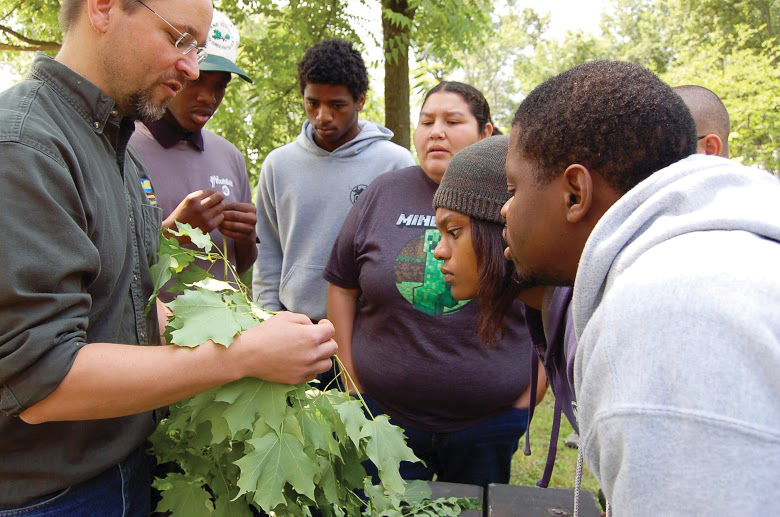
The division’s role is to ensure alignment between our management, operations, strategy, and culture. We achieve this by promoting an inclusive workplace and an engaged, skilled, and accountable workforce. We advance the division’s purpose through planning, training, leadership team support, partner outreach, education, and communications.
Our Direction
Planning
We will facilitate all long-term planning, evaluation, and monitoring efforts directed by Wisconsin’s State Forest Action Plan and the division’s Strategic Direction, while supporting program-level action planning, adaptive management, and process improvement.
Context and Description
- Staff in the division have communicated their desire for more support at the action planning level, as they navigate implementation of the division’s Strategic Direction.
- Staff identified the need to improve the division’s work planning system to better connect the planning tool with the division’s priorities, performance measures, and operations.
- We will also guide the division’s use of new and emerging tools and technology that support quicker and more user-friendly work planning and performance measure monitoring and evaluation.
Communication, Education and Outreach
We will support existing partnerships, and look to leverage new partnerships, communications tools, and educational techniques that support our staff and partners’ work and build awareness of the importance of sustainably managing Wisconsin’s forests, while expanding on how we connect with traditionally underserved communities.
Context and Description
- The feedback we have received from both staff and partners identified the need for increased collaboration and partnering to advance vital goals related to diversity, equity, and inclusion practices.
- We will expand our uses of new web-based, digital, and other media tools and platforms to share our messages to align with emerging technology advancements.
Workforce Development
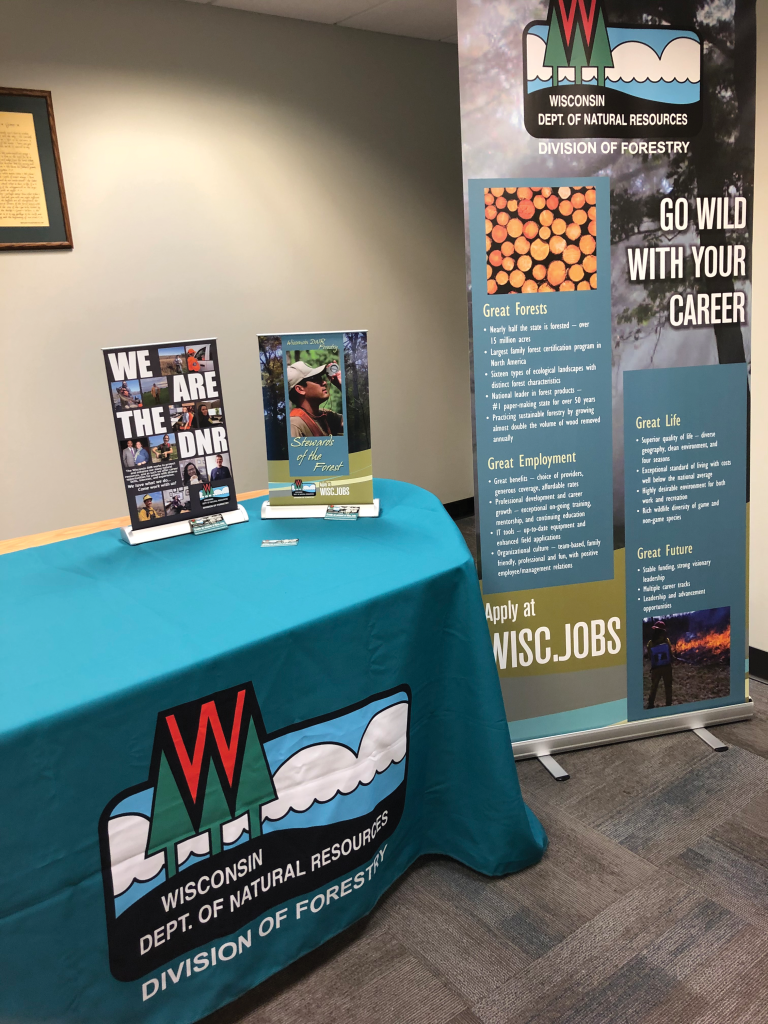
We will support a diverse, high-performing and engaged forestry workforce from recruitment to offboarding. We will increase coordination and implementation of core DEI efforts and action planning within the division, while integrating with other DNR and partner efforts.
Strategy
Enhance our recruitment, retention, and offboarding efforts and increase focus on division-wide DEI coordination.
Tactic
Increase the amount of time allocated in the Workforce Development Specialist position that focuses on division-wide coordination of DEI efforts.
Context and Description
- The WI SFAP identifies the need to promote and support all career pathways into the forestry workforce, including a continuum of existing and new education efforts and initiatives for students to learn about forests and forest related careers.
- As we work to advance our division’s purpose and better meet the needs of our customers, we want to expand the way that we connect with traditionally underserved communities.
- We plan to build on current efforts to enhance our recruitment, retention, and offboarding efforts, with an eye on DEI opportunities and program enhancements.
- Getting excited about a career in forestry starts at a young age and we will be working collaboratively with our partners to connect with youth and expand awareness about forestry.
Training
We will increase capacity to better serve a comprehensive suite of professional development experiences for our staff.
Strategy
Improve and increase coordination and delivery of fire, law enforcement, Incident Qualification System (IQS) and Incident Management Team (IMT) training to better support professional development of all staff.
Tactic
- Create a new Forest Protection Training Officer position through reallocation; located in the Forest Fire Protection Section.
- Increase effort and focus of the Division Learning Specialist on division-wide professional development and instructor support.
Context and Description
- The training needs related to fire, law enforcement, and IMTs are complex and highly impacted by national standards, regional partnerships, and the need for staff to gain critical experiences as part of meeting their qualification standards.
- We heard from staff that there are unmet needs for critical employee development initiatives like a leadership training, division-wide training planning and support, new supervisor training, and course evaluation and modernization.
- The division will need to expand upon our use of learning management systems, emerging learning tools and software, and digital platforms to ensure that our staff have an effective and accessible learning experience.
Action Plan Goals
Our direction supports the following State Forest Action Plan goals:
- N. The forestry workforce, including rural and urban sectors, are thriving with high levels of compensation, training, safety, quality of life and diversity.
- Q. More landowners are actively engaged in making informed decisions about the management of their woodland.
- S. Wisconsin’s public forests are planned and managed using best available science and by an informed and engaged public.
Equipment Research and Development
Our Role
The division’s role is to support the safety and effectiveness of department staff and external partners by developing, maintaining, and providing exceptional quality forestry equipment and supplies, and administering the department’s statewide radio communication network and user devices.
Our Direction
Radio Communications
We will administer the department’s statewide radio communication network in partnership with the Department of Transportation (DOT), including equipment acquisition and maintenance, and policy development and implementation, while increasing direct program support and expertise.
Strategy
Provide direct program support and expertise for radio communication needs.
Tactic
Utilize contracting with private vendors to maintain all user devices and infrastructure not managed by DOT or DNR radio program staff.
Strategy
Establish a new MOA with DOT to define the scope of radio network and device management responsibilities between DNR and DOT.
Context and Description
- Under the new MOA, DOT will be focusing their work on networked towers. Division radio specialists will assume management of all user devices and will fill that need by contracting with private vendors.
Equipment Research and Development
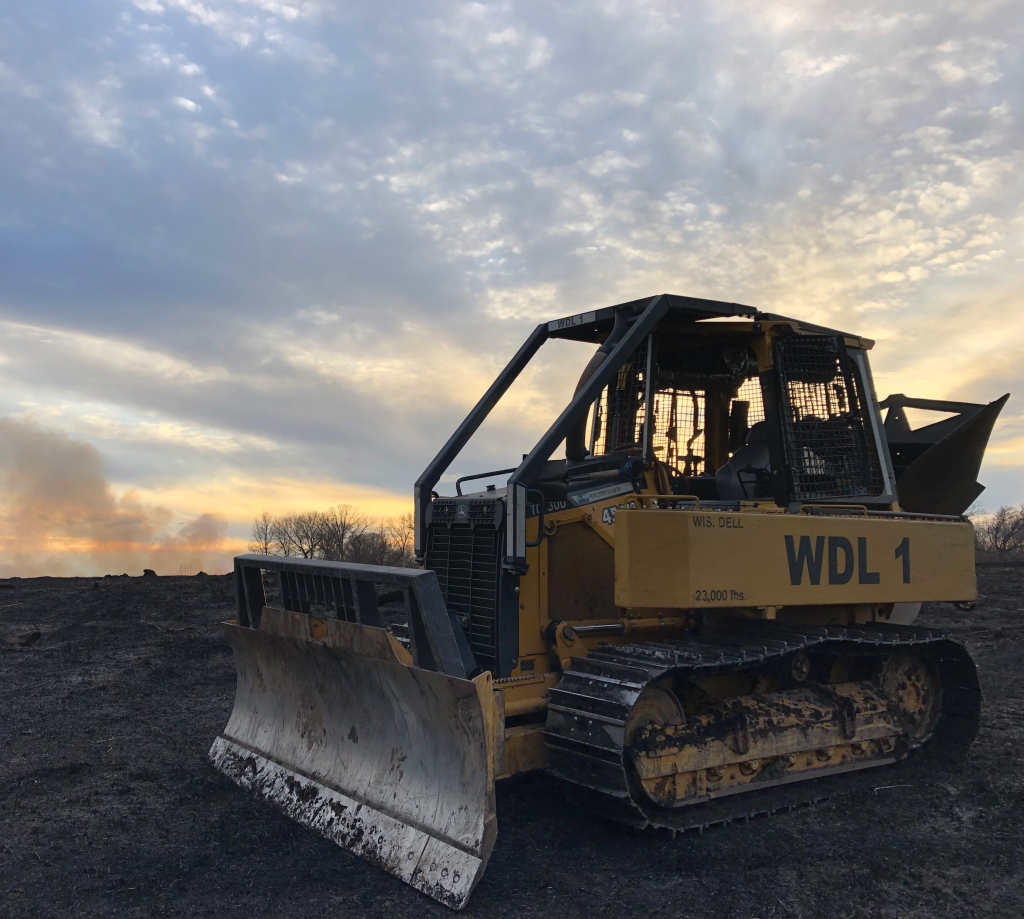
We will design, fabricate, provide, and maintain high-quality equipment and supplies including wildland fire engines, tractor plows, low ground units, utility terrain vehicles (UTVs) and personal protective equipment (PPE), while working to improve services provided.
Strategy
Improve efficiency of equipment fabrication and maintenance to consistently meet replacement schedules, align planned maintenance with field work schedules, and shorten maintenance turnaround.
Tactic
- Consolidate fire management responsibilities in three LeMay fabrication technician staff at 25% - one primary heavy unit operator and two statewide backup heavy unit operators.
- Utilize Limited Term Employees or contracting to fulfill basic LeMay facility maintenance.
Context and Description
- The division utilizes predictive and preventative maintenance methods and regularly scheduled inspections to minimize field failures, costly repairs, and unplanned down time. This equipment is critical to ensuring the safety of our staff in performing their work.
- Currently seven LeMay field mechanic and technician staff have fire duties in their position descriptions, some at 25% (protective status) and some at 15% (non-protective). Consolidating to three staff with 25% fire (protective status) will help those staff focus on fire and the remaining staff to focus on equipment fabrication and repair.
- Currently much of the LeMay facility maintenance work is done “in house”. By contracting out the basic tasks it will allow the LeMay technicians to maximize their skill sets in equipment fabrication and repair.
Action Plan Goals
Our direction supports the following State Forest Action Plan goals:
- D. All authorities make and implement safe, effective, efficient, risk-based wildfire management decisions.
- E. People, property, infrastructure, and forested lands are resilient to wildfire.
- F. Fire-dependent forested landscapes are efficiently and effectively managed with prescribed fire.
Technology Services
In November 2021, the department Secretary’s Office announced an initiative to centralize information technology (IT) staff and services across the department under a new DNR IT Program. The goal of consolidating IT services is to focus efforts on creating a single IT vision that reduces the overall cost of IT, increases department-wide data integrity, speeds up decisions and improves the flow of technical information across IT professionals throughout the agency. While all Forestry IT staff will report centrally to the new DNR IT Program, most, but not all, of the division IT staff will continue to work with and provide primary support for their currently assigned programs to leverage existing relationships and ensure continuity of operations.
Our Role
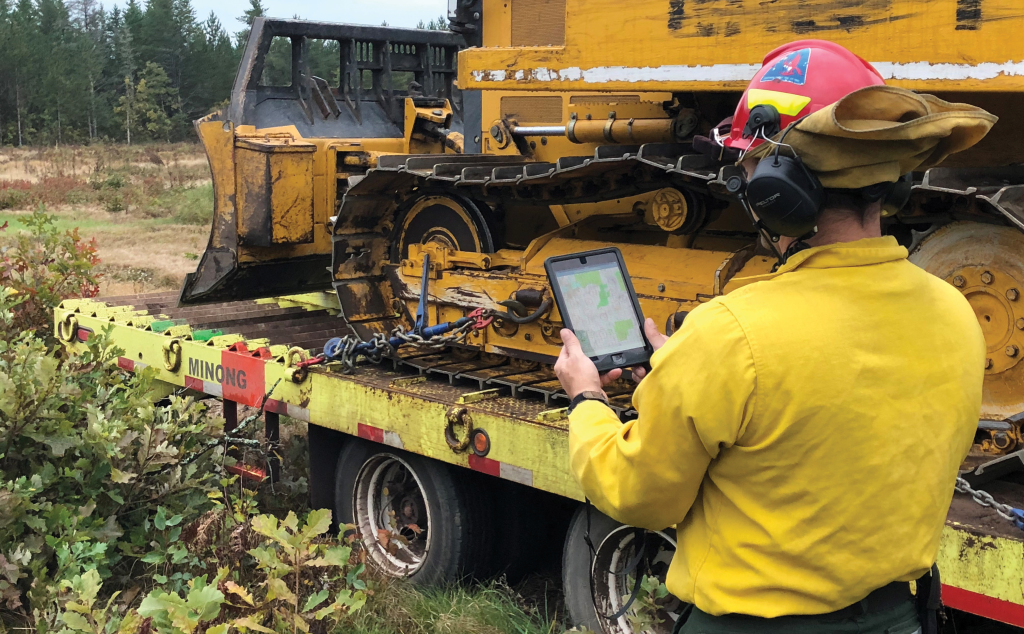
The division’s role is to work in partnership with DNR IT to advance the use of technology to provide IT/GIS and web applications, data, tools, and services, along with training and support, to forestry staff and customers to meet the division’s purpose. This is accomplished by ensuring technology, including hardware, software, mobile devices, web, and SharePoint sites are functional, understood by customers, and provide value while aligning investments with benefits.
Our Direction
The division will promote, support, and invest within DNR IT for the applications, assets, and support needed for our staff and partners to be successful. The division will be an active partner in coordinating and communicating business needs, prioritizing, and participating in projects, testing products, and providing support and training of our staff and partners in the use of these tools to manage division programs. Primary areas of investment and collaboration will include:
Custom Applications and Support
We will collaborate across multiple technical and programmatic disciplines in describing business needs, identifying priorities, performing analyses and custom developments, managing projects, and adhering to best practices.
Context and Description
- The division and partners rely on an array of custom IT/GIS web applications, SharePoint sites, websites, desktop & mobile tools, data, and services to meet our complex business needs, including supporting customers in their use. Key systems that will be supported include:
- The Wisconsin Field Inventory and Reporting System (WisFIRS) Public Lands, and Forest Metrix. These applications are used to manage core timber sale, land management, and habitat management business functions on department lands and Wisconsin’s County and National Forests by department staff and partners. GIS is integrated throughout the system.
- WisFIRS Private Lands. This application manages core business functions for private forest management in Wisconsin, serving hundreds of DNR staff as well as our private consulting forester partners. Core functions are to store and process data collected in the field, plan for and track completed practices, report accomplishments, and calculate the financial aspects of the programs including moneys collected and dispersed to towns.
- Tax Law Management and Administration applications including WisFIRS Private Lands, Private Forest Lands Open for Public Recreation, and Forestry Assistance Locator. These applications manage core tax law business functions including ensuring private lands are adhering to statutes, lands are sustainably managed, and by providing the public and landowners tools to identify forestry support and recreational opportunities.
- Fire Management and Prescribed Burn applications including the Individual Forest Fire Reporting System (IFFRS), Incident Qualifications System (IQS), WI Burning Permits, WisBURN, and Fire/Rx Burn Dashboards. These applications allow staff to manage wildland fire emergency response and prescribed burn implementation, manage staff technical qualifications, issue landowner burning permits and restrictions, and provide information to the public about real time and historic fire occurrences.
- eCommerce for the State Nursery and LeMay Center. These future applications would provide an eCommerce solution for the department’s Forestry Equipment R&D Center, to sell wildland fire equipment, and the State Forest Nursery to sell tree and shrub seedlings to their customers, while offering modern conveniences such as point of sales, electronic storefronts with an inventory system, and electronic payments functionality.
Hardware/Software Management and Support
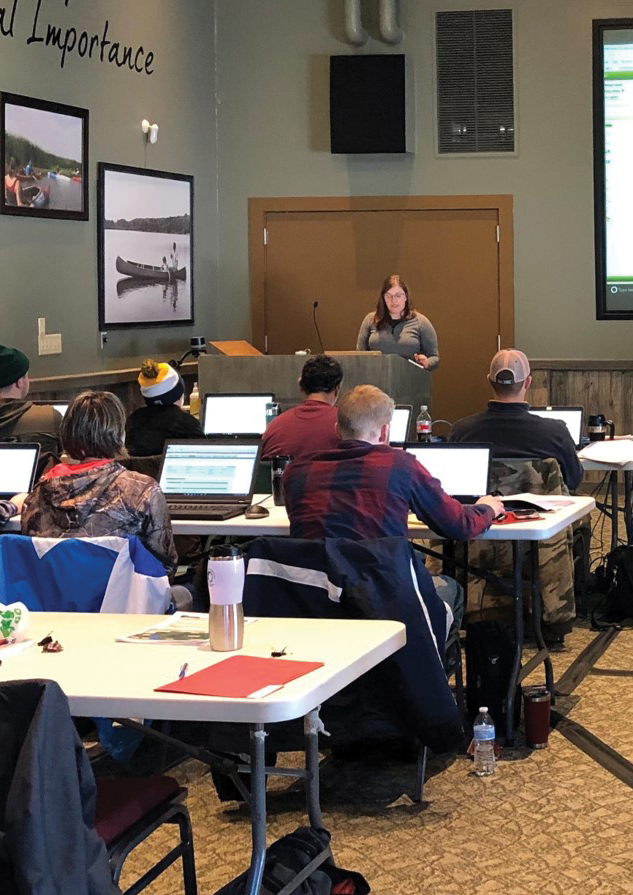
Division staff rely on the procurement and support of computer hardware, mobile tools, and peripherals, as well as data and services to proactively meet business needs. We will partner with DNR IT in identifying needs, securing resources, and providing needed training.
Context and Description
- For staff to be successful in, technology assets must be available, functioning and supported. Key resource examples include:
- Laptop computers with peripherals to maximize the efficiencies of a distributed workforce.
- Mobile hardware to further advance the efficiencies of access to and collection of data in remote locations in the field.
- GIS software to illustrate relationships between resources and highlight opportunities and efficiencies for management and conservation.
- Network connectivity to allow updating and maintenance of mobile technologies as well as providing a safe and secure network in field offices.
Action Plan Goals
Our direction supports the following State Forest Action Plan goals:
- D. All authorities make and implement safe, effective, efficient, risk-based wildfire management decisions.
- F. Fire-dependent forested landscapes are efficiently and effectively managed with prescribed fire.
- Q. More landowners are actively engaged in making informed decisions about the management of their woodland.
- S. Wisconsin’s public forests are planned and managed using best available science and by an informed and engaged public.