
Great Lakes Beach Safety
Wisconsin State Parks
The beaches of the Great Lakes are popular spots for recreating, sunbathing and of course, swimming. It's important to remember that the Great Lakes are also large, powerful water systems prone to dangerous currents that can threaten even the most experienced swimmer. Rip currents, high waves and other dangerous conditions can occur along beaches, near the outlets of rivers and near structures, such as piers and breakwalls. According to data from the Great Lakes Surf Rescue Project, there have been nearly 1,500 Great Lakes drownings since 2010. If you're visiting Wisconsin's state park beaches, here are some tips to remember for staying safe in water.
Great Lakes Beach Forecasts
Beach forecasts are available on the National Weather Service website. These forecasts contain a daily swim risk, which is based on that day's threat of high waves and dangerous currents.
Types of currents
In the Great Lakes, swimmers are most likely to encounter one of five common currents: rip currents, structural currents, channel currents, longshore currents and outlet currents (river channel).
Learn about Great Lakes currents.
How to escape a current
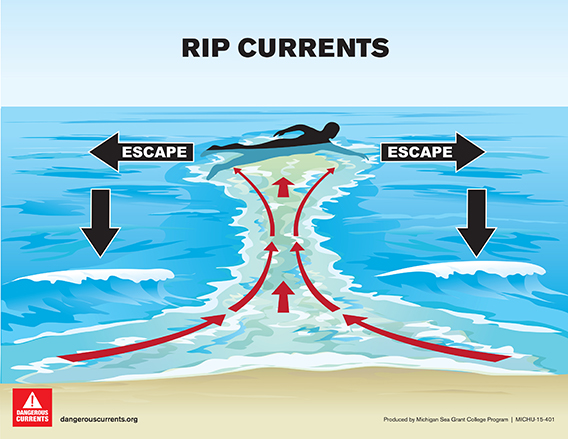
© Michigan Sea Grant
If you find yourself caught in a current, follow these three steps:
1. FLIP
- Flip over onto your back and float.
2. FLOAT
- Keep your head above water.
- Calm yourself down from fear and panic; don't panic.
- Conserve your energy.
3. FOLLOW
- Follow the safest path to safety. Do not fight the current.
- Follow the current to assess which way it's flowing. Swim perpendicular to the flow.
- If you're too tired to swim, continue floating and try to signal for help.
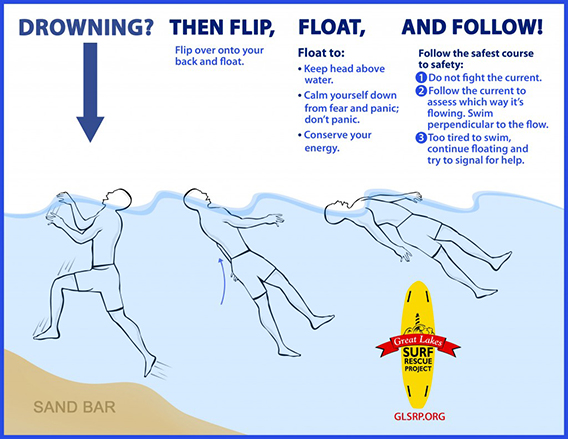
© Great Lakes Surf Rescue Project
Additional Safety Tips
Remember: there are no lifeguards (beach guards) at Wisconsin state park properties.
- In an emergency, immediately call 911.
- Never swim alone. Always keep close watch over children and bring U.S. Coast Guard-approved life jackets, especially for new and inexperienced swimmers.
- Keep close watch of children. Stay within arm's reach and have them wear a U.S. Coast Guard-approved life jacket.
- If you see someone in trouble, call for help and throw a lifesaving device or anything else that floats. Avoid entering the water if possible and, if you must go, wear a life jacket.
- Use caution or avoid the use of recreational flotation devices when strong offshore winds are present.
- During certain weather conditions, the force of water and waves crashing over the surface can easily wash someone off a structure, such as rocky areas along the shoreline.
- Check local weather reports and lake conditions before and during your beach trip by visiting the National Weather Service website.