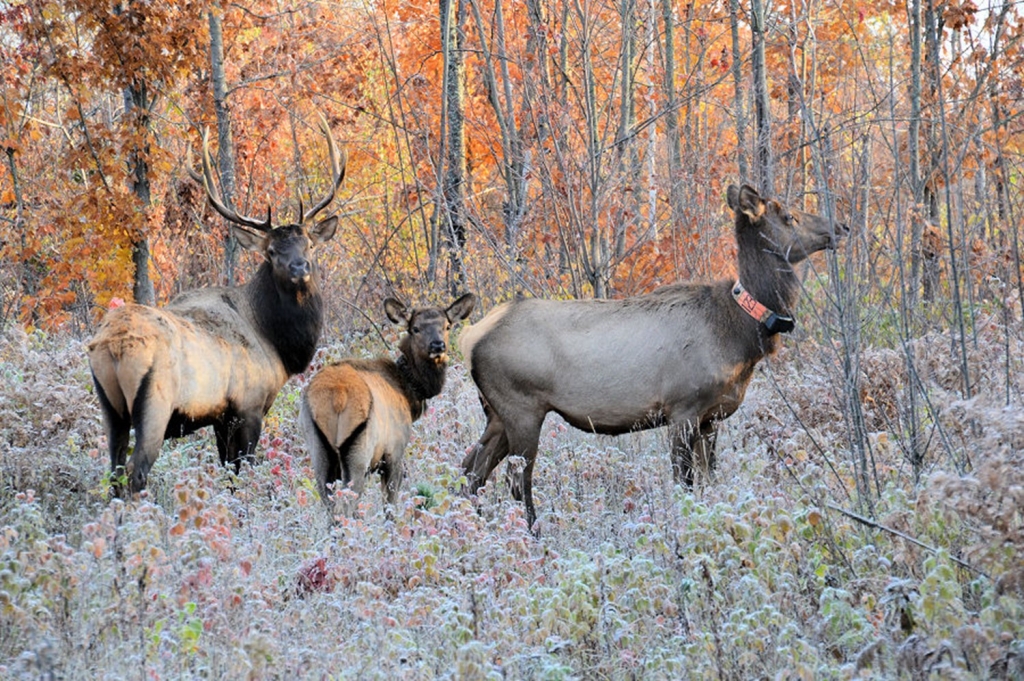
Elk in Wisconsin
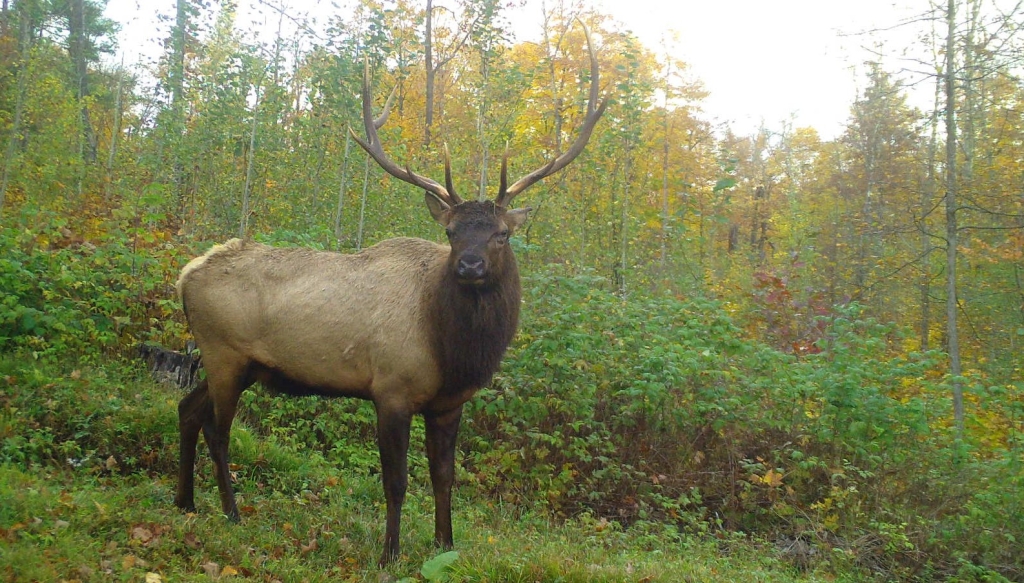
Once widespread here and across North America, elk were eliminated from Wisconsin in the 1880s due to unregulated hunting and habitat loss. Over 130 years later, they once again live in our state's central and northern forest regions. From a population of 25 elk reintroduced in 1995, and with the help of the second reintroduction effort that started in 2015, the state's total elk population has now surpassed 400 animals.
Thanks to the support of multiple partners and the backing of Wisconsin citizens, the bugle of rutting September bulls is back and here to stay!
Elk Biology
Elk (Cervus canadensis) is one of North America's most significant deer family members (Cervidae), second only to moose. Wisconsin's native elk (before European settlement) belonged to the Eastern elk subspecies (C. c. canadensis), believed to have gone extinct during the late 1800s. The Rocky Mountain sub-species (C. c. nelsoni) was later used in reintroduction efforts in Wisconsin and other eastern U.S. states.
Elk is one of three members of the deer family that live in Wisconsin regularly, with the other two being white-tailed deer (Odocoileus virginianus) and moose (Alces alces). Elk are approximately three times larger than deer and about two-thirds the size of moose. Adult elk are light tan-colored with a darker mane on their neck, a distinct buff-colored rump patch and a stub tail.
Elk vary in size by sex. A mature cow stands approximately 4 feet 6 inches tall at the shoulder, 6 feet 6 inches in length from nose to tail and weigh 500-650 pounds. In contrast, a mature bull may stand 5 feet or more at the shoulder, stretch over 8 feet long and weigh 600-900 pounds. Wisconsin elk calves typically weigh between 35 and 40 pounds at birth. Calves are born with white spots to help them blend into their surroundings during their first few months. Elk are also a herd-associated species that have many vocalizations and unique characteristics.
For more information on elk biology, physical characteristics, behavior and more, visit the Rocky Mountain Elk Foundation webpage.
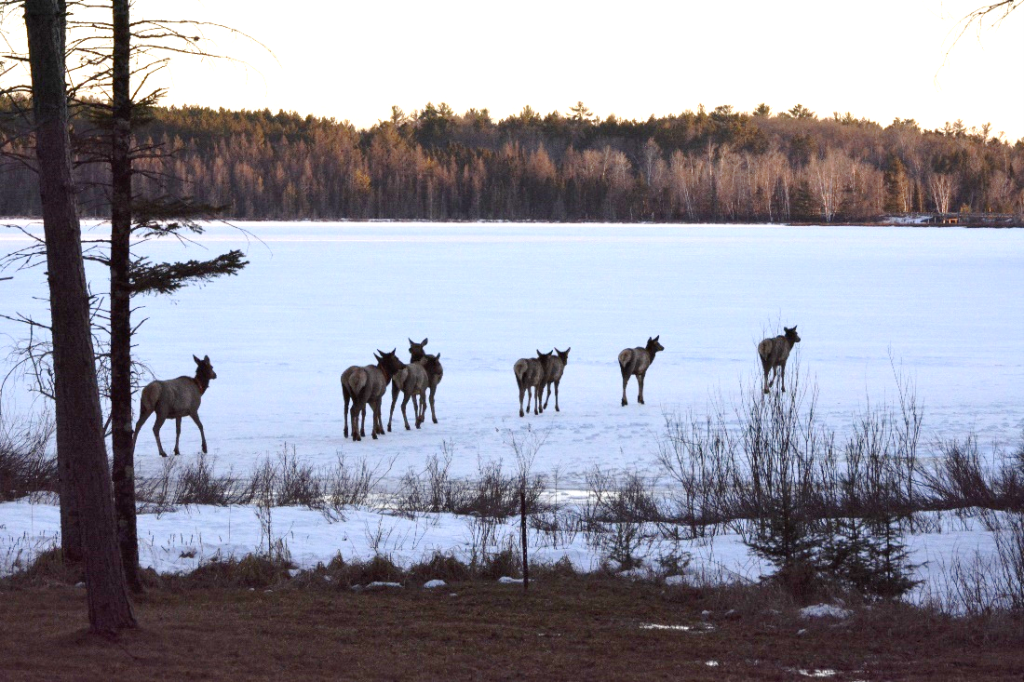
Elk Management Areas
Wisconsin Elk Management Zones
Northern Elk Herd
The Northern Elk Herd is projected to be approximately 383 individuals as of July 2026. The herd currently occupies a range of roughly 500 square miles. The primary habitat used by the elk consists of aspen and pine forests interspersed with forest openings, as well as lowland conifers in the winter. The northern herd can sustain an annual bull-only hunting season and now occupies about 30% of the Northern Elk Management Zone.
This population has grown slowly but steadily since its reintroduction in 1995. The recent average growth rate is 5-6% per year, but the growth rates have varied from as high as 30% to as low as -16%. Primary causes of mortality include predation by wolves and black bears, vehicle collisions and (in recent years) legal hunter harvest.
The entire Northern Elk Management Zone is located within the 1837 and 1842 Ceded Territories, where the Ojibwe tribes' off-reservation, treaty-observed rights may be exercised under their respective tribal conservation codes.
Five state highways cross or border the range, with a sixth just south of the southern boundary. Additionally, numerous county highways run throughout the Northern Elk Management Zone. There are no sizeable human population areas within the range border.
Habitat In The Northern Elk Zone
Based on the habitat suitability model (derived from a study by Didier and Porter), the Wisconsin Elk Study Committee determined that the United States Forest Service Great Divide District of the Chequamegon National Forest near Clam Lake was most suited for an elk reintroduction.
This management zone, originally called the Northern Elk Management Zone, lies within the Northern Forest Region of Wisconsin and comprises portions of five counties, including Sawyer, Ashland, Bayfield, Price and Rusk. The area is 1,627 square miles and is primarily forested. Many forest openings are maintained for elk and other wildlife use. 68% of the Northern Elk Management Zone is public land ownership and lies roughly in two lobes.
The original 2000 Clam Lake Elk Range or northern lobe encompassed 1,112 square miles, centered on the Chequamegon-Nicolet National Forest-Great Divide District (CNNF-GDD). The CNNF-GDD comprises 589 square miles (377,200 acres) of flat to rolling terrain in portions of Ashland, Bayfield and Sawyer Counties. Approximately 65% of the northern lobe is under public ownership, with relatively little private ownership in agricultural production.
The now-decommissioned U.S. Department of Navy's Extremely Low Frequency (ELF) Communication System is a vital landscape component. The ELF line is an X-shaped corridor, annually maintained as a wildlife opening (free of trees and shrubs). The ELF line provides seasonally critical elk habitat because these open areas are dominated by highly palatable forage for elk, like grasses, sedges and forbs. Each segment of the X-shaped corridor is about nine miles long (~36 miles in total) and varies from less than 20 to more than 300 feet wide.
The southern lobe of the management zone, or the 2012 Expanded Range, contains 515 square miles of suitable elk habitat that was officially added to the range by administrative rule in 2012. Public lands (federal, state, county and open industrial forest) comprise 78% of this lobe and include significant blocks of the Sawyer, Price and Rusk County forests, the Flambeau River State Forest, multiple state wildlife areas and large blocks of industrial forest land.
Aspen clear cuts are one of the primary sources of food within the Northern Elk Management Zone, and many properties provide regenerating aspen stands in industrial and managed forests, aggressively managed for revenue generation. They contain vast acreages of aspen in all age classes, including over 171,700 acres (23% of the lobe) of aspen forest.
Population Goal
The 2024-2034 Wisconsin Elk Management Plan established an increase objective until the herd reaches an estimated 650 elk for the Northern Elk Herd. The population range for the northern herd is 650-1,620 elk, depending on the objective set for the herd. See the Management Tab for additional information on adaptive management and population objectives.
Map of Northern Elk Management Zone
Central Elk Herd
The Central Elk Management Zone is approximately 80 miles south of the southern boundary of the Northern Elk Management Zone and is about 252 square miles. The Central Elk Management Zone is located in the Central Forest region of eastern Jackson County. This region of Wisconsin is primarily forested, with some scattered grasslands, barrens and sedge meadows. The vegetation mosaic consists mainly of pine (jack, white and red), oak (red, white and black), central hardwoods and aspen forest, with intermittent open areas. Compared to the Northern Elk Management Zone, temperatures are slightly warmer and considerably less snowfall accumulates in the Central Elk Management Zone..
The Central Elk Herd is projected to be approximately 226 animals as of July 2026, including newborn calves to be born that spring. Vehicle collisions have been the leading cause of mortality in the central elk herd. Since reintroduction, the population has increased through natural reproduction, and the central herd is now an established wild herd in central Wisconsin.
In December 2001, the Natural Resources Board adopted the Black River Elk Herd Management Plan. As part of the plan, the DNR determined that the Black River State Forest and surrounding public lands (primarily the Jackson County Forest) matched the criteria of lying within a historical elk management zone and providing suitable habitat to fulfill an elk herd's biological needs while minimizing the potential for human-wildlife conflicts.
83% of the Central Elk Management Zone is in public ownership. Land ownership consists of the 68,000-acre Black River State Forest (including the Dike 17 Wildlife Area) and 120,000-acre Jackson County Forest (including the Wazee Recreational Area), Ho-Chunk Tribal land and privately-owned parcels.
Elk Management
In August 2024, the Wisconsin DNR finalized a new Elk Management Plan for 2024-2034. This new management plan incorporated recommendations from the Natural Resources Board, Wisconsin Elk Advisory Committee and feedback from the public, and it will be used to guide our elk management efforts for the coming years.
The DNR is currently working on finalizing the design and layout of the new management plan and will post it here once completed. If you are interested in reading the plan (without formatting), here is a direct link: 2024-2034 Elk Management Plan.
Thank you to everyone who helped write/develop the plan or shared a comment. Your feedback is appreciated by the DNR and was carefully considered as we finalized the plan.
Adaptive Management
Adaptive management is an alternative population management framework that uses an objective-based approach with an associated reference table to make population management decisions. Management actions are implemented to achieve the population objective (increase, maintain or decrease of the population) based on a set of metrics and relative to what is actively occurring on the landscape. Thus, the population objective is a management action and not a specific numeric population goal or range.
Metrics are often used with the objective-based approach to measure the effectiveness of the population objective specific to the metrics of concern. Metrics identified in this plan are elk population abundance and distribution trends, agricultural damage levels and economic impacts to agricultural crops, conflict trends and implementation of the conflict program, public support, hunter harvest success and satisfaction, annual elk mortality, economic benefit, scientific developments, and tribal engagement. Based on an annual review of these metrics and localized needs, annual harvest quotas will be set to achieve the target population objective.
Each reference table below (Tables 6, 7) provides guidance to allow the Elk Advisory Committee and the DNR the ability to review the elk population and identified metrics annually and determine a harvest quota to achieve a desired population outcome. The reference tables were constructed using a stairstep approach to represent anticipated elk population growth and are based off 20% incremental elk density categories in relation to one elk/square mile for each herd. The 0.2 elk/ square mile incremental increase in elk density, and the accompanying population ranges within the tables, allow for frequent management checks and balances within the herds. Some population ranges within the tables include multiple population objectives (ex. maintain OR increase), which allows the population to move into the adjacent lower or higher population range if warranted per metric assessment and consideration. This approach provides flexibility during projected population management discussions to determine whether the population should remain stable, increase if metrics are acceptable, or decrease if significant conflict, nuisance, agricultural damage, or social factors warrant greater attention.
Within the core of each reference table, simply representing a population range with a singular objective of maintain does not allow the flexibility to shift to categorically higher or lower population. By including multiple objectives in a given population range, the DNR has a greater ability to manipulate the elk population abundance and rate of change for each elk herd by having the ability to increase, maintain or decrease within a given population range.
Elk in both management zones primarily reside in sub-groups of 10-40 animals with home ranges between 5-15 square miles. Elk densities are not evenly distributed across each management zone since elk utilize areas of variable quality habitat, are impacted by human and predator pressures or are managed at a lower density to reduce nuisance or conflict potential. When evaluating elk management densities and their impacts, it’s important to assess the population abundance at multiple levels, including at the management zone, hunting unit, and sub-group level.
Overall population objectives and associated population ranges are based on all elk associated with the northern and central herds (management zone level). However, local elk populations may be managed at a finer scale within each elk hunting unit due to the spatial distribution of the sub-groups and the ability of the hunting units to focus harvest pressure. While the DNR may establish an overall “increase” objective for an individual herd (northern or central), harvest quotas may be set within individual hunting units at levels that the local sub-group population would be maintained or decreased while adjacent units have reduced (or zero) harvest quotas that would allow the herd population to increase overall. Metrics will be reviewed annually to determine the overall population objective as well as individual elk hunting unit quotas to adjust local elk populations.
Table 6: Northern Elk Zone Population Range
| Density Elk/Sq. Mile | Population Range | Objective For Population |
|---|---|---|
| ≤0.4 | ≤650 | Increase |
| 0.4-0.6 | 650-975 | Increase/Maintain |
| 0.6-0.8 | 975-1,300 | Increase/Maintain/Decrease |
| 0.8-1.0 | 1,300-1,620 | Maintain/Decrease |
| >1.0 | 1,620+ | Decrease |
Table 7: Central Elk Zone Population Range
| Density Elk/Sq. Mile | Population Range | Objective For Population |
|---|---|---|
| ≤0.6 | ≤220 | Increase |
| .06-0.8 | 220-290 | Increase/Maintain |
| 0.8-1.0 | 290-360 | Increase/Maintain/Decrease |
| 1.0-1.2 | 360-430 | Maintain/Decrease |
| >1.2 | 430+ | Decrease |
Prior Management Plans and Related Documents
- Original 2001 Black River Falls Elk Management Plan
- 2012 Clam Lake and Black River Elk Management Plan Amendment
- 2018 Black River Elk Herd Update
Habitat management within the Central and Northern Elk Management Zone has focused primarily on the dietary needs of elk and reduction of conflict. The staff has utilized past research on elk food preferences in Wisconsin and the eastern elk states and GPS collar data to help inform habitat management decisions. A great story on the DNR's collaring efforts was published in 2024. While thermal cover has also been identified as an essential habitat component for elk, conifer stands are abundant within the elk management zones and do not appear to be a limiting factor. Providing high quality habitat within the core of the management zones offers conflict relief potential for elk.
Since elk utilize a broad range of habitat types and food resources, management efforts must be diverse to ensure all aspects of an elk's diet are considered. As such, past and current management efforts have focused on creating and maintaining natural or established forest openings and enhancing natural grassland and shrub-type habitats, such as barrens and forest management practices, that promote early successional aspen and mast-producing oak.
New forest openings have also been created on private and public lands to increase the nutritional quality and abundance of food during the spring, summer and fall months. Food resources are critical during these times because elk prepare to give birth and raise their calves. Additionally, these openings are highly beneficial in drawing elk away from roadways and crops. These openings have also helped cultivate positive relationships with landowners, who have been able to get grass and clover fields created and planted on their property at little or no cost. Several of these were accomplished as a component of perpetual conservation easements developed by the Rocky Mountain Elk Foundation, whereby the landowner donated their development rights to the Rocky Mountain Elk Foundation, ensuring the long-term opportunity to provide this habitat component on private lands. Staff will continue to maintain and create forest openings as needed and as opportunities present themselves.
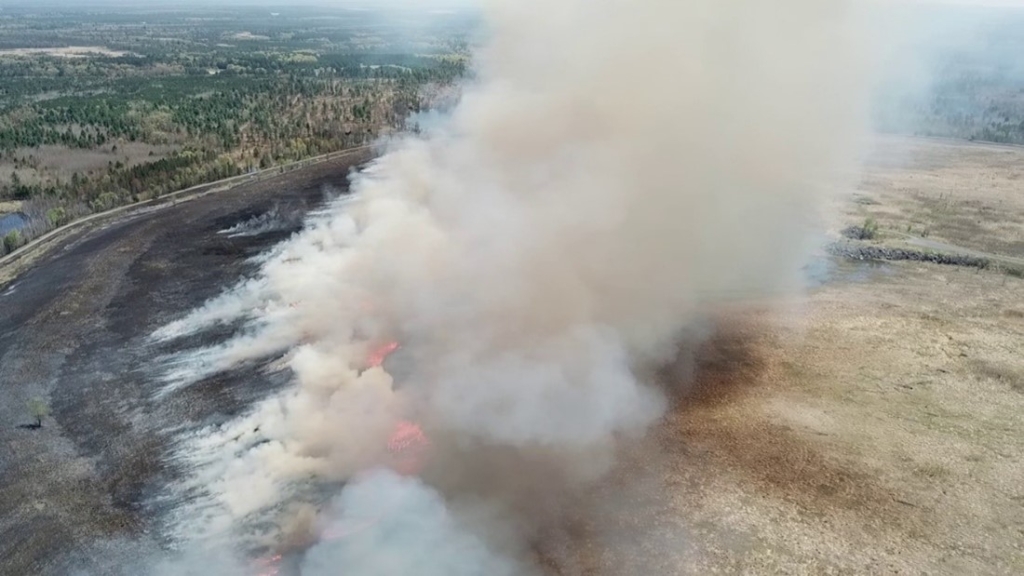
Forest management practices that promote necessary forest resources are also conducted. The forest resources documented to be the most beneficial to elk in Wisconsin are aspen and oak (primarily red and black oak). Young aspen (0-10 years old) provides abundant high-quality woody browse throughout the year, while aspen leaves are beautiful during the growing months. Elk seek out mature oak stands during the fall and winter months in search of highly nutritious acorns, which help build fat reserves for the winter months. In addition to the importance of aspen and oak, elk also utilize a broad range of other woody species, like maple, in their daily consumption of forage. Newly established timber harvests that provide abundant early successional forest browse and abundant grass/forb resources on the ground layer are also highly attractive areas to elk.
Elk management staff routinely meet with their state, county and federal land management partners to ensure elk habitat is considered during the development and implementation of forest management plans and projects. In addition to promoting beneficial forest elk habitats on public lands, DNR staff actively work with private landowners to encourage similar habitats on private land. Typical recommendations include maintaining or increasing the acreage of important timber types, ensuring these species are properly managed through regular harvest and resisting invasive species and forest conversion to less desirable species. DNR Wildlife Management staff are developing and implementing aspen and oak habitat management guidelines, which should be referenced before establishing timber sales within the elk management zones.
Land acquisition and protection are also critically important to Wisconsin's elk population's long-term health and persistence. DNR staff have worked with several public land management organizations (DNR, county forests and United States Forest Service), partner groups and private landowners to acquire critically important habitat. These acquisitions protect important properties from development and allow for beneficial habitat management practices to be completed that further aid in elk management efforts. They also provide public viewing and hunting opportunities for elk.
Habitat can be essential in mitigating predation's potential impacts on elk. Reintroduction efforts in recent years have focused on broad areas of young forest habitat rather than mature forest. Elk in the Northern Elk Management Zone demonstrate a significant ability to avoid predators in young forests, and mortalities have been low. In 2014 and 2015, 26 Wisconsin elk were moved to the Flambeau River State Forest and Sawyer County Forest in the southeastern quarter of Sawyer County, where there are large areas of aspen cutting with dense stands of regenerated aspen. Aspen in the 0–10-year age class is abundant and provides excellent predator escape cover.
Wisconsin's first state-managed hunt for elk was held in 2018 in the Northern Elk Management Zone only. As of 2026, eight managed elk hunts have been completed in the Wisconsin Northern Elk Management Zone (2018-2025) and two in the Central Elk Management Zone (2024-2025). To date, 67 bull elk and five antlerless elk have been harvested by Wisconsin DNR licensed and tribal hunters in the modern-day elk hunting seasons. Visit the Elk Hunting page for more information.
Chronic Wasting Disease
Chronic wasting disease (CWD) is a degenerative disease of the brain and nervous system tissue that infects members of the cervid family (deer, elk, etc.). CWD is present in white-tailed deer in Wisconsin but has not yet been detected in elk in Wisconsin. All hunter-harvested elk, as well as all elk that die of other causes, are tested for CWD. Routine sampling of hunter-harvested white-tailed deer within and surrounding the two elk ranges also occurs.
Elk Viewing
To ensure the successful management of elk, please respect the elk and their habitat. Disturbances to the elk, such as calling them or attempting to view them by foot, may force them into areas where they may not otherwise reside and can make them more susceptible to predation, vehicle collisions or other undesirable circumstances.
While it is understandable that people will desire to observe the elk, the public is asked to refrain from pressuring or calling the elk during the rutting season. This disturbance can disrupt breeding activities and separate the elk from their family units, leading to slower population growth. The many partners involved in the elk reintroduction are happy to see high public interest and excitement surrounding the elk reintroduction, but please respect the elk's space and view them from afar.
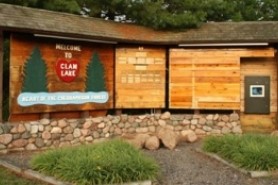
An interactive touchscreen kiosk has been retrofitted into a signboard at the junction of state highways 77 and GG in Clam Lake. The kiosk is designed to provide visitors with expansive information about the resident elk herd and their habitat. The program includes information about the history of elk in Wisconsin and even has a video clip of the original elk reintroduction. Most importantly, the program contains other tools and knowledge to help visitors experience elk, including wildlife spotting guides, maps and directions to nearby viewing areas. Please note that the interactive kiosk may not be available during winter months.
To have the best chance of viewing elk while keeping safe, please keep in mind these recommended wildlife viewing tips:
- Start early in the morning and stay into the evening. Elk are most active during these periods of the day.
- Go during the late fall/early winter and spring. These are the best timeframes to see elk.
- Drive slow, use your flashers, only pull over in safe areas and stay in your vehicle.
- Try and try again. Don't forget to take pictures when you do succeed.
- Do not feed, call to or approach any wildlife. It is illegal to bait or feed elk in Wisconsin.
- Do not honk at wildlife or block traffic.
- Stay in your vehicle and do not trespass without speaking to the landowner first.
Elk Advisory Committee
The Elk Advisory Committee reviews and makes recommendations on the reintroduction and management of wild elk. The committee advises the Wildlife Policy Team on various topics, such as herd monitoring, growth strategies, research priorities, herd health issues and other reintroduction strategies. As requested, the committee will provide input on other elk herd management and policy decisions. The Elk Advisory Committee is comprised of representatives from many agencies and organizations, including the Wisconsin Department of Natural Resources, Rocky Mountain Elk Foundation, United States Forest Service, United States Department of Agriculture-Wildlife Services, University of Wisconsin-Stevens Point, Great Lakes Indian Fish and Wildlife Commission, Ho-Chunk Nation, Wisconsin Conservation Congress, Wisconsin County Forest Association, Wisconsin Wildlife Federation, Wisconsin Bowhunters Association, Wisconsin Cranberry Growers Association and Wisconsin Farm Bureau Federation.
Committee meeting minutes
Elk Projects
Department staff members are tending to numerous projects to ensure the success and sustainability of our Wisconsin elk herds. Some recent and ongoing projects include:
- Surveyed citizens on their awareness and views of elk and their management in Wisconsin. Results showed that, in general, the public had very positive attitudes toward elk and supported their leadership within the state
- Posting elk signage and performing media outreach before the deer hunting season to ensure hunters know the elk in the area
- Distributing elk identification sheets to local registration stations and popular establishments to educate hunters before deer hunting season
- Collaborating with Snapshot Wisconsin to monitor remote game cameras across both elk ranges to capture elk images used for bull analysis, herd monitoring and distribution of elk
- Collaring elk (winter trapping and calf searching) to monitor habitat use and preference, home range size, dispersal, survival information, cause-specific mortality and collection of other data for research analysis
- Completing habitat projects for elk, including creating large wildlife openings planted with clovers and grasses and maintaining existing (or created) wildlife openings into the future
- Working on an assisted elk dispersal to ensure a maximum portion of the elk range's preferred habitat is utilized and reduce nuisance location when applicable
- Monitoring daily locations of all GPS-collared elk, including bulls, cows and calves, to provide information on mortality, home range size, habitat preference, calving, season movements and dispersal
- Active participation with federal, state, county and tribal partners in timber and forest management to increase preferred forested and open habitat types