
Groundwater quality
GCC Report to the Legislature
Groundwater pollution from human activities and natural sources happens across Wisconsin. This is of particular concern for the 70% of Wisconsinites who get their drinking water from groundwater.
Other groups concerned about groundwater quality include farmers who rely on safe groundwater for crop and livestock production and business owners who rely on groundwater for manufacturing and commerce. Lakes, rivers and streams are fed by groundwater. Fish and wildlife can't thrive when groundwater contaminants impact the surface water they are dependent upon.
We continue to learn more about groundwater quality in Wisconsin through research by collecting information about the occurrence of different substances found in groundwater and their impacts on human and environmental health.
Nitrate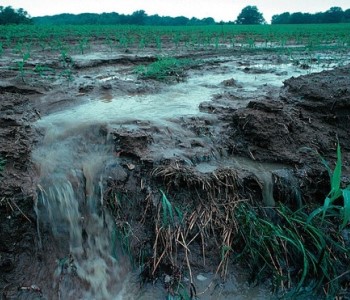
application on agricultural fields accounts for 90% of nitrate in our groundwater. / Photo credit: USDA, NRCS Nitrate contamination is a serious problem in Wisconsin’s groundwater. It’s been affecting our water for over 50 years. The GCC listed nitrate contamination of groundwater as a problem in the first annual report in 1985 and has made it a top priority since 1994. This contamination is harmful to both our health and the environment, so it's urgent to address this issue now. Nitrate contamination of groundwater typically results from human activities on the land surface and can be influenced by the aquifer’s natural susceptibility. In Wisconsin, 90% of the groundwater nitrate contamination is estimated to have originated from agriculture. |
Perfluoroalkyl And Polyfluoroalkyl Substances (PFAS)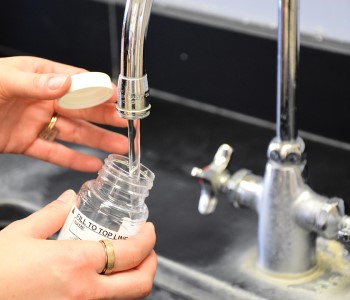
Wisconsin DNR PFAS are a large group of human-made chemicals that have been used in industry and consumer products worldwide since the 1940s. Their ability to repel water and oil and withstand high temperatures has made PFAS a useful ingredient in products including nonstick pans and water-repellent clothing. These chemicals do not easily break down in the environment and accumulate in the environment and humans. PFAS chemicals are widespread in the environment and have been detected in Wisconsin groundwater, in some areas at very high levels. Given the serious health risks posed by PFAS, there is a real need to determine the extent of PFAS contamination in Wisconsin’s groundwater and to ensure that individual residents and public utilities test water supplies, especially in areas of concern. |
Bacteria, Viruses And Other Pathogens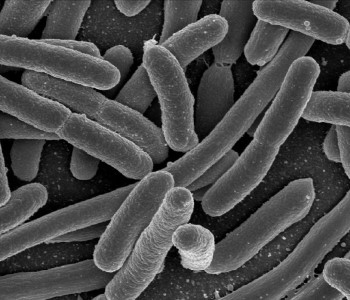
and Infectious Disease Pathogens are organisms or other agents that can cause disease, including microorganisms such as bacteria, viruses and protozoa that can cause waterborne disease. Groundwater contamination by microbial pathogens can sometimes be traced to human or livestock fecal waste that seeps into the ground from sources such as inappropriately constructed or failing septic systems, leaking sanitary sewers or animal manure application and storage facilities. It is important to evaluate the occurrence of viruses and other pathogens in groundwater and groundwater-sourced water supplies and develop appropriate response tools in order to protect human health. Homeowner complaints about private well bacterial contamination events, which often correspond with manure spreading, are an ongoing concern for GCC agencies. |
Pesticides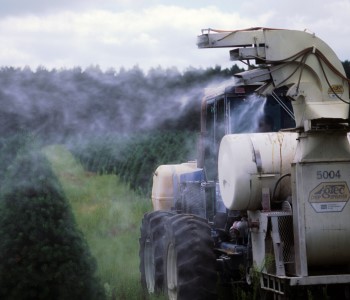
trees at tree farm near Wautoma. / Photo credit: Wisconsin DNR Pesticides are a broad class of substances designed to kill, repel or otherwise disrupt living things that are considered pests. Normal field applications, spills, misuse or improper storage and disposal can all lead to pesticide contamination in groundwater. At least one pesticide substance is estimated to be present in over 40% of private potable wells in Wisconsin. Neonicotinoid insecticides were detected in an estimated 5% of private wells statewide, or up to 40% when including bias sampling. Detection trends are increasing over time. Monitoring groundwater for pesticide contamination is very important for human and environmental health. |
Arsenic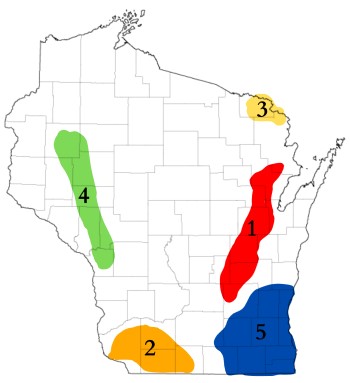
northeastern Wisconsin (regions 1 & 3), but is also found in other areas throughout the state (regions 2, 4 & 5). / Photo credit: Wisconsin DNR Arsenic is an odorless, tasteless and naturally occurring element present in soil and rock. Under certain environmental conditions, arsenic can dissolve and be transported in groundwater. It can also be released as a by-product from agricultural and industrial activities. Arsenic contamination in Wisconsin groundwater poses a serious public health risk, as prolonged exposure can lead to skin lesions, cancer and cardiovascular disease, highlighting the urgent need for effective mitigation efforts across the state. GCC member agencies and partners continue to proactively address arsenic concerns through well drilling advisories, health studies, well testing campaigns, studies aimed at improving geological understanding and developing practical treatment technologies. |
Naturally Occurring Elements, Including Chromium, Manganese, Radionuclides And Strontium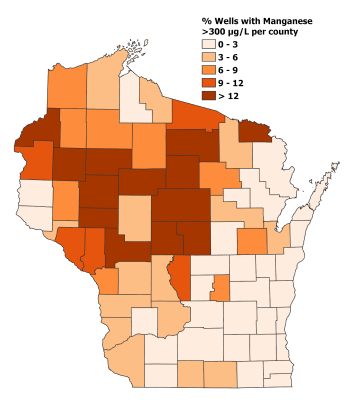
over 300 µg/L). / Photo credit: Wisconsin DNR Naturally occurring elements including arsenic, radionuclides, chromium, manganese and strontium occur in Wisconsin groundwater, sometimes at concentrations that exceed health guidance levels. Natural earth processes, such as rock weathering, soil erosion and mineral dissolution, can cause trace elements to be released into groundwater. In areas where naturally occurring elements may be present in groundwater at levels close to or above health guidelines, it is important to regularly test groundwater drinking water supplies to ensure that they are safe. GCC member agencies continue to work on multiple initiatives related to ensuring that the public is aware of the possibility of high levels of naturally occurring elements. |
Volatile Organic Compounds
including paints, stains and paint thinners. / Photo credit: Tom Murphy VII Volatile organic compounds (VOCs) are a group of common industrial and household chemicals that evaporate or volatilize when exposed to air. Examples of products containing VOCs include gasoline and industrial solvents, paints, paint thinners, air fresheners and household products such as spot and stain removers. Thousands of wells have been sampled for VOCs and about 60 different VOCs have been found in Wisconsin groundwater, but only 34 have established health-based NR 140 groundwater quality standards. Sources of VOCs in Wisconsin’s groundwater include landfills, underground storage tanks and hazardous substance spills. A critical role of GCC agencies is identifying and monitoring all known sources of VOCs, not only landfills. |
Emerging Contaminants
one group of emerging contaminants. / Photo credit: U.S. Department of Defense Emerging contaminants are chemicals and substances characterized by a perceived, potential or real threat to human health or the environment. Contaminants may be considered to be emerging because of the discovery of a new source or pathway that could impact human health, or because improved methods now allow their detection. Emerging contaminants in Wisconsin include pharmaceuticals, PFAS, agricultural contaminants such as neonicotinoid pesticides, microbial contaminants, microplastics and nanoplastics, flame retardants, phthalates and other plasticizers, engineered nanomaterials, manganese and lithium. Much is unknown about these emerging contaminants, so an important role of the GCC is to provide funding to support research studies that further the scientific understanding of these substances and their occurrence, fate and transport in groundwater. |
Additional Resources
- UW-Stevens Point Interactive Map: Wisconsin Well Water Quality Viewer
- USGS Interactive Map: A Decadal Look At Groundwater Quality
- DNR Water Quality And Contamination In Private Wells
- DHS Overview Of Water Quality Issues
- Peer-Reviewed Overview Of Groundwater Issues In Wisconsin (Luczaj and Masarik, 2015)