
Wisconsin Recycling Excellence Awards
The Wisconsin Department of Natural Resources celebrates outstanding recycling and waste minimization efforts through its annual Recycling Excellence Award program. Communities, organizations, schools and businesses - both large and small - are eligible and encouraged to apply. In addition to giving recognition, the Recycling Excellence Awards highlight ideas and strategies with proven track records that other organizations may use to improve their recycling endeavors.
One of the goals identified in the DNR's climate action plan is to reduce per-capita food waste disposed of in Wisconsin landfills by half by 2030 (from 2020 levels). Please note: Food waste recovery or diversion programs are eligible for a Recycling Excellence Award!
Awards are offered in four categories: Projects and Initiatives, Overall Program, Special Events and Innovation. Programs may self-nominate or apply on behalf of another program.
2026 Award Categories and Winners
The table below provides more information on these categories and a list of the 2026 award winners.
| Category | Recognition | Winners |
|---|---|---|
| Projects and Initiatives | Recognizes a defined project or initiative that increases materials recycled or diverted and/or improves the cost-effectiveness of a recycling/diversion program. |
|
| Overall Program | Recognizes programs that are robust and constantly improving, demonstrating a commitment to advance the overall recycling/diversion program. |
|
| Special Events | Recognizes effective recycling at special events, offering participants an enhanced opportunity to recycle or reuse materials. |
|
| Innovation | Recognizes a program that demonstrates unique and innovative approaches to recycling. |
|
2026 Award Winners
Projects & Initiatives
Brown County Hazardous Material Recovery Facility
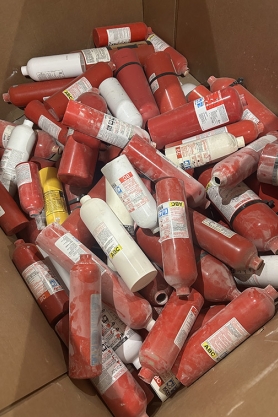
emptied fire extinguishers.
Many people associate the disposal and collection of household hazardous materials with incineration. However, at the Brown County Hazardous Material Recovery Facility, over 60% of materials collected are reused or recycled.
In fall 2021, Brown County recognized there wasn't a convenient and readily available landfill disposal alternative for fire extinguishers and valuable metals were being landfilled. Brown County developed an on-site process to empty the contents of the fire extinguishers in a safe and environmentally complaint manner in order to recycle the remaining metal. Between 2024 and 2025, the program diverted nearly 500 pounds of aluminum and 1,200 pounds of steel from the landfill. Since the creation of this program, nearly 2,000 fire extinguishers have been diverted from landfills.
Communities At Oshkosh North High School (Winnebago County)
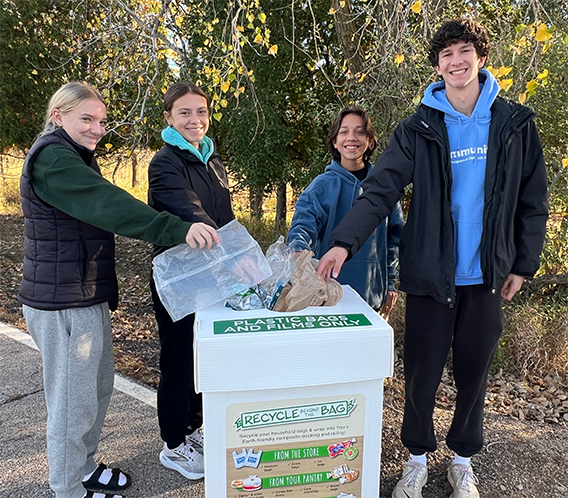
The Communities at Oshkosh North High School demonstrates outstanding recycling efforts with the Trex Plastic Film Collection Challenge. Over the past year, students kept 1,136 pounds of plastic film out of the local landfill. The students didn't just set out collection bins; they built a real community effort. Students visited 21 fifth-grade classrooms three times to teach younger kids about recycling and collecting plastic, got Oshkosh North staff on board during professional development and kept the momentum going with regular emails and announcements. The students also audited the collected plastic every month to clean out nonrecyclables and used what they learned to improve their next lessons. It's hands-on, student-led environmental action at its best, and they're already geared up to make an even bigger impact in 2026-2027.
Goodwill Of South Central Wisconsin
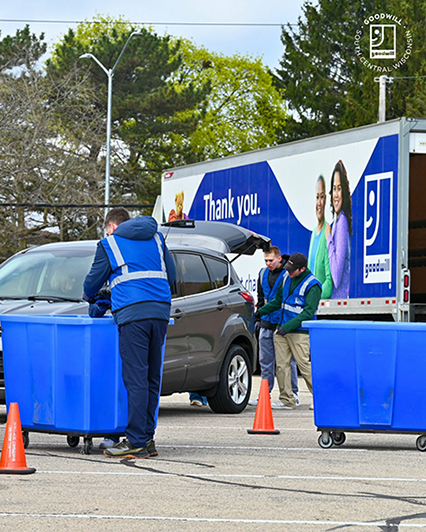
during the 2026 Hilldale Earth Day Electronics Recycling
Donation Drive.
Many people know Goodwill as a secondhand shopping and donation destination, but fewer know about its extensive sustainability initiatives, particularly responsible electronics recycling. Goodwill of South Central Wisconsin (Goodwill SCWI) accepts electronics for recycling free of charge year-round at its donation centers.
To increase awareness of this service, Goodwill also hosts special electronics recycling donation drives that make responsible e-waste disposal convenient for the community. The Goodwill and Hilldale Earth Day Electronics Recycling Donation Drive is a key part of these efforts. In 2026, more than 575 people brought approximately 25,000 pounds of electronics to the event, a 104.6% increase from the previous year and more than five times the 4,680 pounds collected when the drive began in 2023. In 2025, Goodwill SCWI recycled more than 257,000 pounds of electronics, a 32% increase from the previous year. Through its partnership with Dell Reconnect, Goodwill helps ensure donated electronics are handled responsibly, supporting recycling and reuse while helping keep hazardous materials and electronic waste out of landfills.
Milwaukee German Immersion School (Milwaukee County)
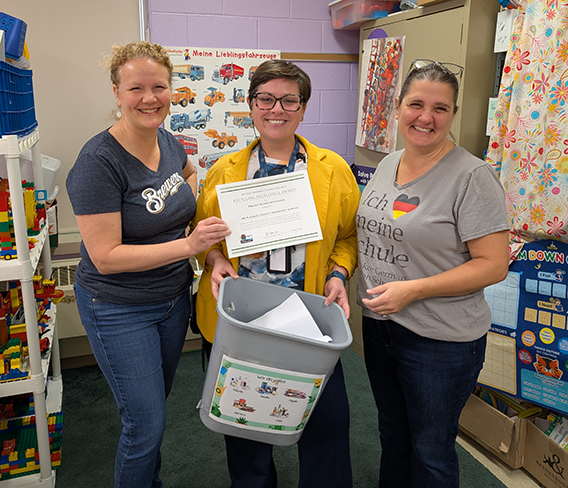
and a recycling bucket labeled in German.
Milwaukee German Immersion became interested in waste reduction after noticing how much waste accumulated after lunch and group activities. The school undertook two large projects: composting and plastic recycling. The school applied for and received a two-year U.S. Department of Agriculture grant for composting school lunch waste as part of a pilot program in Milwaukee Public Schools. Recycling stations and German educational posters were set up around the school to begin the composting and plastic recycling program. The recycling committee started with teachers and employees, then later students were trained as well. Currently, students largely handle the enforcement of what can be composted and what cannot.
In addition, the school used NexTrex: Plastic Bag & Film Recycling that rewards schools with a bench made of recycled plastics when they collect 1,000 pounds of plastics. As of this year, the school has diverted 14,000 pounds of food waste and recyclables from landfills.
Purple Cow Organics (Dane County)
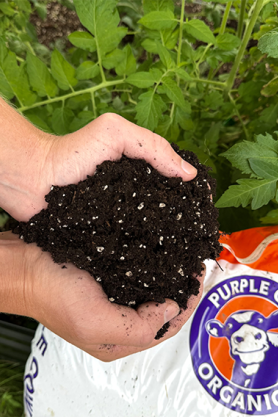
material into compost and growing media that
support healthy soils and plant growth.
Purple Cow Organics has made recycling organic material a core part of its business mission since it began in 2008. Each year, the company recycles approximately 18 million pounds of leaves, sticks, brush and other green material from Wisconsin communities, turning material that may otherwise be treated as waste into finished compost that can be put back to use.
More recently, Purple Cow Organics has partnered with Dane County on its Food Scrap Program. Food scraps collected from residents throughout the county are brought to Purple Cow Organics for composting. The finished compost from this program is returned to the community through local projects. This work represents what local recycling can look like when municipalities, residents and private businesses work together. Purple Cow has built a long-standing organics recycling program while continuing to find new ways to keep valuable materials out of the waste stream and put them back to work in Wisconsin communities.
Overall Program
Attic Angel Prairie Point Green Committee (Dane County)
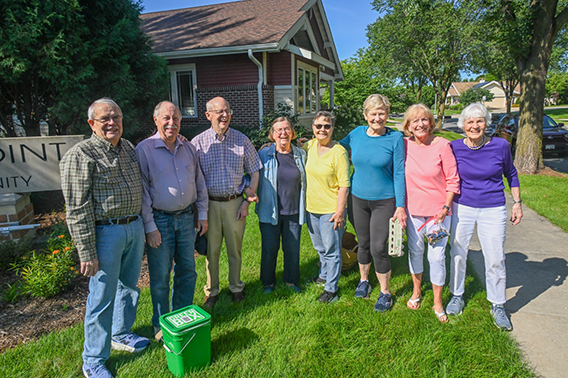
Attic Angel Prairie Point (PP) is a resident-led recycling and sustainability effort within a senior living community serving adults age 55 and older. Prairie Point residents saw an opportunity to act, rather than accept, age-limiting participation as inevitable. A retired Middleton High School teacher and PP resident with deep knowledge of recycling issues and practices initiated the community effort.
The Prairie Point Green Committee, supported by residents and the Resident Council, has shown exemplary leadership in practical, innovative resource management. By combining recycling, reuse, composting, gardening and solar energy, the committee has built a resident-led conservation model that is both effective and replicable. Early efforts focused on several high-volume materials that are often discarded as trash: printer ink cartridges, batteries, plastic bags and film and pill bottles. These are collected at the site and sent for recycling. The list continues to grow and now includes items such as worn-out sneakers, which residents can take to a nearby retailer for drop-off. Together, these efforts reduce landfill waste and pollution. The program fills an important niche in community-based sustainability and offers a strong example of service, stewardship and innovation in a senior residential community.
Brookfield Elementary School (Waukesha County)
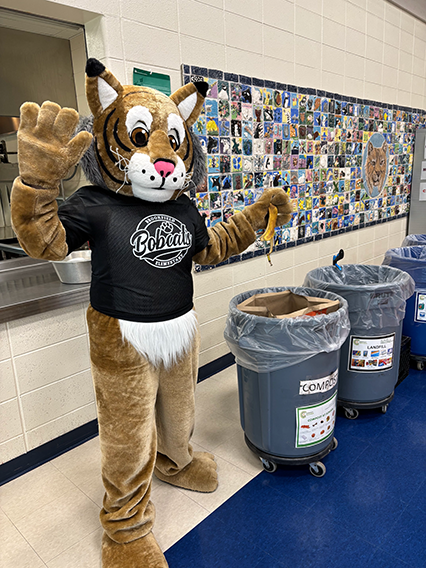
school-wide recycling and cafeteria composting efforts.
Brookfield Elementary decided to change from being part of the waste generation problem to part of the waste management solution. With over 670 students, the school was generating much waste, including divertible material, that was going straight to the landfill. By working together as a team with custodial staff, teachers, students, the parent-teacher organization, administration and community partners, the school developed a sustainable plan to ensure diverting as much waste as possible from the landfill. The program included a school-wide recycling initiative, cafeteria composting program and other sustainable changes. Since beginning the recycling program in 2023, the school diverted approximately 92,000 pounds of food waste from the landfill.
In partnership with Compost Crusaders, this food waste has become nutrient-rich compost that is sold commercially. The school also made an impact by saving approximately 172,500 milk cartons from the landfill and has partnered with the Waukesha County Recycling team to host a school-wide educational assembly. Lastly, the school introduced metal utensils in January 2025 and has saved over 80,000 plastic utensil packets from becoming trash. The students have done an outstanding job of supporting these efforts. The school's Green Team is continually thinking of ways to increase awareness among the community and provide hands on waste reduction education to our students. The school received a Green and Healthy Schools waste badge award in 2026 for its efforts.
City Of Hartford (Washington County)
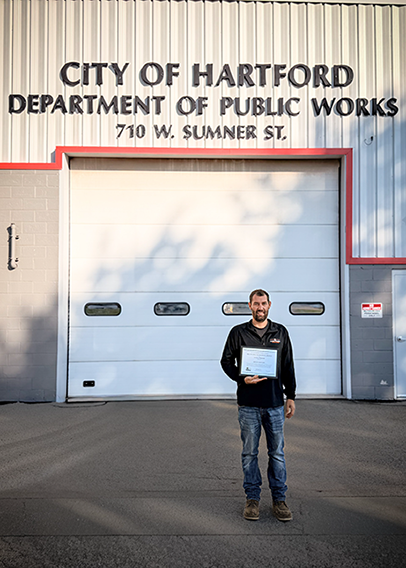
the 2026 Recycling Excellence Award.
The city of Hartford is committed to making recycling simple, accessible and effective for all residents. Through ongoing education, convenient recycling programs and community partnerships, the city continues to encourage responsible waste management while reducing the amount of material sent to landfills. One of the city's key initiatives is its comprehensive recycling information brochure, which it distributes to residents to clearly explain what can and cannot be recycled, proper recycling practices and the recycling services available throughout the community. This educational resource helps reduce contamination in the recycling stream and increases resident participation.
The city also offers a curbside metal pickup program, providing residents with a convenient way to recycle large metal items that might otherwise be discarded. This service diverts valuable recyclable materials from landfills while making recycling easier and more accessible for households. In addition to serving residents, the city partners with community organizations by collecting and recycling scrap steel to support local charitable efforts. Each October, Hartford collects donated steel as part of the United Way Outreach campaign, with proceeds from the recycled metal benefiting programs that strengthen and support the community. This initiative not only promotes recycling but also demonstrates how environmental stewardship can directly benefit local families and organizations.
City Of Milwaukee Department Of Public Works (Milwaukee County)
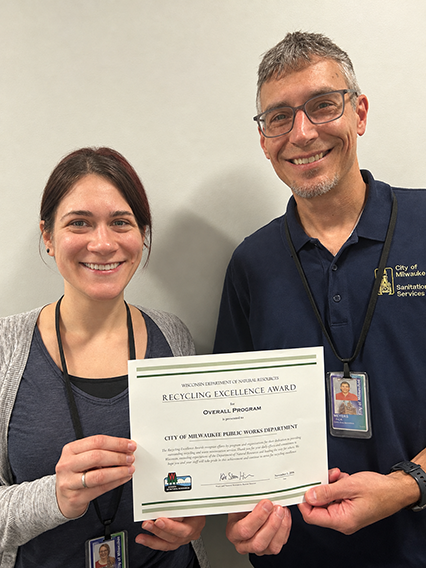
with their 2026 Recycling Excellence Award.
The city of Milwaukee Department of Public Works (DPW) serves approximately 189,000 one- to four-unit households through curbside collection, manages more than 26,000 tons of curbside recyclables annually and provides additional recycling access to all residents through two drop-off centers that serve more than 252,000 visitors each year. Milwaukee expanded equitable access by replacing remaining small recycling bins with 95-gallon lidded carts in 2021, transitioned to a fixed every-other-week recycling schedule year-round beginning in winter 2025 and remains on track to achieve its goal of increasing curbside recycling tonnage by 7% by the end of 2028.
DPW has demonstrated exceptional resilience through its regional partnership with Waukesha County to operate a joint materials recovery facility (MRF). The partnership strengthened recycling infrastructure, improved processing and marketing efficiencies and supported Milwaukee's transition to curbside single-stream recycling. When a catastrophic fire destroyed the MRF in May 2023, DPW quickly adapted its operations and communications to maintain uninterrupted recycling service for residents. This response underscored both the program's resilience and Milwaukee's continuing commitment to recycling.
Beyond collection, DPW makes recycling education accessible through annual mailers, school-based programming with Keep Greater Milwaukee Beautiful and Milwaukee Public Schools, America Recycles Day activities and family events such as Big Truck Day.
Eau Claire Area School District (Eau Claire County)
In the 2023-24 school year, the Eau Claire School District initiated a program to train 11,000 pre-K through twelfth-grade students in 19 schools to separate food scraps and recyclables from trash at breakfast and lunch. Initially, this program was funded by a two-year federal grant written by the Eau Claire County sustainability coordinator, but the program has continued at district expense. Collection bins and bags were purchased, Earthbound Environmental collected the organic material to compost, custodial and food service staff were trained and a video was produced to teach students and staff how to correctly separate the items on their tray and the benefits of creating compost for replenishing the soil. In the 2024-25 school year, Earthbound Environmental collected 112 tons of compostables from kitchens and cafeterias throughout the district, averaging 4,000 pounds of organic waste per week diverted from the landfill. During 2025-26, this figure doubled to 241 tons of waste diverted. There has been cost savings of 50% to the district due to the decrease in frequency of hauling trash loads and tipping fees.
In addition, the district has been focusing on reducing plastic bottles by swapping out water fountains for bottle fillers. By October 2025, the district had saved 2,579,447 plastic bottles. Old carpeting in classrooms is now replaced by 2x2 squares of recycled plastic made from 27 plastic bottles.
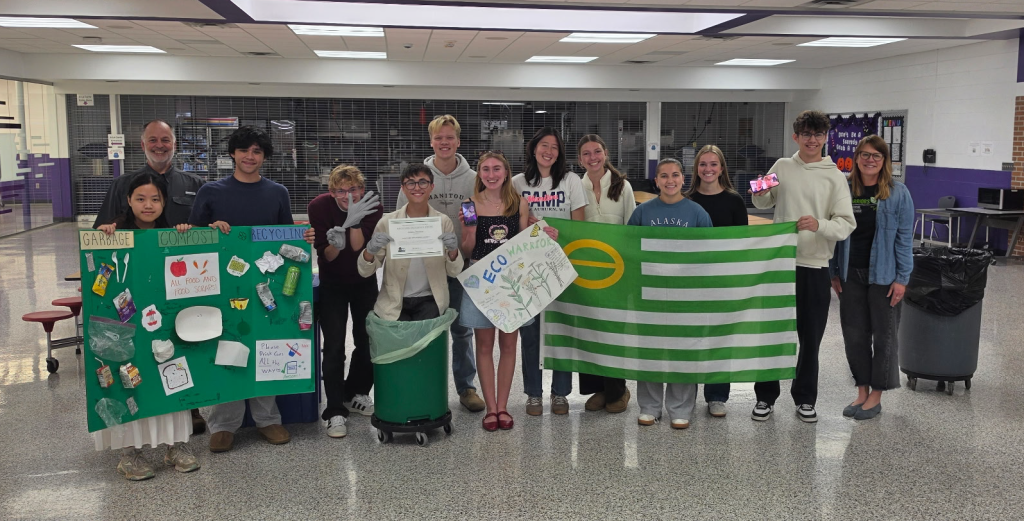
InSinkErator (Racine County)
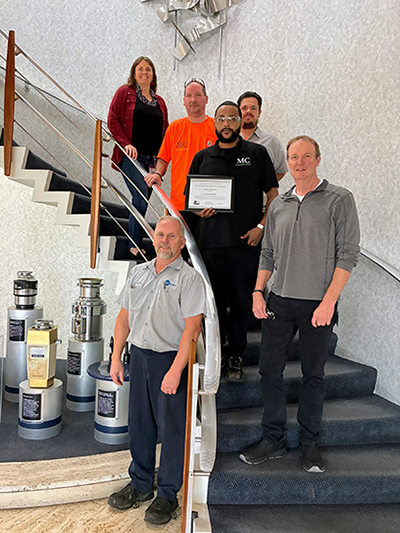
with their 2026 Recycling Excellence Award.
Headquartered in Racine, InSinkErator® is the world's largest manufacturer of garbage disposals and instant hot water dispensers for home and commercial use. Not only do garbage disposals help divert food waste from landfills, but local wastewater facilities can generate and capture biogases from digesting organic matter (kitchen food waste), which can then be used as fuel. The Racine Wastewater Utility currently powers about 56% of its treatment plant's energy needs through this renewable source of power.
At the InSinkErator manufacturing facility in Racine, the company has achieved the UL “Strong Gold” Zero Waste to Landfill status by diverting materials from landfills through recycling, reuse and other strategies. For example, much of the production material is delivered on shrink-wrapped pallets or in heavier plastic bags. From June 2025 to June 2026, the company collected 69,201 pounds of plastic and sent it to Allied Resource Recovery in Waukesha for recycling. During the same timeframe, nearly 12 million pounds of scrap metal was generated and sent to Alter Metals in Milwaukee. InSinkErator also recycles other materials such as electronics, batteries, pallets, parts washer solvents, rags, absorbents, used oil and grease and other packaging materials. Additionally, materials that cannot be recycled, such as paint filters, can be diverted from the landfill through waste-to-energy management. These efforts, combined with employee education and continuous focus has positioned InSinkErator for a future emphasizing waste minimization in the manufacturing process.
Furthermore, InSinkErator contracts with MahlerClean, an integral element to the facility's recycling efforts. MahlerClean helps physically collect most of the paper and cardboard, aluminum cans and plastic bottles accumulated throughout the facility.
Keep Greater Milwaukee Beautiful (Milwaukee County)
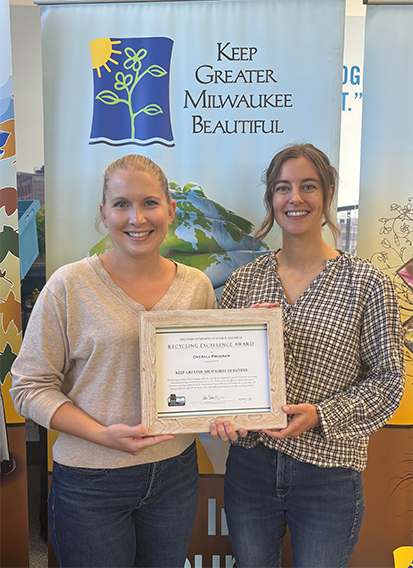
pose with their 2026 Recycling Excellence Award.
Keep Greater Milwaukee Beautiful (KGMB) is a nonprofit organization dedicated to creating clean, healthy and beautiful communities through environmental education, waste reduction, recycling, litter prevention and community beautification initiatives. For more than four decades, KGMB has empowered people of all ages with the knowledge, resources and hands-on experiences to become sustainability stewards for their communities and the environment. KGMB's environmental education programs reach 3,500 youth and adults each year through partnerships with schools, neighborhood groups and local businesses throughout the Milwaukee area.
KGMB's most popular K-12 program, "Recycle For Good," introduces students to the 3 Rs (reduce, reuse, recycle) and helps them understand the importance of recycling, how to recycle right and the role they can play in creating a cleaner and healthier world. KGMB's composting program, "Rot is Hot," teaches kids what belongs in a compost bin, how organic materials break down and how food scraps can become nutrient-rich compost instead of taking up space in landfills. Students explore real compost with magnifying glasses, discovering the macroinvertebrates that help turn organic materials into “black gold.”
KGMB's "Know What to Throw: Recycling 101" workshop provides adult participants with detailed information about recycling guidelines in the city of Milwaukee, including common recycling mistakes and what can and cannot be placed in a curbside recycling cart. Participants also learn what happens inside a materials recovery facility and discover how collected materials are sorted and transformed into new products. KGMB also offers Small Space Compost workshops, demonstrating that even residents without a traditional composting space can take meaningful steps to reduce food waste.
Outpost Grocery Co-op (Milwaukee & Ozaukee County)
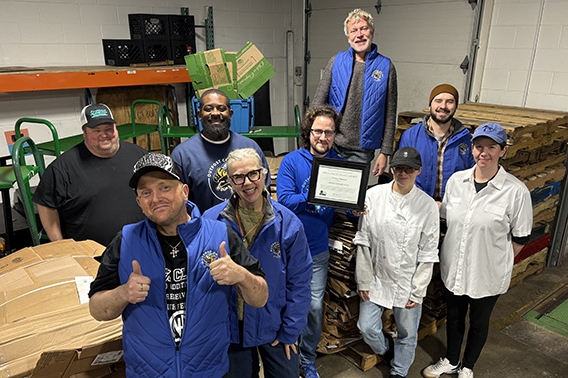
Outpost Grocery Co-op has built a comprehensive waste reduction and recycling program across four Milwaukee-area stores and its production facilities, achieving a self-tracked landfill diversion rate of more than 76%. Outpost's approach goes beyond traditional recycling to include plastic film recycling, food scrap composting, used cooking oil recovery, food donation and repurposing, reusable service ware and ongoing packaging improvements.
Outpost focuses on continually addressing the harder-to-divert waste streams and finding practical solutions that work within the tight margins and operational realities of grocery retail. Outpost is currently streamlining recycling logistics across multiple locations and haulers and evaluating more sustainable packaging options. As a member of National Co-op Grocers, Outpost also has the opportunity to share successful approaches with other food cooperatives nationwide.
In 2015, the 56-kikowatt solar panel system on the roof of the Mequon location was connected to the energy grid by We Energies. In 2020, the panels produced 57,795 kilowatt hours of electricity, which is the equivalent of saving over 90,000 pounds of carbon dioxide from the atmosphere, and is the same as offsetting about 103,000 miles driven by the average car!
Purple Door Ice Cream, LLC (Milwaukee County)
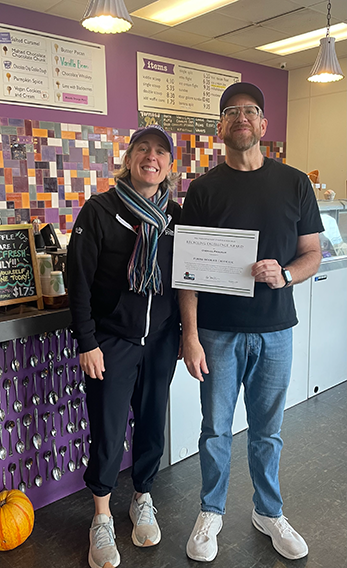
Purple Door Ice Cream produces super-premium, hand-crafted ice cream for both retail and wholesale avenues. Production varies seasonally across 200+ rotating flavors, prioritizing local ingredient sourcing — including 100% Wisconsin dairy and partnerships with multiple local Milwaukee businesses for specialty ingredients.
Purple Door has a high standard for sustainable practices and company policies encourage waste reduction at every level. For the past 15 years, Purple Door has been producing ice cream with little to no food waste. Any product that nears its expiration date is donated to local shelters in Milwaukee such as Walker's Point Youth and Family Center and Cathedral Center. In addition, Purple Door runs its own donation program, Milk for Milwaukee, that donates fresh gallons of milk to area shelters. To date, this program has donated over 37,000 gallons of milk to four Milwaukee-area shelters.
Purple Door also has a strong sustainability foundation through its Plastic Free MKE / Lake Friendly Business partnership. Purple Door reuses specialized ice cream buckets in-house as well as with select wholesale customers who return them for reuse. Purple Door uses fully plastic-free front-of-house compostable spoons and bowls and encourages customers to choose edible packaging (cones!) to reduce waste.
St. Croix County Recycling
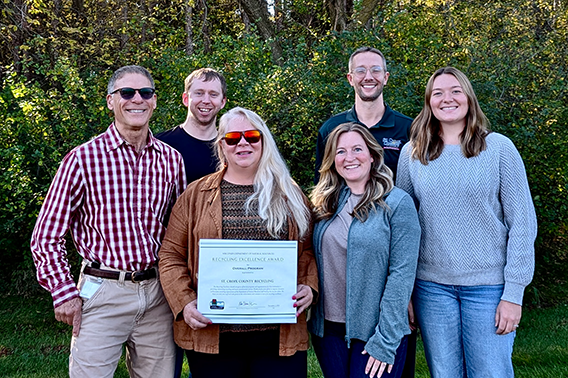
St. Croix County has transformed its recycling and waste diversion program from a series of limited seasonal collection events into a comprehensive, year-round system that is more convenient, accessible and cost-effective for residents. Historically, electronics, appliances, scrap metal and household hazardous waste were collected primarily during spring and fall events at multiple locations. Residents needing to dispose of these materials at other times had limited, costly options. St. Croix County partnered with Redemption Recycling in Somerset to establish a permanent recycling location offering daily drop-off for electronics and refrigerant-containing appliances. As a result, electronics collection increased 600%, from an annual average of approximately 25,000 pounds to more than 150,000 pounds. In addition, appliance and scrap metal collection now exceeds 200,000 pounds, compared with a previous annual appliance average of approximately 60,000 pounds — an increase of more than 300%.
St. Croix County transformed its Clean Sweep household and agricultural hazardous waste program through a partnership with Logistics Recycling, Inc. in Somerset. Previously offered as an annual two-day event, the program could not meet the needs of residents requiring disposal at other times of the year. The county replaced this limited collection model with a Household Hazardous Waste Voucher Program, allowing residents and farmers to schedule qualified hazardous waste drop-offs Monday through Friday at no cost. The partnership also delivers substantial financial benefits. By using the vendor's existing facility rather than mobilizing a temporary collection event, St. Croix County saves more than $25,000 annually in mobilization, transportation, containers and packaging, vendor staffing and county staff time. Those savings allow St. Croix County to expand into additional waste streams, such as a free annual tire collection and a special collection for upholstered furniture.
Lastly, St. Croix County complements its collection programs with education, outreach and reuse initiatives designed to make responsible materials management part of everyday community life.
Special Events
Friends Of Beaver Creek Reserve (Eau Claire County)
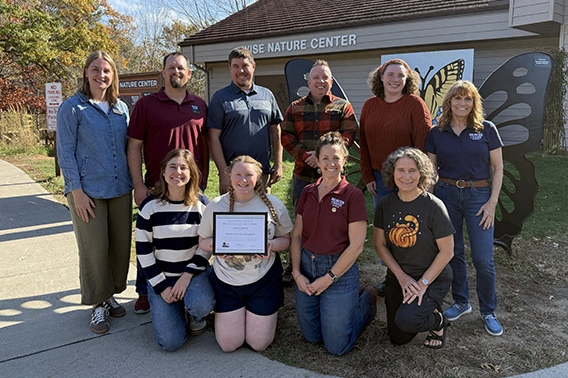
Beaver Creek Reserve celebrates Earth Day the entire month of April and hosts a variety of programs that focus on sustainability and getting outside. Friends of Beaver Creek Reserve leads guided hikes, sustainable crafting and more.
Beaver Creek also partners with Eau Claire Earth Fest, an annual event focused on sustainability. At this event, community members can visit booths from sustainable businesses and organizations to get information about a variety of topics such as recycling, energy, biodiversity and transportation. Participants can also bring damaged items to the event and get them repaired, from stuffed animals to bikes and gear, as well as participate in a used clothing swap and electronics recycling.
Beaver Creek Reserve also partners with Alter Metal Recycling during its Earth Month campaign. Beaver Creek Reserve has been accepting metal recycling donations during April the past three years to raise awareness and fundraise for Beaver Creek Reserve. This event is hosted by Alter Metal Recycling as their "Go Green for the Green" Fundraiser. They have selected Beaver Creek Reserve for the past three years as the donation recipient. During April, Alter Metal Recycling leaves a large roll-off dumpster in the parking lot at Beaver Creek Reserve for visitors and local community members to drop off unused or unwanted metal. This allows the community a close, accessible space to recycle metal. When Earth Month is over, Alter matches the donations dollar for dollar and donates it back to Beaver Creek Reserve. Over the past three years, a total of $40,000 was fundraised thanks to metal recycling donations and Alter's match. The funds raised go back to the mission of "Connecting People with Nature," and are used for student scholarships to attend field trips, buying educational tools and equipment for visiting groups (microscopes, raincoats, rain boots, insect catching nets, etc.) and more.
Great Green Bay Junk Drawer, Basement And Garage Decluttering Event (Brown County)
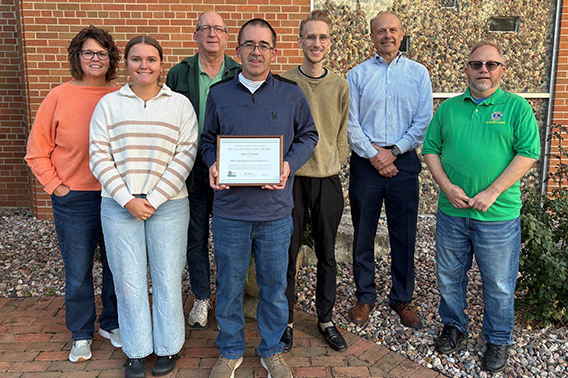
The Great Green Bay Junk Drawer, Basement and Garage Decluttering Event becomes more successful each year. The event is held on a Saturday during April. The highly successful Declutter Green Bay events have provided an opportunity for no-cost recycling/proper disposal of electronics, scrap metal, freon appliances and sensitive paper documents while using partnerships with local and state nonprofits that repurpose working eyeglasses and bicycles for those in need in Wisconsin and beyond. The event also provided resources through its website to connect local residents with thrift stores and resale shops that take donation of usable, working items.
The Declutter event partners with Resurrection Catholic Parish's Care for Creation Committee (event lead), Allouez Lions Club, Spokes of Hope/WhatSoEver You Do, BMO Bank - DePere and B3 Recycling. The event includes significant volunteers from East DePere High School Key Club and Notre Dame High School of Green Bay. The event includes no-fee electronics and freon appliance recycling. The event also offers bicycle repairs for those in need of transportation in the Green Bay area through Spokes of Hope. The event has collected 114 bikes, with roughly 40% of the bikes distributed in the past two years. The Lions Clubs in Wisconsin collect eyeglasses and repair/prepare them for those in need. The Lions Club also coordinated hearing aid recycling and inkjet printer cartridge recycling, which supports the Lions Camp for youth with disabilities. More than 1,100 eyeglasses were collected, and the 2025 event collected >40% of the inkjet cartridges collected by Lions Clubs statewide.
The event coordinators also learned from the 2025 DNR Recycling winner, 3rd Annual Recycling Extravaganza, and expanded to include secure paper shredding of tax and other documents in 2026. Event partner BMO Bank led this component and accepted about 5,000 pounds of paper, running out of space in the first 3½ hours of the event.
Honorable Mention
Village Of Union Grove (Racine County)
The village of Union Grove began a free residential used oil collection program in April 2026 in response to a need for a convenient local disposal and recycling option. The program increases recycling and diversion while reducing the potential for used motor oil to be improperly disposed of through household garbage, storm drains, sanitary systems or onto the ground.