Structure Ignition Zone
Preparing Structures For Wildfire
The structure ignition zone is a building and its surroundings out to 100-200 feet. Research has shown that the characteristics of buildings and their immediate surroundings determine the risk of ignition. That’s why preparing your structure ignition zone is so important.
Since you, as the homeowner, are the only one who has authority to make changes around your property, you have a vital role in protecting it. The steps you take to reduce or change the fuels in your structure ignition zone could determine whether or not your property survives a wildfire.
Importance Of The Structure Ignition Zone
If a wildfire is burning towards your property, its intensity can be reduced or even stopped completely if you have managed the “fuel” on your property. Raking leaves out of your yard may prevent a surface fire from burning right up to your building. Cleaning debris from rain gutters can prevent windblown embers from becoming the flames that could ignite your roof.
Your structure has a much better chance of surviving a wildfire if you interrupt the continuity of fuels leading up to your building and if flammable materials are kept away from the sides of your building.
Steps To A Safer Structure Ignition Zone
- Remove pine needles and leaves from roof and gutters.
- Rake debris from under deck and around wood fences.
- Remove all flammable plants, debris and materials within the first 3 to 5 feet around buildings.
- Keep the area 30 feet around buildings mowed and limit the number of evergreens.
- Store firewood 30 feet away from buildings.
- Remove lower branches of evergreen trees up and away from the ground.
- Remove tree branches within 10 feet of the roof.
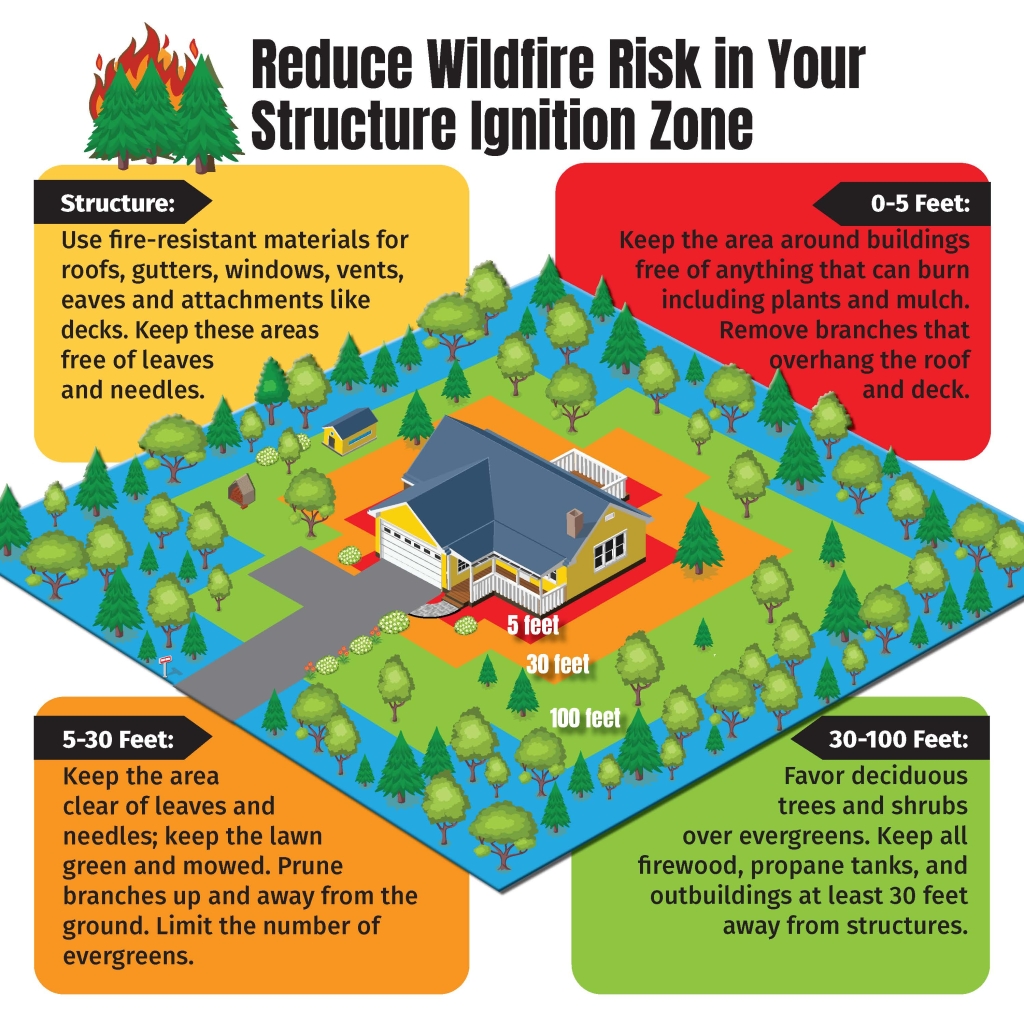
0-5 Feet Around The Structure
Keep area free of anything that can burn. Remove all wood mulch, plants, fallen leaves, firewood and any flammable objects. If you do plant here, choose only low-growing or succulent plants and deciduous shrubs (those with leaves). Be sure to remove all dead and dying plant parts. These “fine fuels” can ignite easily.
5-30 Feet Around The Structure
Keep this area clean and green by raking leaves and pine needles and keeping your yard mowed. Choose deciduous trees and shrubs over evergreens (those with needles). If there are evergreens in this zone, they should be limited in number and have their lower branches pruned up and away from the ground. If there are any other buildings in this zone, they should have a 30-foot managed area around them as well.
30-100 Feet Around The Structure
Remove any dead trees or brush. Trees should be spaced to keep branches from touching. Favor deciduous trees and shrubs over evergreens. Create separation between trees and nearby grasses and shrubs to avoid a “ladder effect” where fire can climb into tree tops. In the fall, cut back grasses and wildflowers.
100-200 Feet Around The Structure
Remove dead trees and brush that are standing or on the ground. Thin trees to create space between tree tops. Favor deciduous trees over evergreens. Managing this zone is especially important for properties at higher risk, such as those surrounded by pine forests or on steep slopes.