
Fish Stocking and Genetics Management
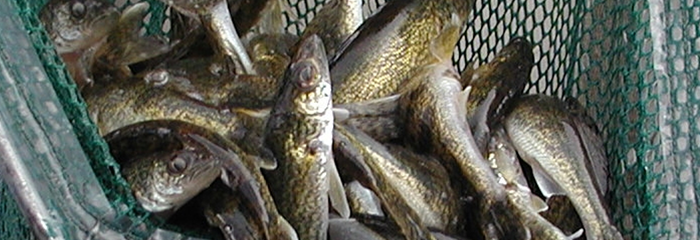
Stocking and Genetics in Wisconsin
Wisconsin has a long and storied history of fish stocking. Advances in genetic analysis and lower-cost genetic testing have enabled more detailed stock determination, allowing fisheries biologists to better allocate stocked fish based on genetics and maximize natural reproduction, survival, and growth. Preserving the genetic integrity of fish stocks that are documented and proven to survive and thrive in Wisconsin waters is a central goal of fisheries management in Wisconsin.
Fisheries Management Meeting On Statewide Genetics Management Plan
A Stocking and Genetics Management meeting was held on the UW-Stevens Point campus on Jan. 28, 2026
Read the DNR’s fisheries genetics management plan.
- Watch the video of the meeting
- Review the meeting presentation
- Additional questions from meeting
Genetic Management Guidance
Stocking should be used on a case-by-case basis. Waters with adequate natural reproduction, which provide some of the best fishing opportunities in the state, should not be stocked.
Genetic Management Units
Genetic management units (GMUs) have been identified for Wisconsin fish species. Fish within these GMUs are genetically similar, whereas there are genetic differences between GMUs.
Strains
Appropriate strains typically display high survival and growth to maximize return on stocking investment while also preserving the genetic integrity of wild populations.
Process to Acquire Strains
Bid requests for the sale of surplus walleye and muskellunge fry will be available on the DOA eSupplier website.
Requirements:
- Bids must be at least 8 ounces
- Bidders must have a Type 3 Fish Farm License
- Fish must be stocked in Wisconsin waters
Note: It has been shown that post-stocking survival is best if gametes are collected each year.
Fry Sold in 2026
During 2026, fry were sold through a bidding process to the following vendors to rear for sale and eventual stocking into Wisconsin Waters. These fish are typically sold as fingerlings in the fall and should be averaging six inches for walleye and eleven inches for muskellunge at stocking.
- Great Lakes Spotted Muskellunge Fry to Sokaogon Mole Lake Tribal Fish Hatchery
- Upper Chippewa Strain Muskellunge Fry to Lac Courte Oreilles Tribal Fish Hatchery
- Upper Chippewa Strain Muskellunge Fry to Minnesota Musky Farm
- Rock Fox Strain Walleye Fry to Minnesota Musky Farm
- Upper Chippewa/St. Croix Strain Walleye Fry to Island Chain of Lakes Association
- Upper Wisconsin Strain Walleye Fry to Klug’s Fish Farm
- Upper Wisconsin Strain Walleye Fry to Central Wisconsin Fish Farm
Genetics Frequently Asked Questions
What is genetics?
Fish genetics is the study of genes, genetic variation and heredity in fish. It examines how traits such as growth rate, color, disease resistance, behavior and environmental tolerance are inherited and expressed across generations.
Why is fish genetics important?
Fish genetics is important for:
- Aquaculture: Improving growth, survival, feed efficiency and disease resistance
- Conservation: Protecting genetic diversity and managing endangered species
- Fisheries management: Preventing overfishing-related genetic decline
- Research: Understanding evolution, adaptation and development
What is genetic diversity in fish populations?
Genetic diversity refers to the variety of genes within a fish population. High genetic diversity:
- Increases resilience to disease and environmental change
- Reduces the risk of inbreeding
- Supports long-term population survival
- Low genetic diversity can make populations vulnerable to extinction
What is selective breeding in fish?
Genetic diversity is not typically maintained through selective breeding. Potential loss of traits critical to survival, growth and reproduction. Selective breeding involves choosing parent fish with perceived desirable traits (such as fast growth or disease resistance) to produce improved offspring. It is not used in DNR hatcheries but is sometimes used in aquaculture.
Can fish genetics help with conservation?
Yes. Genetics helps conservationists to:
- Identify distinct populations or species
- Prevent inbreeding in hatcheries
- Design effective restocking programs
- Allows for genetics parentage analysis
What is inbreeding and why is it a problem?
Inbreeding can occur when closely related fish populations reproduce or when hatchery broodstocks with low diversity are maintained. It can lead to:
- Reduced survival, growth and fertility
- Increased deformities
- Lower disease resistance
Maintaining genetic diversity helps prevent these problems.
How is fish genetics used in fisheries management?
Fish genetics is one of many tools DNR uses to manage fisheries. Fish genetics are used to:
- Identify fish stocks/strains
- Monitor population mixing/parentage
- Set sustainable harvest limits
- Detect hatchery fish in wild populations
- Design effective stocking programs
How were the Genetic Management Units (GMUs) chosen?
Based on watersheds and genetic testing that was conducted on several species. Environmental conditions vary by GMU. Native ranges of some species such as muskellunge were also considered.
Why is stocking the correct strain important?
Local stocks have evolved under local environmental conditions. Stocking the correct genetic strain/stock of fish is important because genetics strongly influence how fish survive, grow, reproduce and interact with ecosystems. Using the incorrect strain can cause long-term biological and economic problems. Traits that aid in survival and reproduction are most important.
How does DNR maintain genetic integrity and diversity when collecting wild gametes (eggs/milt)?
- Gametes are collected over the entire spawning period.
- Spawn appropriate number of pairs by species.
- Most gametes are collected from waterbodies on minimum of a 3-year rotation.
- Strains are maintained in distinctly separate rearing spaces or facilities.
Associated Literature and Additional Resources
- Contemporary Stock Structure of Muskellunge Population in Northern Wisconsin
- Contemporary Muskellunge Genetic Resources in Northern Wisconsin: Impacts of Supplemental Stocking and Genetic Management Zones
- Genetic Structure of Wisconsin’s Naturally Recruiting Walleye Populations
- Differences in Stocking Success among Geographically Distinct Stocks of Juvenile Muskellunge in Illinois Lakes
- Genetic Structure of Rock Bass and Johnny Darters: Implications for Gamefish Management in Wisconsin
- Advancing Broodstock Selection to Optimize Brook Trout Stocking in Wisconsin
- Performance and cost advantage of stocking locally sourced walleye fry into southern Minnesota lakes
- Using genetic data to estimate capture rate of Wisconsin and Leech Lake strains of muskellunge stocking in four Wisconsin lakes
- Advancing brood stock selection to optimize brook trout stocking in Wisconsin
Contact Information
Inquiries or information requests may be sent to: DNRFWPFHStockingGenetics@wisconsin.gov.