
Rare Plant Monitoring
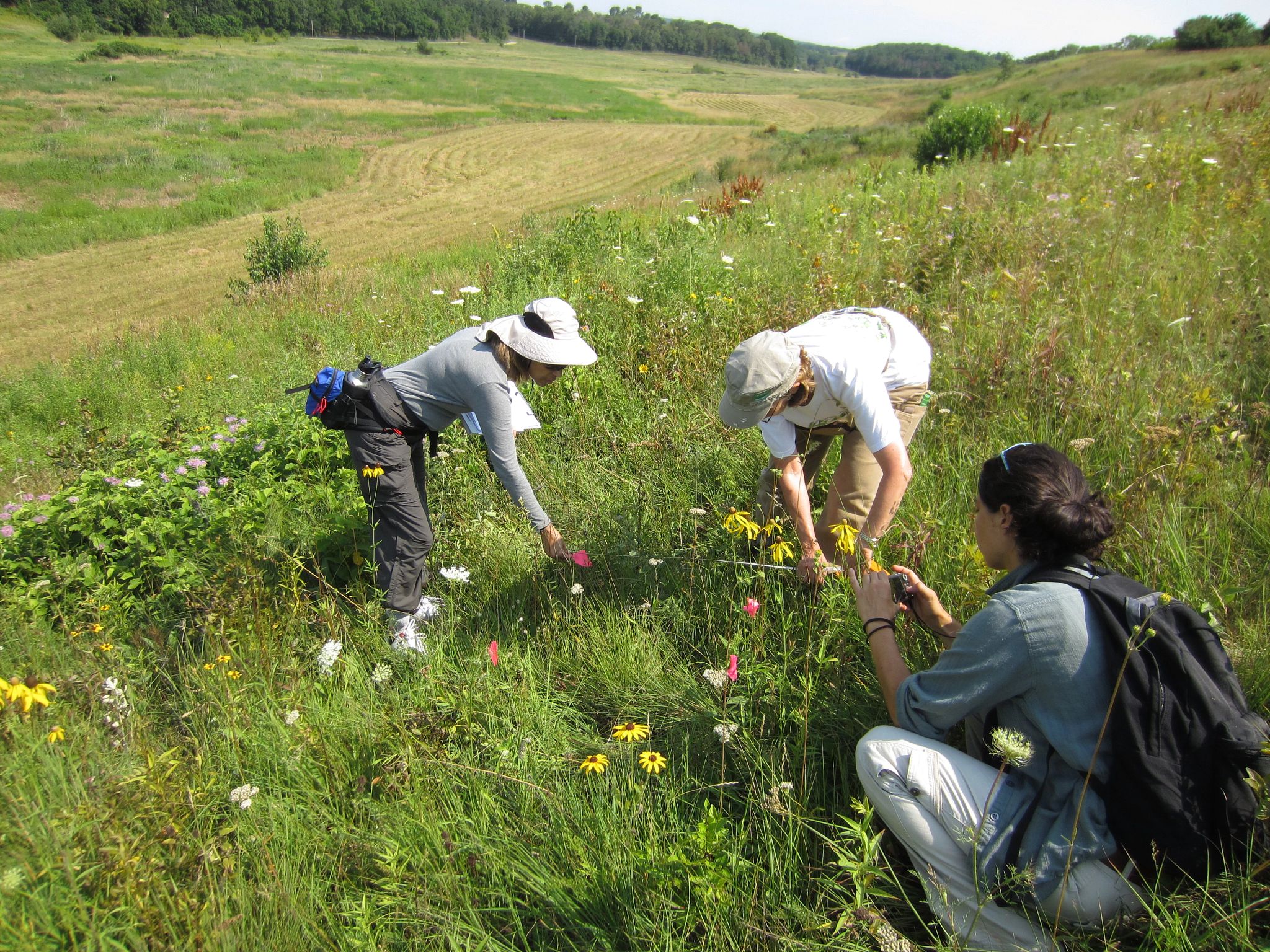
Become a Rare Plant Monitoring Program volunteer and help preserve our rare flora for future generations.
Wisconsin is home to over 1,800 vascular plant species, 298 of which are listed as Endangered, Threatened or Special Concern. In order to conserve these rare species, we need up-to-date information on their distributions, population sizes, threats and management activities. The Rare Plant Monitoring Program gives plant enthusiasts an opportunity to help with this effort by conducting surveys for rare plants around the state. The information these volunteers collect is used to guide decisions for state and national conservation efforts.
Become A Volunteer – Trainings
To participate in the program, you must complete either the online training, available year-round, or participate in an in-person training, offered in the spring. Read the volunteer expectations [PDF] to learn more about the project.
Online Training
To complete the virtual Rare Plant Monitoring Program training, please watch all nine videos below. Note that 'Video 8 - Data Collection Level 2 Protocol' is optional. Once you've watched all the videos you must complete the quiz and confidentiality form to be able to participate in the program.
- Part 1 – Overview
- Part 2 – Confidentiality
- Part 3 – Signing Up For A Survey
- Part 4 – What to Bring On A Survey
- Part 5 – Navigation
- Part 6 – Interpreting Aerial Photos
- Part 7 – Survey Protocols
- Part 8 – Data Collection Level 2 Protocol (optional)
- Part 9 – Submitting Data
In-Person Trainings
In-person trainings are offered each spring. These free trainings cover the same material as the online trainings. In 2026, we are offering three in-person trainings:
North Lakeland Discovery Center
Manitowish Waters, WI
Saturday, May 2, 10 a.m. – 2:30 p.m.
Sign up for the training at North Lakeland Discovery CenterKickapoo Valley Reserve
La Farge, WI
Saturday, May 30, 10 a.m. – 2 p.m.
Sign up for the training at Kickapoo Valley ReserveCrossroads at Big Creek
Sturgeon Bay, WI
Friday, June 5, 9:30 a.m. – 1:30 p.m.
Sign up for the training at Crossroads at Big Creek
Decide Where To Survey
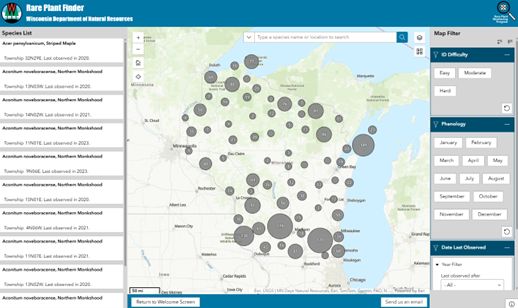
Use the Rare Plant Finder to explore surveys throughout the state. The Rare Plant Finder allows you to filter available surveys by difficulty of identification, phenology and year of last observation. The Rare Plant Finder cannot be used to determine the exact location of rare plant populations. Please take the training to gain access to precise rare plant locations.
Need help choosing a survey? Contact us for lists of species and surveys to help you narrow down your options. Consider looking for and submitting a report on one of our Species with Information Needs. While these species do not have official surveys on the Rare Plant Finder, we still accept reports if you see them in the field. These reports help us assess whether these plants might need addition conservation action in the future.
Conduct A Survey - Volunteer Resources
- Pacing exercise [PDF] – We often need to calculate distances while monitoring plant populations. While using a tape measure is best, you may not always have one in the field. Learn how to calculate distance using the pacing method instead.
- Estimating populations [PDF] – This guide will help estimate the size of a large population.
- Data sheet [PDF] – Prefer taking data on a paper form? Print this out and bring it in the field with you.
- Data confidentiality form [PDF] – All volunteers, whether they have taken the training or not, must submit a signed confidentiality form before they conduct a survey.
Submit Your Survey Results
Once you have completed a survey, or if you have found a new population of a rare plant, make sure to submit your data. You can do this in one of two ways: using the Survey123 form or iNaturalist on your desktop or in the app.
- If you would like to join our iNaturalist project to submit your observations, send us an email to be added to the project. For more information about how to submit observations on iNaturalist, use this guide [PDF].
- Submit a rare plant report using Survey123. The Wisconsin Rare Plant Monitoring Data Collection Form is available to use in a web browser and in the Survey123 application.
Frequently Asked Questions
How much time will a rare plant survey take?
Rare plant survey duration varies, depending on a number of factors. A survey for a small population (less than 50 individuals), on a site that is easy to access, with good locational information (i.e. GPS coordinates), may take two hours or less. Budget more time for larger sites with larger populations or poor locational information.
Do I need to take the training to participate?
Yes. All participants must complete the online training or attend an in-person session in the spring. This includes submitting a signed confidentiality form.
What if I haven’t completed the training, but have seen a rare plant?
Anyone can submit rare plant observation data. If you haven’t taken the Rare Plant Monitoring Program training, you can use the rare species observation form to submit your observations. By taking the training, Rare Plant Monitoring Program volunteers get access to detailed information on rare plant locations, which helps them with their surveys. If you don't take the training, you will not have access to this same level of information, but you can still look for, find and report on rare plants. These reports are still extremely meaningful for plant conservation, and we appreciate you letting us know if you find a rare plant.
Can I take other people with me on a rare plant survey if they haven't taken the training?
Yes. At least one trained volunteer must be present on all surveys. Some people prefer not to conduct plant surveys alone and invite friends or family members to come along. That can be fun and increase safety in the field. All volunteers, whether they have taken the training or not, must submit a signed confidentiality form before they conduct a survey.
Once I've taken the training, do I ever have to take it again?
Maybe. It depends on how often you actually conduct a survey after taking the training. If you take the training and conduct rare plant surveys each year, you will not have to retake the training. However, if a lot of time passes between the time you take the training and the time you want to conduct a survey, it may be a good idea to retake the training to ensure you have a successful survey.
Do I need to be an expert botanist to participate?
No. Anyone is welcome to participate in the program, regardless of skill level. There are surveys appropriate for all levels of experience. However, the more comfortable you are in the field identifying plants, the higher chance you will find what you're looking for.
On a rare plant survey, it helps to be comfortable identifying most of the common plants in the habitat you are surveying. That way you will be more likely to know the rare target plant when you see it. Use the natural community descriptions to learn about these common species and help assess your ability to identify them.
Read About Rare Wisconsin Plant Finds in the News
Our amazing volunteers are constantly making headlines. Read some recent news stories about discoveries from the Rare Plant Monitoring Program.
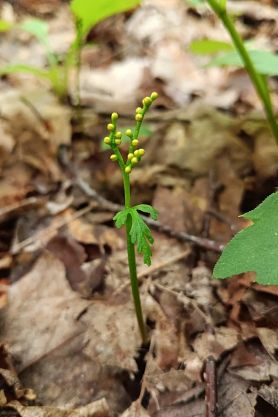
- Volunteer Rediscovers Rare Plant Not Seen In Wisconsin For Over 100 Years
- Volunteer Finds Rare Parasitic Plant In Wisconsin For The First Time In Over 40 Years
- Tiny Fern Turns Out To Be A Big Find For One Wisconsin Family
- Volunteers Discover New Population Of Rare Orchid Near Crandon
- Rare Carnivorous Sundew Found By DNR Volunteers While Kayaking
- Good News, Bad News For Wisconsin's Rare Plants
Each year, we compile an annual report which contains stories that highlight volunteer efforts, management successes and new discoveries, as well as profiles of volunteers, program updates and information about Wisconsin’s rare plants. Read archived annual reports.