
The Lake Pepin TMDL
Total Maximum Daily Loads for Total Phosphorus
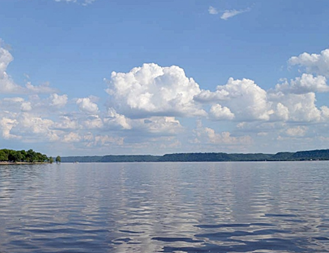
The Wisconsin Department of Natural Resources (DNR), together with many partners throughout the basin, including the Minnesota Pollution Control Agency (MPCA), is working to improve the surface water quality of Lake Pepin and its tributaries. Lake Pepin is the naturally widest part of the Mississippi River, bordered by Minnesota on the west and Wisconsin on the east. It is located just south of where the St. Croix and Minnesota Rivers join the Mississippi River. Lake Pepin is approximately 21 miles long, averages 1.7 miles wide, and covers 29,295 acres with a maximum depth of 60 feet and an average depth of 18 feet.
Lake Pepin and two small Wisconsin streams that drain directly to it, Lost and Bogus creeks, are listed on Wisconsin’s 303(d) list as impaired due to excessive phosphorus, which leads to nuisance algae growth, oxygen depletion, fish kills, reduced submerged aquatic vegetation, water clarity problems and degraded habitat. This Total Maximum Daily Load (TMDL) is designed to complement the TMDL prepared by MPCA for Lake Pepin by addressing Wisconsin’s portion of the Lake Pepin basin. MPCA’s TMDL report, Lake Pepin and Mississippi River Eutrophication Total Maximum Daily Load Report was approved by the U.S. EPA on May 19, 2021, and can be found on MPCA’s project website.
U.S. EPA Approval
Final TMDL Documents
Appendices
- Appendix A: Impairments Addressed
- Appendix B: Allocation Tables
- Appendix C: Agricultural Edge-of-Field Targets
- Appendix D: Edge-of-Field and EVAAL Analysis
Copy Of The Public Informational Meeting Presentation And Slides
Spatial Data Viewer
The DNR's Watershed Restoration & Protection Viewer is an interactive web mapping tool for exploring water quality improvement and protection projects across Wisconsin. When waters are listed as impaired as defined by the EPA, the DNR works to improve the waters by implementing various types of frameworks such as TMDLs and Nine Key Element Plans. If the waters are already healthy, the DNR works to maintain their healthy status for current and future generations to enjoy.