
Cable Restraints
Trap-Specific Regulations
You may not:
- Set, place or operate cable restraints for any species other than fox, coyote and bobcat. Cable restraints may only be placed, set or sprung during the open trapping seasons for the previously listed species.
- Use cable restraints for removal of nuisance wildlife except for during the open seasons for coyote and fox.
- Stake a cable restraint in a manner that allows the restraint device to reach any part of a fence, rooted woody vegetation greater than ½ inch in diameter or any other immovable object or stake that could cause entanglement.
- Set, place or operate any cable restraint, regardless of the size of the loop, in the following locations:
- Within 3 feet of any federal, state or county road right-of-way culvert.
- Within 3 feet of any woven or welded wire fence.
- Within 100 yards of any building devoted to human occupancy without the owner’s consent.
- Set, place or operate any cable restraint with the bottom of the loop less than 6 inches or greater than 12 inches above the first surface beneath the bottom of the set cable restraint loop (Figure 6), where the surface is ground, ice, crusted or packed snow or any other hard surface.
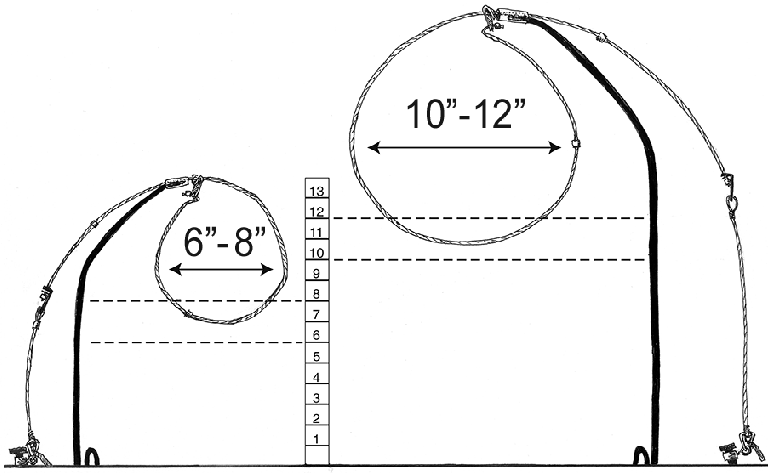
Figure 6. Loop heights and size vary depending on the intended species: coyote, bobcat or fox. Multiple swivels are recommended on a cable restraint. However, only a single swivel is required.
- Set, place or operate any cable restraint unless the noose cable and noose attachments conform to the following specifications (Figure 7):
- The cable length may not exceed 7 feet.
- The cable must be galvanized aircraft cable and include a swivel.
- The set must be non-spring activated with the exception of the foot-activated cable restraint.
- The cable must be made of multiple strands of wire, with a diameter of 3/32 inches or larger.
- The set must include a breakaway device or be stop-rated at 350 pounds or less.
- The set must include a relaxing reverse-bend washer lock with a minimum outside diameter of 1¼ inches.
- The set must include cable stops affixed to the cable to ensure that the portion of the cable that makes up the noose loop may not be longer than 38 inches or less than 8 inches.
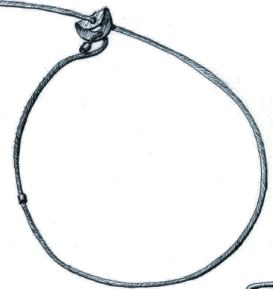
Figure 7. The maximum and minimum loop size for cable restraints is easily measured by circumference. The minimum loop stop is set at 8 inches and the maximum loop stop is set at 38 inches from the reverse-bend washer end of the cable. This results in a loop no smaller than 2½ inches in diameter and no larger than 12 inches in diameter.